
Last reviewed: 2026-07-07
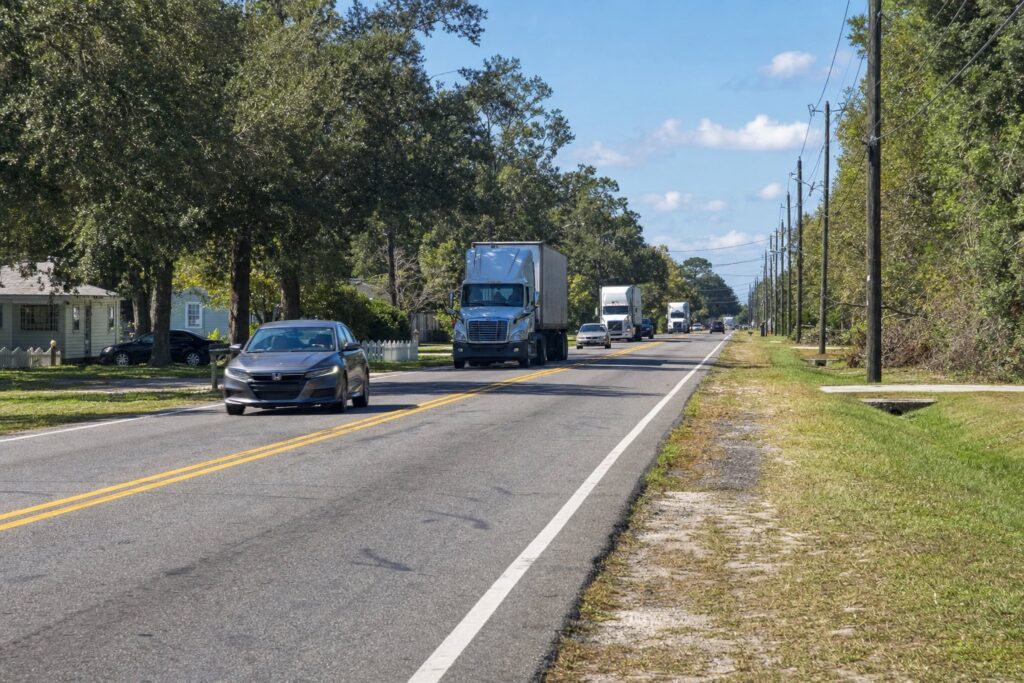
If you were hurt in a crash on Augusta Road, you need a Garden City GA 21 Augusta Road car accident lawyer who actually knows this corridor — a 2-lane, 45-mph trunk highway with no median, where local drivers turning off residential streets share the road with freight bound for the port. A wreck here can change everything in an instant: mounting medical bills, lost income, and pain that touches every part of your day. At Roden Law, we work on a contingency fee basis — you pay nothing upfront, and no legal fees unless we win your case.
Key Takeaways
- In Georgia, you have 2 years from the date of a crash to file a personal injury lawsuit (O.C.G.A. § 9-3-33) — that deadline applies to Augusta Road (GA 21) collisions in Garden City.
- Georgia follows modified comparative negligence (O.C.G.A. § 51-12-33): you can recover as long as you are less than 50% at fault, with damages reduced by your share.
- Garden City crash lawsuits are filed in Chatham County — usually the State Court of Chatham County, or the Superior Court of Chatham County (Eastern Judicial Circuit).
- Augusta Road (GA 21) is a 2-lane, 45-mph trunk highway with no median, which drives head-on, rear-end, and left-turn crashes at residential access points.
- If a hit-and-run driver is never found, your uninsured motorist coverage (O.C.G.A. § 33-7-11) is often the primary way to recover.
- Roden Law's Savannah office is a short drive from the GA 21 corridor, and we never charge upfront fees.
- 📞 Call 1-844-RESULTS for a Free Case Review — No Fees Unless We Win.
Why Augusta Road (GA 21) Produces So Many Garden City Crashes
Augusta Road causes crashes because it is a 2-lane, 45-mph trunk highway with no median separating opposing traffic, forcing fast through-traffic to mix with local drivers slowing to turn. According to the Federal Highway Administration, undivided two-lane roads that carry heavy volumes at higher speeds are among the most crash-prone roadway types precisely because a single left-turning or crossing vehicle can trigger a head-on or high-speed rear-end collision. On GA 21 in Garden City, that risk repeats at every residential access point.
The corridor is also a freight route. Augusta Road (GA 21) and Bourne Avenue (GA 307 / GA 21 ALT) funnel port-area commercial traffic through what is otherwise a small residential municipality, so a passenger car braking to turn onto a side street is often doing so directly in front of a loaded truck. These are the same corridors we already cover in our reporting on truck accidents around Eden Loop in Garden City and Dean Forest Road truck accident claims.
Eric Roden, Roden Law's founding partner, points out that the geometry of a road like GA 21 often does more to explain a crash than either driver's split-second reaction — when a highway invites 45-mph speeds but offers no median and no protected turn lane, the road design itself becomes evidence a car accident lawyer can build a claim around.
The Corridor Grid: Where Garden City Crashes Cluster
Crashes cluster where fast trunk-highway traffic meets slow local access, and Garden City's road grid creates several of those pinch points. Residential streets such as Eden Loop (ZIP 31408) and secondary roads like Robert B Miller Jr Road empty directly onto the GA 21 / GA 307 corridor, so neighborhood drivers merge from a standstill straight into trunk-highway speeds.
Here is how the main corridors compare:
| Corridor | Classification | Lanes | Posted / typical speed | Dominant crash pattern |
|---|---|---|---|---|
| Augusta Road (GA 21) | Trunk highway | 2 | 45 mph | Head-on, rear-end, left-turn |
| Bourne Avenue (GA 307 / GA 21 ALT) | Trunk connector | 3–4 (shifts) | Corridor speed | Sideswipe, merge conflicts |
| Dean Forest Road (GA 307) | Secondary / trunk | 2 | Corridor speed | Freight + local merge |
| Robert B Miller Jr Road | Secondary road | 2 | Local | Access-point T-bone |
Bourne Avenue (GA 307 / GA 21 ALT) is the corridor's other trouble spot because its lane count shifts from 2 to 3 to 4 lanes across different segments, and every lane-count transition creates a merge and sideswipe conflict. According to the National Highway Traffic Safety Administration, lane-change and merging maneuvers are a recurring factor in multi-vehicle crashes on higher-speed arterials. For a wider look at how these Garden City corridors connect to the metro, see our guide to Savannah's most dangerous highways and dangerous Savannah-area intersections.
The Most Common Crash Types on GA 21 and the Surrounding Grid
The most common crashes on this corridor are rear-end, left-turn/T-bone, sideswipe, and hit-and-run collisions — each tied to a specific feature of the GA 21 road grid.
Rear-end collisions. These dominate when corridor traffic slows on 2-lane Augusta Road (GA 21) and a following driver — often a freight vehicle with a long stopping distance — cannot stop in time. If you were struck from behind, our rear-end collision claims coverage explains how fault usually falls on the trailing driver.
Left-turn and T-bone crashes. These happen at the unsignalized residential access points along GA 21 and GA 307, where a driver turning across oncoming traffic misjudges the gap at 45 mph. With no median or protected turn lane, there is little margin for error.
Sideswipe and merge crashes. These occur where Bourne Avenue (GA 307 / GA 21 ALT) changes lane counts and two vehicles try to occupy the same space during a merge.
Hit-and-run collisions. These are a real problem on residential streets like Eden Loop, where a driver can flee toward the nearby trunk corridors and disappear into freight traffic. If that happens to you, our hit-and-run accident lawyers can pursue recovery even when the other driver is never identified.
Georgia Law: Your Deadlines, Your Fault Rules, and Your Court
Georgia gives you a hard deadline and a specific fault rule, and both decide whether — and how much — you recover. Here is what governs a Garden City crash.
The deadline. In Georgia, you generally have 2 years from the date of injury to file a personal injury lawsuit (O.C.G.A. § 9-3-33). If a related traffic prosecution is pending against the at-fault driver, that clock can be tolled while the criminal case plays out (O.C.G.A. § 9-3-99) — but you should never assume you have extra time. Talk to a lawyer early.
The fault rule. Georgia follows modified comparative negligence (O.C.G.A. § 51-12-33). Your damages are reduced by your percentage of fault, and you are barred from recovering entirely if you are found 50% or more at fault. On a corridor like GA 21, insurers routinely try to pin part of the blame on the injured driver to shrink or defeat the claim — which is why the road-design evidence discussed above matters so much.
Your court. A personal injury suit arising in Garden City is filed in Chatham County. Most car-accident cases proceed in the State Court of Chatham County, the primary venue for personal injury suits, while larger matters may go to the Superior Court of Chatham County (Eastern Judicial Circuit). Smaller disputes of $15,000 or less can be heard in the Magistrate Court of Chatham County.
According to the Georgia Department of Transportation, GA 21 (Augusta Road) is a state-route trunk highway, which is why Georgia's Uniform Rules of the Road — including the duty-to-stop and impaired-driving statutes below — govern conduct on it. For the fuller picture of your rights, see the car accident lawyers at Roden Law and our broader personal injury lawyers pages.
When the At-Fault Driver Fled or Was Impaired
If the driver who hit you fled the scene or was drunk, Georgia law gives you additional protections — and, in the DUI case, additional damages.
A hit-and-run driver on a Garden City street violates O.C.G.A. § 40-6-270, which imposes a duty to stop, remain at the scene, and render aid; fleeing a crash that caused serious injury is a felony. When that driver is never identified, your own uninsured motorist coverage under O.C.G.A. § 33-7-11 is often the primary recovery path — and it is coverage you already paid premiums for. Our post on using uninsured motorist coverage in Georgia walks through exactly how that works.
Crashes caused by impaired drivers (O.C.G.A. § 40-6-391) can support punitive damages on top of your compensatory recovery. Critically, O.C.G.A. § 51-12-5.1(f) removes Georgia's usual cap on punitive damages when the defendant was driving under the influence. If you were hit by an impaired driver on the GA 21 or Dean Forest Road corridors — a documented risk during night and weekend hours — our drunk driver accident lawyers can pursue the full measure of what you are owed.
What to Do After a GA 21 Crash — and How Roden Law Helps
The most important steps after an Augusta Road crash are getting medical care, documenting the scene, and calling a lawyer before you talk to the insurer. Serious injuries from Garden City corridors are transported to Memorial Health University Medical Center in Savannah — the region's Level I trauma center — so get evaluated even if you feel "okay," because adrenaline masks injuries.
According to the Centers for Disease Control and Prevention, prompt medical documentation after a motor-vehicle crash both protects your health and creates the record that connects your injuries to the collision. That record is the backbone of a strong claim. For a step-by-step aftermath guide, read what to do after a car accident in Georgia, and for the money side, see maximizing your Georgia car accident compensation.
Roden Law's Savannah office at 333 Commercial Dr. is a short drive from the GA 21 corridor, and our Savannah car accident lawyers handle Garden City crashes regularly. With $300M+ recovered, 5,000+ cases handled, and a 4.9-star average across 500+ reviews, we bring real corridor knowledge to your claim — and we never charge upfront fees. 📞 Call 1-844-RESULTS for a Free Case Review — No Fees Unless We Win.
Frequently Asked Questions
Q: How long do I have to file a car accident claim after a crash on Augusta Road (GA 21) in Garden City?
A: In Georgia, you generally have 2 years from the date of the crash to file a personal injury lawsuit (O.C.G.A. § 9-3-33). That deadline applies to any Augusta Road collision in Garden City. If a related traffic prosecution is pending, the clock may be tolled (O.C.G.A. § 9-3-99), but you should never rely on that — contact a lawyer as early as possible to protect your evidence and your rights.
Q: Do I need a Garden City GA 21 Augusta Road car accident lawyer, or can I handle the insurer myself?
A: You can technically deal with the insurer alone, but on a corridor like GA 21 — where insurers routinely blame the injured driver to exploit Georgia's comparative-fault rule — an experienced lawyer protects your recovery. A car accident lawyer gathers the road-design and crash evidence, handles the insurer, and works to maximize your compensation. At Roden Law, you pay nothing upfront and no fees unless we win.
Q: Where would my Garden City car accident lawsuit be filed?
A: A crash in Garden City is filed in Chatham County. Most personal injury cases proceed in the State Court of Chatham County, the primary venue for these suits, while larger matters may go to the Superior Court of Chatham County (Eastern Judicial Circuit). Claims of $15,000 or less can be heard in the Magistrate Court of Chatham County. Your lawyer selects the proper court based on your case.
Q: What if the driver who hit me on Eden Loop or GA 21 fled the scene?
A: A driver who flees violates O.C.G.A. § 40-6-270, which requires stopping and rendering aid — fleeing a serious-injury crash is a felony in Georgia. If the driver is never identified, your uninsured motorist coverage under O.C.G.A. § 33-7-11 is usually the primary way to recover. This is coverage you already paid for, and our team can help you access it.
Q: Can I still recover if I was partly at fault for the GA 21 crash?
A: Yes, as long as you were less than 50% at fault. Georgia follows modified comparative negligence (O.C.G.A. § 51-12-33), which reduces your damages by your percentage of fault and bars recovery entirely only at 50% or more. Because insurers push to inflate your share of blame, corridor and road-design evidence is critical to protecting your claim.
Q: How much does it cost to hire Roden Law for a Garden City car accident?
A: Nothing upfront. Roden Law works on a contingency fee basis — you pay no upfront fees and no legal fees unless we win your case. Your initial case review is free. With $300M+ recovered and 62 years of combined experience across 5 offices, our Savannah team is a short drive from the GA 21 corridor. Call 1-844-RESULTS for a Free Case Review.
About the Author
Eric Roden is the founding partner of Roden Law and is admitted to practice in both Georgia and South Carolina. He leads the firm's Savannah office at 333 Commercial Dr. and has helped injured clients across Chatham County — including the Garden City corridors of Augusta Road (GA 21) and GA 307 — recover the compensation they deserve. No fees unless we win.
About the Author