

Key Takeaways
I-516 (W.F. Lynes Parkway) is a 6.49-mile auxiliary interstate connecting southern Savannah to the Port of Savannah and I-16. It carries a significant share of the 30,000 daily truck trips through Chatham County on compact interchanges with short merge zones and close residential proximity. Merge collisions, rear-end crashes in commuter congestion, and cargo spills are common crash types. Georgia law provides 2 years to file (O.C.G.A. § 9-3-33) and recovery if less than 50% at fault.
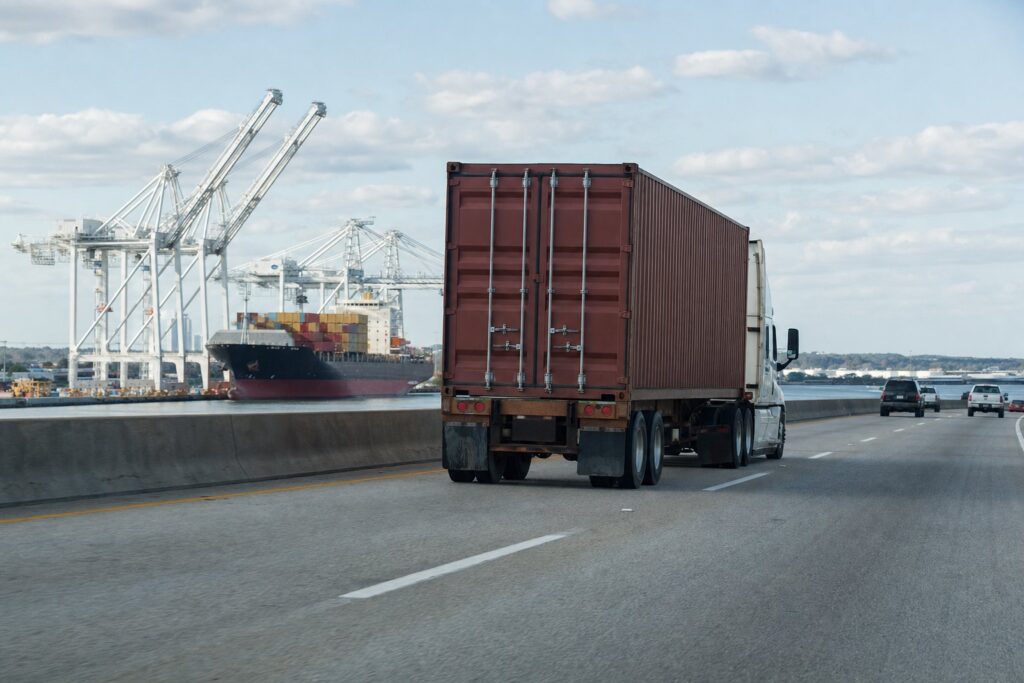
I-516: Savannah’s Port Connector and Hidden Truck Danger
Interstate 516 — also known as W.F. Lynes Parkway — is a 6.49-mile auxiliary interstate that most Savannah residents drive daily without thinking about its unique dangers. Connecting DeRenne Avenue on Savannah’s south side to the port area and I-16, I-516 is a critical link in the Port of Savannah’s truck route network.
While shorter than I-16 or I-95, I-516 concentrates truck traffic into a compact corridor with interchanges, merges, and exits that were designed decades before current freight volumes. No competitor law firm has dedicated content to I-516 truck accidents — but the crashes happening here are real, severe, and increasing.
I-516 Truck Traffic Volume
I-516 is part of the arterial system carrying roughly 30,000 truck trips per day through Chatham County. As the direct connector between southern Savannah neighborhoods and I-16 (the primary port freight corridor), I-516 carries:
- Port container trucks moving between terminals and I-16
- Fuel tankers serving Savannah’s commercial and industrial zones
- Construction vehicles from ongoing development in the Savannah metro
- Local delivery trucks serving the commercial areas along DeRenne Avenue and Veterans Parkway
Why I-516 Truck Crashes Happen
Short Merge Zones
I-516 was built as an urban expressway with shorter on-ramps than a full interstate. Trucks accelerating from surface streets need significantly more distance to reach highway speed than passenger vehicles. When a 40-mph truck merges into 65-mph traffic, the speed differential creates rear-end and sideswipe crash risk for every vehicle in the right lane.
Residential Proximity
Unlike I-16 or I-95, which run through industrial or rural areas for much of their length, I-516 cuts directly through Savannah’s residential neighborhoods. This means:
- Higher volumes of passenger vehicle traffic mixing with commercial trucks
- More frequent exits and entries as residents access neighborhoods
- Pedestrians and cyclists on crossing streets near interchanges
- Stop-and-go commuter congestion during morning and evening rush hours
Veterans Parkway Interchange
The I-516/Veterans Parkway interchange is a high-volume junction where truck traffic from the port area meets commuter traffic from Savannah’s growing westside. The complex interchange geometry — with multiple ramps, weaving lanes, and short merge distances — creates conflict points where trucks and passenger vehicles must cross paths at speed.
Connection to I-16
Where I-516 meets I-16, trucks must navigate a transition from urban expressway speeds to interstate speeds while merging with the massive freight volume on I-16 itself. This is a frequent location for rear-end crashes and lane-change collisions.
Common I-516 Truck Crash Scenarios
- Merge collisions: Trucks accelerating on short on-ramps cannot match highway speed, forcing trailing vehicles to brake suddenly or change lanes
- Rear-end crashes in congestion: Morning and evening commuter backups on I-516 create stop-and-go conditions that are especially dangerous for following trucks
- Exit ramp crashes: Trucks decelerating for exits create speed differentials with through-traffic in adjacent lanes
- Cargo spills: Container trucks and flatbeds losing unsecured cargo on the expressway
- Tire debris: Truck tire blowouts at highway speed send debris across compact lanes with nowhere to swerve
Georgia Truck Accident Law
- Statute of limitations: 2 years from injury (O.C.G.A. § 9-3-33)
- Comparative fault: Recovery if less than 50% at fault (O.C.G.A. § 51-12-33)
- Multiple liable parties: Truck driver, trucking company, cargo shipper (especially port container shippers), chassis leasing company, and maintenance providers
- FMCSA regulations apply: Hours of service, vehicle maintenance, cargo securement, driver qualification — violations are evidence of negligence
What to Do After an I-516 Truck Crash
- Pull to the shoulder or exit if safe — I-516’s narrow shoulders make staying in the travel lane extremely dangerous
- Call 911 — Savannah-Chatham Metro Police or Georgia State Patrol will respond
- Document the truck: Company name, USDOT number, trailer number, cargo type
- Photograph the scene: Damage, road conditions, interchange signage, and any cargo debris
- Seek medical attention — Memorial Health (Savannah’s Level I trauma center) is minutes from I-516
- Contact a truck accident attorney — Evidence preservation must begin within hours, not weeks
Free Consultation
Roden Law’s Savannah office on Commercial Drive is less than 5 minutes from I-516. We handle truck accident cases on contingency — no fees unless we win. Call (912) 303-5850 for a free consultation.
Related Pages
Frequently Asked Questions
About the Author

Eric Roden
Founding Partner, CEOEric Roden has represented injury victims from the outset of his career and has never advocated on behalf of insurance companies. He focuses on wrongful death, automobile accidents, nursing home negligence, and workers’ compensation law. In 2013, he became a founding partner of Roden Law, dedicated to providing advocacy for injured clients. Education J.D., University […]
View Full Profile →