

Key Takeaways
North Charleston's most dangerous roads include the Ashley Phosphate/I-26 interchange (one crash every 3 days), the I-26/I-526 interchange, Rivers Avenue from Remount to I-526, and Dorchester Road. Contributing factors include high-speed merges, commercial truck volume, and inadequate pedestrian infrastructure. South Carolina's 3-year statute of limitations (S.C. Code § 15-3-530) applies to most injury claims on these roads; claims against government entities, which may share liability for known design deficiencies, generally must be filed within two years (S.C. Code § 15-78-110).
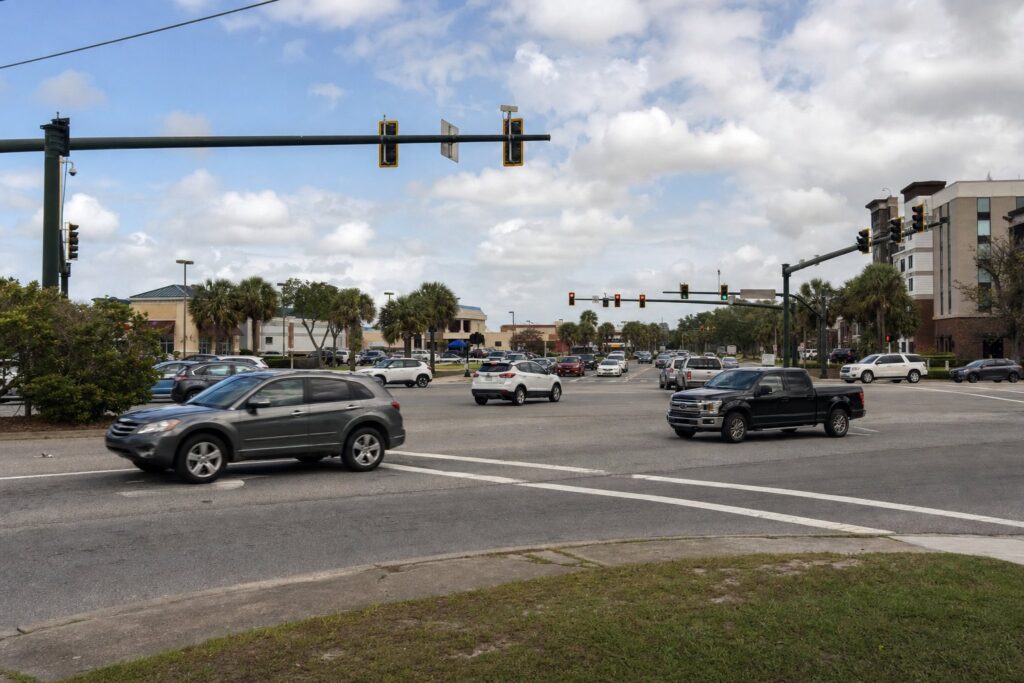
North Charleston’s Most Dangerous Roads and Intersections
North Charleston’s major freight corridors bisect residential neighborhoods, and the city sees serious and fatal crashes on them every year. According to the South Carolina Department of Public Safety (SCDPS), Charleston County records hundreds of injury crashes annually, with North Charleston corridors accounting for a significant percentage.
Ashley Phosphate Road & I-26: A High-Crash North Charleston Interchange
The intersection of Ashley Phosphate Road and I-26 carries heavy interstate and surface-street traffic through North Charleston. Multiple left turn lanes, heavy commercial traffic, and drivers running red lights create hazardous conditions at all hours. Common crash types include:
- Left-turn collisions — Vehicles turning across multiple lanes of opposing traffic
- Rear-end crashes — Sudden stops at red lights during high-speed approaches from I-26 off-ramps
- T-bone accidents — Red-light runners striking vehicles entering the intersection on green
- Pedestrian strikes — Pedestrians crossing the wide, multi-lane road face long exposure times
If you were injured at the Ashley Phosphate/I-26 intersection, Roden Law’s North Charleston office handles these cases regularly and understands the specific traffic engineering failures that contribute to crashes here.
I-26/I-526 Interchange
The interchange demands rapid lane changes, merges at highway speed, and navigation of construction zones related to the ongoing I-526 widening project. Truck traffic from the Port of Charleston amplifies the severity — a collision involving an 80,000-pound tractor-trailer at 60+ mph produces catastrophic injuries.
Rivers Avenue & I-526
The intersection of Rivers Avenue (US-52) and I-526 led the tri-county area in injuries between 2011 and 2015, with 62 people injured in collisions at this single location (Post and Courier analysis of SCDPS collision data). Rivers Avenue is North Charleston’s primary commercial corridor — a high-volume, multi-lane road carrying a mix of passenger vehicles, commercial trucks, and transit buses through dense retail and industrial zones. Contributing factors include:
- High speed differentials between highway traffic exiting I-526 and surface-street traffic
- Heavy truck traffic from nearby industrial and port-related facilities
- Frequent lane changes near shopping centers and fast-food drive-throughs
- Inadequate pedestrian infrastructure despite adjacent bus stops
I-526 & Leeds Avenue
This interchange is especially hazardous due to merging trucks from the nearby port, sudden lane changes by commuters, and heavy traffic from the Boeing South Carolina facility. The weaving pattern required to enter and exit I-526 at Leeds Avenue creates conflict points where vehicles traveling at highway speed must cross paths with slower-moving merging traffic.
Dorchester Road Corridor
Dorchester Road between Ashley Phosphate Road and Ladson carries heavy commuter traffic through a mix of residential, commercial, and industrial zones. The corridor has seen multiple fatal motorcycle and pedestrian crashes. A concrete truck drove off the I-26 overpass near Dorchester Road, and fatal motorcycle-versus-truck collisions have occurred at the Forest Hills Drive intersection. Limited shoulders, aging road surfaces, and a lack of dedicated turn lanes contribute to the danger.
Rivers Avenue (Full Corridor)
Beyond the I-526 interchange, Rivers Avenue from Aviation Avenue to Remount Road is one of the most crash-prone corridors in North Charleston. Overturned cement trucks, high-speed rear-end collisions, and pedestrian fatalities are reported regularly. The road’s width (up to 6 lanes in sections) encourages dangerous speeds while its dense commercial development generates constant turning conflicts.
What to Do If You Are Injured on a North Charleston Road
- Call 911 immediately — A police report documents the scene and establishes fault
- Seek medical attention — Go to Trident Medical Center or Roper St. Francis even if injuries seem minor
- Document the scene — Photograph vehicle positions, road conditions, traffic signals, and injuries
- Do not admit fault — Under South Carolina’s comparative fault rule, anything you say may reduce your recovery
- Contact an attorney before speaking to insurance — Insurance adjusters are trained to minimize payouts
Your Legal Rights After a Crash in North Charleston
Under South Carolina law (S.C. Code § 15-3-530), you have 3 years from the date of your injury to file a personal injury lawsuit. South Carolina’s modified comparative fault rule allows recovery as long as you are less than 51% at fault for the accident — your compensation is reduced by your percentage of responsibility.
Cases involving dangerous road design or maintenance failures may also allow claims against government entities, but these run on a shorter deadline — two years from discovery rather than three — under the South Carolina Tort Claims Act (S.C. Code § 15-78-110), extended to three years only if a verified claim is filed with the agency within one year (S.C. Code § 15-78-80). Contact an attorney promptly to preserve all available claims.
Why Road Design Matters in Your Injury Case
Dangerous intersections are not simply the result of bad drivers. Road design deficiencies — inadequate turn lanes, poor sight lines, missing traffic signals, and outdated lane configurations — contribute to crash frequency and severity. When a government entity or private developer knew or should have known about a dangerous condition and failed to address it, they may bear liability for resulting injuries. Roden Law investigates road design factors in every North Charleston crash case.
Frequently Asked Questions
About the Author

Graeham C. Gillin
Partner, COOGraeham C. Gillin serves as both attorney and Chief Operating Officer at Roden Law. He brings multifaceted expertise with a professional background spanning business management and commercial construction. His diverse experience positions him to lead the firm’s management, growth, and operational success. Education J.D., Charleston School of Law Bachelor’s Degree, Montana State University Bar Admission […]
View Full Profile →