

Key Takeaways
Bay Street in Savannah's Historic District has 2–3 times the statewide crash rate average, created by the collision of 80,000-pound port trucks with narrow 18th-century streets, tourist pedestrian traffic, horse-drawn carriages, and angled parking blind spots. The City of Savannah has passed truck restriction ordinances and GDOT added a raised median, but enforcement gaps and last-mile delivery exemptions keep trucks flowing through one of the most pedestrian-dense corridors in Georgia. Georgia gives injury victims 2 years to file a lawsuit (O.C.G.A. § 9-3-33) and allows recovery if less than 50% at fault. Call Roden Law at (912) 303-5850 immediately to preserve truck GPS routing and surveillance evidence.
Bay Street: Where 80,000-Pound Trucks Meet Cobblestone Streets
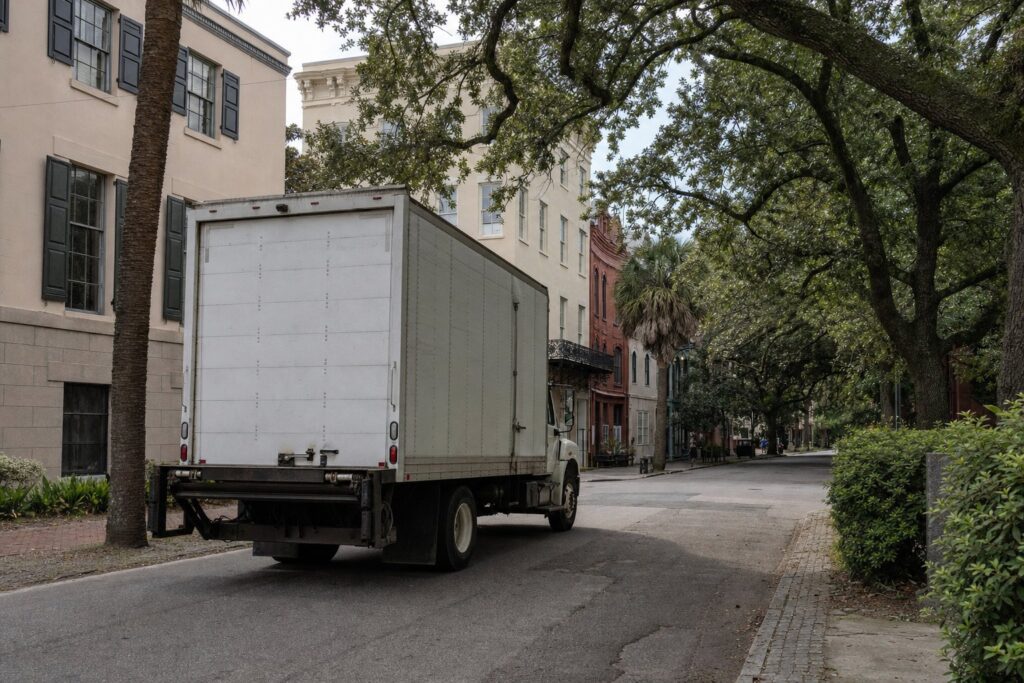
Bay Street runs along the northern edge of Savannah’s Historic District, directly paralleling the Savannah River and serving as one of the primary routes for Port of Savannah truck traffic entering the city. The result is a uniquely dangerous mix: 80,000-pound tractor-trailers sharing narrow, centuries-old streets with tourists, horse-drawn carriages, pedestrians, cyclists, and angled-parked vehicles.
Crash data shows that Bay Street has 2–3 times the statewide crash rate average per mile. The severity of these crashes is amplified by the Historic District’s infrastructure limitations — narrow lanes, cobblestone surfaces, limited sight lines from the tree canopy, and a pedestrian density that few commercial corridors in Georgia can match.
Why Bay Street Is So Dangerous for Truck Traffic
Port-Related Last-Mile Deliveries
The Port of Savannah generates 14,000–16,000 truck moves per day, and a significant portion of last-mile deliveries serve businesses along Bay Street and the surrounding Historic District. Hotels, restaurants, retail shops, and construction sites all require regular truck deliveries — often from vehicles that are too large for the streets they must navigate. Delivery trucks double-park, block sight lines, and create lane obstructions that force other vehicles into oncoming traffic.
Oversized Trucks on Undersized Streets
Bay Street and the surrounding Historic District grid were designed in 1733 for horse-drawn wagons. Modern tractor-trailers with 53-foot trailers must navigate streets with tight turning radii at squares, narrow lane widths, and intersections that provide inadequate clearance. Trucks making turns at Savannah’s famous squares frequently jump curbs, clip parked vehicles, strike pedestrians in crosswalks, and damage historic infrastructure including light poles, benches, and tree canopy.
Angled Parking and Delivery Blind Spots
Bay Street features angled parking that creates dangerous blind spots for truck drivers. Vehicles backing out of angled parking spaces are invisible to truck drivers in adjacent travel lanes until they are already in the truck’s path. Delivery trucks loading and unloading at the curb further reduce lane width and create additional blind spots for through-traffic. Pedestrians stepping between parked vehicles and delivery trucks are especially vulnerable.
Tourist and Pedestrian Density
Savannah’s Historic District attracts nearly 15 million visitors annually. Bay Street — with River Street access points, hotels, restaurants, and the Savannah Convention Center nearby — sees some of the highest pedestrian density in the city. Tourists unfamiliar with the area step into crosswalks and intersections without awareness of truck traffic patterns. Horse-drawn carriage tours share the roadway with trucks, creating extreme speed differentials and unpredictable traffic flow.
Tree Canopy and Infrastructure Damage
Savannah’s iconic live oak canopy creates low-clearance hazards for oversized trucks on Bay Street and adjacent corridors. Trucks striking tree limbs damage historic trees, drop debris onto vehicles below, and can destabilize the truck itself. Oversized trucks have also struck utility lines, traffic signals, and historic structures, causing infrastructure damage that extends well beyond the initial crash.
City of Savannah Truck Restrictions
In response to the escalating danger, the City of Savannah passed an ordinance restricting truck traffic in the Historic District. The ordinance limits through-truck traffic on designated streets, requiring trucks to use approved routes. However, enforcement remains challenging — GPS navigation systems frequently route trucks through the Historic District, and delivery trucks serving local businesses are exempt from many restrictions. Violations continue to put pedestrians and other drivers at risk.
GDOT has also taken steps to improve safety: a raised median was added to Bay Street to eliminate mid-block turns by trucks and other vehicles. The median prevents the most dangerous left-turn movements but has not eliminated rear-end crashes, pedestrian strikes, and right-turn squeeze collisions.
Bay Street Widening Project
A Bay Street widening project is currently underway, aiming to improve traffic flow and separate truck and passenger vehicle lanes where possible. While the project may eventually reduce crash severity, the construction zone itself creates additional hazards: lane shifts, reduced lane widths, construction vehicles mixing with regular traffic, and confused wayfinding for both truck drivers and tourists. Construction zone truck crashes carry enhanced penalties and may involve additional liable parties including the construction contractor and project manager.
Common Crash Types on Bay Street
- Pedestrian strikes: Trucks turning right through crosswalks where pedestrians are in the driver’s blind spot
- Sideswipe collisions: Trucks unable to maintain lane position on narrow streets, striking adjacent vehicles or scraping parked cars
- Right-turn squeeze: Truck trailers cutting corners and crushing vehicles, cyclists, or pedestrians between the trailer and the curb
- Backing crashes: Delivery trucks backing into loading zones, striking pedestrians or vehicles behind them
- Overhead strikes: Oversized trucks hitting tree canopy, utility lines, or historic structures
- Rear-end collisions: Trucks unable to stop for sudden congestion from horse-drawn carriages, tour groups, or red lights
Liable Parties in Bay Street Truck Crashes
| Potentially Liable Party | Basis for Liability |
|---|---|
| Truck driver | Driving an oversized vehicle on a restricted street, failure to check blind spots, excessive speed for conditions |
| Trucking company | Routing trucks through the Historic District, failure to equip trucks with adequate mirror/camera systems, HOS violations |
| Delivery company | Scheduling deliveries during peak pedestrian hours, using oversized vehicles for Historic District deliveries |
| City of Savannah | Inadequate enforcement of truck restrictions, failure to maintain signage, construction zone design defects (subject to Georgia sovereign immunity) |
| GPS/navigation company | Routing commercial trucks through restricted Historic District streets despite known size/weight limitations |
What to Do After a Truck Accident on Bay Street
- Call 911 immediately — Savannah-Chatham Metropolitan Police and Savannah Fire respond to Historic District crashes. Pedestrian injuries should be treated as emergencies.
- Document the truck: Company name, USDOT number, trailer number, and whether the truck was a delivery vehicle or through-traffic. Note if the truck appears to violate Historic District truck restrictions.
- Photograph the scene: Narrow streets, angled parking, delivery trucks blocking sight lines, and any “No Trucks” signage are critical evidence for your claim.
- Check for cameras: Bay Street has extensive surveillance from hotels, restaurants, city traffic cameras, and River Street businesses. Note camera locations near the crash.
- Get medical treatment: Memorial Health University Medical Center is the closest Level I trauma center. Even seemingly minor pedestrian-truck impacts can cause serious internal injuries.
- Contact a truck accident attorney — Evidence from the truck’s ELD, GPS routing history, and business surveillance cameras must be preserved immediately.
Georgia Law: Deadlines & Fault Rules
- Statute of limitations: 2 years from the date of injury (O.C.G.A. § 9-3-33)
- Comparative fault: Georgia allows recovery if you are less than 50% at fault. Your compensation is reduced by your percentage of fault (O.C.G.A. § 51-12-33).
- Punitive damages: Available when trucking companies show willful disregard for safety — routing oversized trucks through restricted zones, falsifying logs, or ignoring known vehicle defects
Free Consultation — Roden Law Savannah
Roden Law’s Savannah office handles truck accident cases on Bay Street and throughout the Historic District. We understand the unique challenges of Historic District truck crashes — restricted routes, pedestrian density, and the liability questions created by trucks that should not have been on these streets. Call (912) 303-5850 for a free consultation — no fees unless we win.
Related resources: Port of Savannah Truck Routes | I-16 Truck Accidents | Abercorn Street Truck Accidents
Related Pages
Frequently Asked Questions
About the Author

Eric Roden
Founding Partner, CEOEric Roden has represented injury victims from the outset of his career and has never advocated on behalf of insurance companies. He focuses on wrongful death, automobile accidents, nursing home negligence, and workers’ compensation law. In 2013, he became a founding partner of Roden Law, dedicated to providing advocacy for injured clients. Education J.D., University […]
View Full Profile →Want more from Roden Law in your Google results?