
Last reviewed: 2026-06-01
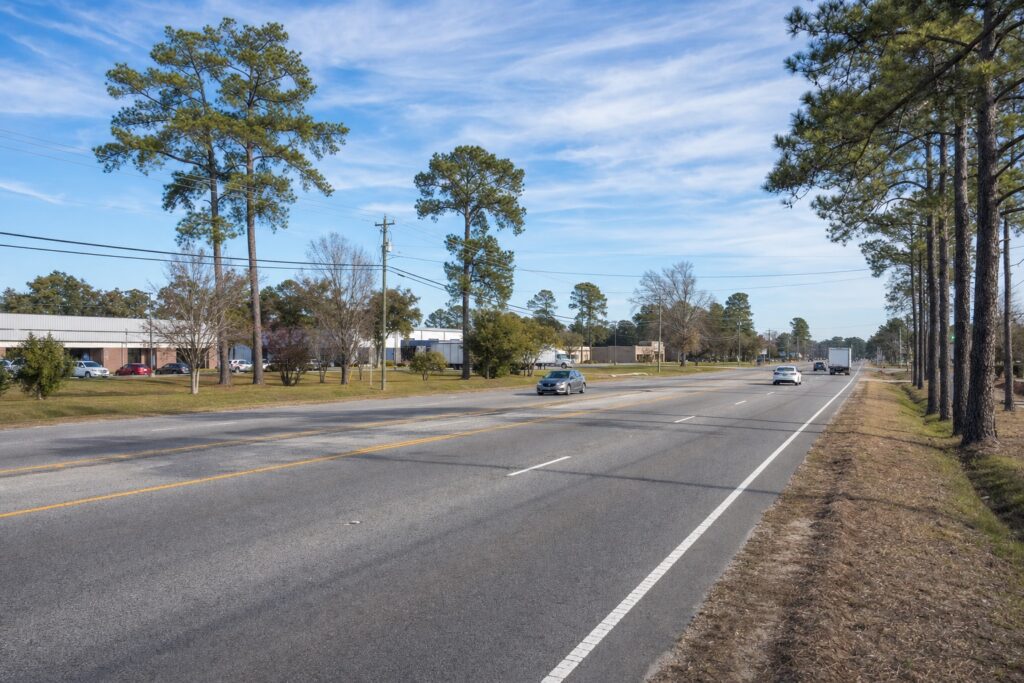
If you or a loved one was hit by an 18-wheeler, tanker, chip truck, or delivery van on the North Rhett Avenue corridor, you need a Hanahan North Rhett Avenue truck accident lawyer who already knows this stretch of road — the Ingevity and WestRock freight gates on Henry Brown Boulevard, the school-zone pinch points around Hanahan Middle and Hanahan High, and the Berkeley County venue rules that decide where your case gets filed. Rhett is not a quiet residential street. It is the old US-52 alignment, now a 4-lane, 45 mph arterial pouring industrial freight, shift-change worker traffic, and weekend retail volume through one of Berkeley County’s most accident-prone commercial spines. When a fully loaded truck hits a passenger car here, the math is brutal and the recovery path is technical.
Key Takeaways
- South Carolina gives you 3 years from the crash date to file a personal-injury or wrongful-death lawsuit under S.C. Code § 15-3-530(5) — Berkeley County crashes are no exception.
- Hanahan sits in Berkeley County, not Charleston County. North Rhett truck cases are filed in the Berkeley County Court of Common Pleas (9th Judicial Circuit, Moncks Corner) — not Charleston.
- Federal Motor Carrier Safety Regulations (49 C.F.R. Parts 350–399) govern interstate trucks on Rhett — hours-of-service, ELD, and inspection records are recoverable evidence.
- South Carolina’s minimum 25/50/25 liability limits under S.C. Code § 38-77-140 rarely cover a serious truck crash — UM/UIM stacking under § 38-77-160 is usually the key recovery lever.
- Ingevity / WestRock-related crashes layer workers’ compensation against third-party negligence — § 42-1-540 preserves the third-party claim alongside comp.
- South Carolina is a modified comparative-negligence state (50% bar) under Nelson v. Concrete Supply Co., 303 S.C. 243 (1991) — fault under 51% still recovers, reduced by your share.
- Roden Law’s contingency model — no fees unless we win — applies to every Hanahan North Rhett Avenue truck accident lawyer matter.
Why North Rhett Avenue Generates So Many Truck Crashes
North Rhett Avenue is a four-lane, 45 mph secondary arterial through the Gold Cup Springs and Lakeview neighborhoods of Hanahan, Berkeley County. It is the old US-52 alignment — a corridor that pre-dates I-26 and I-526 — and still functions as the commercial spine connecting Park Circle in North Charleston, the Ingevity / WestRock industrial complex on Henry Brown Boulevard, and the Goose Creek freight chain north of the city.
That layered traffic mix is the problem. On any weekday the Rhett corridor sees tankers and chip trucks moving in and out of Ingevity and WestRock, delivery vans hitting the retail strip near Tanner Plantation, parents on school runs to Hanahan Middle School (0.86 mi off the corridor) and Hanahan High School (1.11 mi), commuter cars flowing between Hanahan, Park Circle, and Goose Creek, and industrial shift-change waves at the Henry Brown gates twice a day. The speed differential between a fully loaded tractor-trailer running 45 mph and a parent pulling out of a strip-center driveway is where catastrophic injury claims are born.
According to the Federal Motor Carrier Safety Administration (FMCSA) Large Truck and Bus Crash Facts, fatal crashes involving large trucks have climbed by more than 49% over the past decade, with most occurring on non-interstate arterials like North Rhett Avenue. According to NHTSA’s Traffic Safety Facts: Large Trucks, large trucks were involved in roughly 5,936 fatal crashes nationwide — and occupants of the other vehicle accounted for the overwhelming majority of fatalities. And according to SCDOT’s South Carolina Traffic Collision Fact Book, Berkeley County consistently ranks in the top tier of counties for commercial-vehicle collision volume.
Graeham C. Gillin, a partner and Chief Operating Officer at Roden Law, tells families plainly why this stretch is so dangerous: the Rhett corridor was built when the area was mostly rural, and modern industrial freight, suburban school traffic, and an aging signal grid are now stacked on infrastructure that was never engineered for any of it.
The Berkeley County Venue Question — Why It Matters Where You File
A truck crash inside the Hanahan city limits is a Berkeley County case, not a Charleston County case. That distinction shows up in three places:
- Berkeley County Court of Common Pleas (9th Judicial Circuit) is the trial venue, seated in Moncks Corner. Civil discovery deadlines, motion practice, and trial calendars follow the 9th Circuit’s Berkeley County local order — not the Charleston County calendar.
- Berkeley County Magistrate’s Court handles civil claims up to $7,500 — usually too small for a serious truck case, but relevant for property-only sub-claims.
- U.S. District Court for the District of South Carolina, Charleston Division is the federal venue if your case is removed — common when the trucking company is out-of-state and the amount in controversy exceeds $75,000.
Filing in the wrong county produces a motion to transfer venue, lost time against the three-year statute under S.C. Code § 15-3-530, and an opposing carrier hunting for procedural levers to delay a payout.
The Ingevity / WestRock Cargo Layer
The Ingevity / WestRock industrial complex sits on Henry Brown Boulevard, just off the Rhett corridor near Ingevity-WestRock Park (1.06 mi from the cluster centroid). It generates a heavy stream of chemical tankers, paper-products flatbeds, chip trucks, and contractor pickups feeding the boulevard.
Crashes involving those vehicles layer multiple claims: the driver’s personal liability, the motor carrier’s vicarious liability under respondeat superior, a workers’ compensation claim if the injured person was on the clock, a separate third-party negligence claim preserved by S.C. Code § 42-1-540 (workers’ comp exclusivity does not bar suit against a third-party at-fault driver), and a possible premises claim. We build these in parallel — comp covers medical and wage benefits quickly; the third-party file is where pain and suffering, future earnings, and loss of consortium live.
Common Crash Patterns We See on the Rhett Corridor
| Crash Pattern | Where It Happens | Primary Legal Theory |
|---|---|---|
| Rear-end at retail/industrial driveway | Rhett retail strip near Tanner Plantation | Following too close; S.C. Code § 56-5-1520 (basic speed law) |
| Left-turn / oncoming collision | Unsignalized side streets along the old US-52 alignment | Failure to yield; § 56-5-1810 right-of-way |
| Heavy-truck override | Henry Brown / Ingevity-WestRock gate area | FMCSA hours-of-service; 49 C.F.R. Parts 350–399 |
| School-zone pedestrian strike | Hanahan Middle / Hanahan High catchment | § 56-5-3220 (school-zone speed) |
| Hit-and-run / uninsured driver | Gold Cup Springs / Lakeview feeders | § 56-5-6240 + UM coverage under § 38-77-150 |
| Drunk-driver weekend crash | Rhett retail strip Friday/Saturday evening | § 56-5-2930 DUI + punitive damages |
To figure out which pattern fits your facts, see our North Charleston truck accident lawyers pillar and the sub-types for 18-wheeler and semi-truck accident lawyers, commercial van and delivery truck accident lawyers, and cement and construction truck accident lawyers.
FMCSA Evidence — Why the Trucking Company’s Records Win Cases
Interstate carriers running freight through Hanahan are bound by the Federal Motor Carrier Safety Regulations (49 C.F.R. Parts 350–399) — the most powerful evidence engine in trucking litigation, because the law forces the carrier to keep records that prove its own negligence: hours-of-service logs under Part 395, ELD data, pre-trip and post-trip inspections under Part 396, driver qualification files under Part 391, and drug-and-alcohol testing records under Part 382.
According to the FMCSA Large Truck Crash Causation Study, driver-related factors — fatigue, inattention, and prescription medication use — drive the overwhelming majority of large-truck crashes where the truck driver was assigned a critical reason. That is why we send a spoliation letter demanding preservation of ELD data, dashcam footage, and inspection records within days of being retained. Many carriers cycle ELD data on a 6-month schedule; a delayed letter arrives after evidence is overwritten.
For more, see how FMCSA violations strengthen a truck accident claim, fatigued trucker accident claims, and the broader I-26 and I-526 truck accident liability discussion — Henry Brown Boulevard hands traffic directly to the I-526 connector.
SC’s 25/50/25 Problem — and How UM/UIM Stacking Solves It
South Carolina’s minimum auto-liability limits under S.C. Code § 38-77-140 are 25/50/25: $25,000 per person for bodily injury, $50,000 per accident, and $25,000 for property damage. According to U.S. Bureau of Labor Statistics and HCUP National Inpatient Sample data, the average inpatient stay for a motor-vehicle trauma admission runs well into five figures — before surgery, rehab, or follow-up imaging. A single trauma admission at Trident or MUSC can blow past the $25,000 per-person cap before discharge.
The recovery lever is underinsured-motorist (UIM) stacking under S.C. Code § 38-77-160. South Carolina lets you stack UIM coverage across multiple policies in the same household, multiplying the available coverage when the at-fault driver’s liability limits are exhausted. Combined with mandatory uninsured-motorist coverage under S.C. Code § 38-77-150, stacking turns a $25,000 ceiling into six-figure coverage that actually matches the injury.
See South Carolina UM/UIM stacking explained, South Carolina’s three-year personal-injury statute of limitations, and how South Carolina courts calculate pain and suffering.
What to Do in the First 72 Hours After a North Rhett Truck Crash
The first three days set the file. Graeham C. Gillin tells every truck-crash client the same thing: get treated, lock down the evidence, and get a lawyer in front of the carrier before their adjuster gets in front of you.
- Get treatment — Trident Medical Center is roughly 4 mi west via Henry Brown / Trident Medical Drive; MUSC Health (Level I trauma) is about 12 mi south via I-526; Roper St. Francis Berkeley is about 9 mi northwest.
- Call 911 and get a crash report — Hanahan Police, Berkeley County Sheriff’s Office, or SC Highway Patrol will respond depending on jurisdiction.
- Photograph the scene — vehicle positions, damage angles, skid marks, the truck’s DOT and trailer numbers, the load configuration.
- Identify witnesses — Rhett corridor crashes often have witnesses at adjacent commercial driveways and around Creekside Park and Murray Park.
- Get everyone in the car checked, even if injuries seem minor — soft-tissue and traumatic-brain injuries from truck impacts often present 24–72 hours later.
- Do not give a recorded statement to the trucking company’s insurer before talking to a lawyer.
- Hire counsel quickly so a spoliation letter goes out before ELD and dashcam data cycles off.
Our step-by-step guide after a South Carolina car crash walks through each step in more detail.
Related Berkeley County and Lowcountry Resources
For the passenger-car side of a Rhett crash, see North Charleston car accident lawyers. For pedestrian or bicyclist strikes near Hanahan Middle, Hanahan High, Creekside Park, or Murray Park, see North Charleston pedestrian accident lawyers, school zone pedestrian accident claims, and South Carolina pedestrian right-of-way rules. For fatal-crash families, North Charleston wrongful death attorneys explains the personal-representative requirement. Injured Ingevity / WestRock workers should also see our North Charleston workers’ compensation lawyers. For the broader Berkeley County picture, see the Goose Creek and US-52 military-traffic crash guide, South Carolina’s deadliest intersection at Ashley Phosphate and I-26, and the Roden Law personal injury team pillar.
Frequently Asked Questions
Q: What does a Hanahan North Rhett Avenue truck accident lawyer actually do that I can’t do myself?
A: A Hanahan North Rhett Avenue truck accident lawyer immediately sends a spoliation letter to preserve ELD data, hours-of-service logs, and dashcam footage under 49 C.F.R. Parts 350–399. They identify every potentially liable party — driver, motor carrier, broker, shipper, maintenance vendor — and file in the correct Berkeley County venue before the three-year SC statute of limitations runs.
Q: Why does it matter that Hanahan is in Berkeley County and not Charleston County?
A: Because the venue determines where your case is filed and tried. North Rhett truck crashes are filed in the Berkeley County Court of Common Pleas (9th Judicial Circuit, Moncks Corner) — not in Charleston. Filing in the wrong county risks a motion to transfer, lost time inside the SC § 15-3-530 three-year statute, and unnecessary procedural delay.
Q: How long do I have to file a truck-accident lawsuit in South Carolina?
A: Under S.C. Code § 15-3-530(5), you have three years from the date of the crash to file a personal-injury lawsuit. Wrongful-death actions are also governed by a three-year statute under § 15-3-530. Claims against state actors (such as SCDOT for signal or signage allegations) trigger the SC Tort Claims Act under § 15-78-10 with additional notice requirements.
Q: What if the at-fault truck driver only has South Carolina’s minimum 25/50/25 coverage?
A: South Carolina’s minimum 25/50/25 limits under S.C. Code § 38-77-140 rarely cover a serious truck crash. The recovery lever is underinsured-motorist (UIM) stacking under S.C. Code § 38-77-160, combined with mandatory uninsured-motorist coverage under § 38-77-150. Stacking across household policies often turns a $25,000 cap into meaningful six-figure coverage.
Q: I was working for an Ingevity or WestRock contractor when the crash happened. Does workers’ comp bar a lawsuit?
A: No. Workers’ compensation exclusivity under S.C. Code § 42-1-540 bars suit against your employer, but it does not bar a third-party negligence action against the at-fault truck driver and their motor carrier. Serious cases run both files in parallel — comp covers immediate medical and wage benefits; the third-party claim recovers pain and suffering and future damages.
Q: What happens if the truck crash on North Rhett was caused by an uninsured or hit-and-run driver?
A: Under S.C. Code § 38-77-150, every South Carolina auto policy carries mandatory uninsured-motorist coverage. Combined with stacking under § 38-77-160 and the hit-and-run reporting provisions of S.C. Code § 56-5-6240, an uninsured-driver crash on Rhett can still produce a meaningful recovery — even without a named at-fault defendant — if the file is built correctly from day one.
About the Author
Graeham C. Gillin, partner and Chief Operating Officer at Roden Law, is admitted in both South Carolina and Georgia. He has built the firm’s truck-accident practice around aggressive evidence preservation — FMCSA records, ELD data, dashcam footage — and the UM/UIM stacking work SC’s 25/50/25 limits make essential. If you’ve been injured in a Hanahan North Rhett Avenue truck crash, call 1-844-RESULTS for a free case review. No fees unless we win.
About the Author