

Key Takeaways
South Carolina law (S.C. Code § 56-5-6410) requires children to be secured by age and size in four stages: rear-facing until at least age 2 (or until they outgrow the seat's height/weight limit), forward-facing with a harness after that, a belt-positioning booster once they outgrow the harness (generally from age 4), and a regular seat belt only once the child is at least 8 years old or at least 57 inches tall and the belt fits properly. The safest practice is to keep each child in every stage as long as the seat allows before moving up. Following the law protects your child, and a violation cannot be used against a claim: S.C. Code § 56-5-6460 makes a child-restraint violation inadmissible as evidence in any civil action. Georgia differs — O.C.G.A. § 40-8-76(c) says only that a violation is not negligence per se or contributory negligence per se.
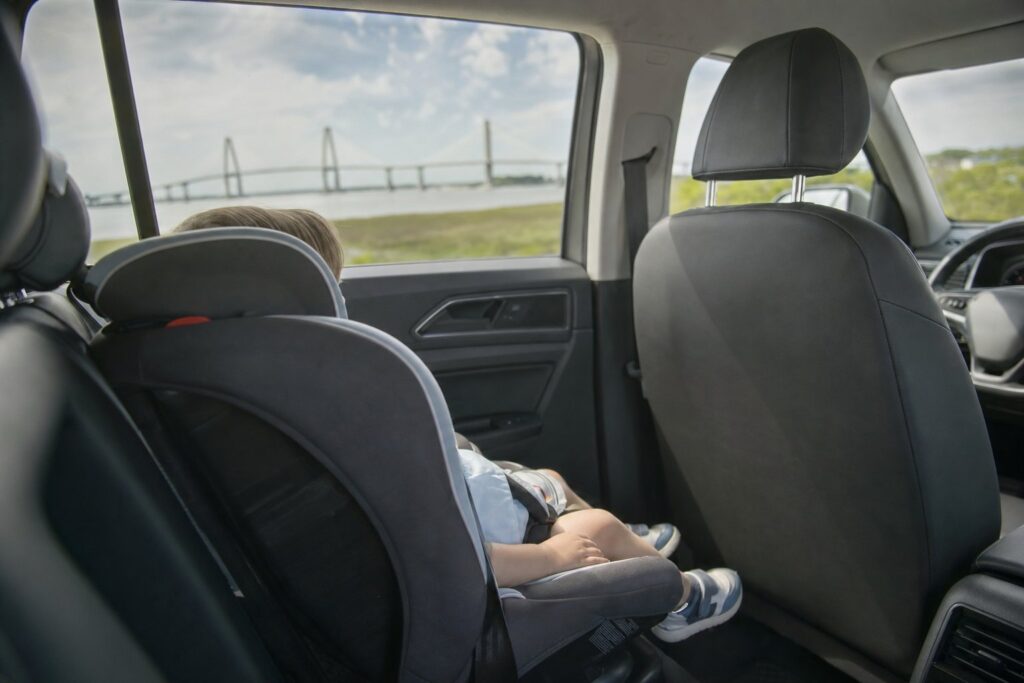
South Carolina requires every child riding in a passenger vehicle to be secured in a child restraint that matches the child’s age and size, stepping up through four stages as the child grows: rear-facing seat, then forward-facing harness seat, then booster seat, and finally a standard seat belt once the child is big enough to fit it correctly. These requirements are set out in S.C. Code § 56-5-6410 and the sections that follow. The guiding safety principle behind the law is simple: keep your child in each stage for as long as the seat’s height and weight limits allow before moving to the next one.
This guide explains South Carolina’s child-restraint rules in plain language, the four stages by age and size, and how following them protects both your child and any injury claim if a crash happens. The current requirements come from S.C. Code § 56-5-6410, which was rewritten into its present four-stage form in 2017.
What are the car seat laws in South Carolina?
South Carolina’s child passenger safety law requires drivers to properly secure children in an age- and size-appropriate restraint system whenever they ride in a vehicle. The law is structured in stages, and a child moves up to the next stage only when they have outgrown the height or weight limit of their current seat — not simply when they reach a certain birthday. The stages are:
- Rear-facing car seat — from birth until at least age 2, in a rear seat, kept rear-facing until the child reaches the maximum height or weight the seat’s manufacturer allows.
- Forward-facing car seat with a harness — after age 2 (or once a younger child outgrows rear-facing), secured by the seat’s internal harness in a rear seat, until the child exceeds the harness seat’s highest height or weight limit.
- Booster seat — once a child is at least 4 and has outgrown the forward-facing harness, using the vehicle’s lap-and-shoulder belt (never the lap belt alone) to position it correctly across the child.
- Adult seat belt — only once the child is at least 8 years old or at least 57 inches tall and the lap-and-shoulder belt fits properly on its own.
South Carolina’s law does not set a single weight number for the first two stages — instead, you follow the height and weight limits printed on your specific car seat by its manufacturer. The age-8-or-57-inches rule is the statute’s threshold for when a child may move to the adult belt, and even then only if it fits correctly.
When can my child ride in a booster seat in South Carolina?
A child moves into a booster seat once they have outgrown the height or weight limits of their forward-facing harness seat. The booster’s job is to raise the child so the vehicle’s adult lap-and-shoulder belt crosses the strong parts of the body — the lap belt low across the hips and the shoulder belt across the center of the shoulder and chest, not the neck or abdomen. Safety experts widely recommend keeping a child in a booster until the seat belt fits correctly without it, which often means staying in a booster longer than the bare legal minimum. Under South Carolina law, a child generally moves into a booster from age 4 (after outgrowing the forward-facing harness) and stays in it until they are at least 8 years old or 57 inches tall and the belt fits properly.
When can my child stop using a booster and use a seat belt?
A child is ready for an adult seat belt alone when the belt fits properly: the child can sit all the way back against the seat, knees bend comfortably at the edge, the lap belt sits low on the hips (not the stomach), and the shoulder belt crosses the chest and shoulder rather than the neck or face. Because children grow at different rates, fit — not just age — is what matters. Moving a child out of a booster too early is one of the most common car-seat mistakes and increases injury risk in a crash. Under S.C. Code § 56-5-6410, a child may use the adult belt alone once they are at least 8 years old or at least 57 inches tall and the belt passes a three-part fit test: the lap belt crosses the thighs and hips (not the abdomen), the shoulder belt crosses the center of the chest (not the neck), and the child can sit back against the seat with knees bent over the edge.
What is the safest practice, beyond the legal minimum?
The law sets a floor, not a ceiling. According to child-passenger-safety guidance from the National Highway Traffic Safety Administration, children are safest when they remain in each stage of restraint — rear-facing, forward-facing harness, and booster — until they reach the upper height or weight limit of that seat, rather than graduating to the next stage at the earliest allowed moment. Practically, that means:
- Keep your child rear-facing as long as the seat allows.
- Use the harness until the child outgrows it by height or weight.
- Keep the child in a booster until the adult belt fits correctly.
- Children under 13 are safest in the back seat.
How do car seat laws affect an injury claim in South Carolina?
Parents often ask whether a car-seat problem can be used against their child’s claim. In South Carolina it cannot. S.C. Code § 56-5-6460 provides that a violation of the child-restraint article “shall not constitute negligence, per se, contributory negligence nor be admissible as evidence in any trial of any civil action or trial.” An at-fault driver’s insurer cannot introduce a car-seat violation to argue comparative fault or to reduce what it owes your child. Georgia’s rule is different: O.C.G.A. § 40-8-76(c) provides only that a violation “shall not constitute negligence per se nor contributory negligence per se,” and contains no equivalent bar on admissibility. Restraining your child correctly is first and foremost about keeping them safe.
If your child was hurt in a crash caused by someone else, a Roden Law attorney can review what happened at no cost and explain your options. We work on a contingency fee basis — no upfront cost and no fees unless we win.
Get help after a South Carolina crash involving your child
A crash that injures your child is every parent’s worst moment. If another driver was at fault, you should not have to face the medical bills and the insurance company alone. Roden Law’s South Carolina attorneys can investigate, deal with the insurers, and fight for full compensation for your child’s injuries.
For more on how these claims work, see our guide to the South Carolina statute of limitations, how comparative negligence can affect recovery, and our car accident practice page. You can also reach our Columbia office at (803) 219-2816 or our Charleston office at (843) 790-8999.
Related Pages
Frequently Asked Questions
About the Author

Graeham C. Gillin
Partner, COOGraeham C. Gillin serves as both attorney and Chief Operating Officer at Roden Law. He brings multifaceted expertise with a professional background spanning business management and commercial construction. His diverse experience positions him to lead the firm’s management, growth, and operational success. Education J.D., Charleston School of Law Bachelor’s Degree, Montana State University Bar Admission […]
View Full Profile →