

Key Takeaways
South Carolina premises liability settlements range from tens of thousands of dollars to several million, depending on the hazard, how badly you were hurt, and whether the owner knew about the danger. Premises liability is broad — it covers negligent security and assaults, inadequate maintenance, pool, stairwell, and parking-lot hazards, and slip and falls. South Carolina places no cap on compensatory damages in ordinary cases, but your award is reduced by your fault (barred at 51%), and Tort Claims Act caps of $300,000 per person / $600,000 per occurrence apply on government property. You generally have 3 years to file (S.C. Code § 15-3-530).
Most South Carolina premises liability settlements fall between roughly $25,000 and $500,000, while the most serious cases — a shooting at an under-secured apartment complex, a child drowning in an unfenced pool, a catastrophic fall from a defective stairwell — can reach several million dollars or more. Premises liability is a broad category: it covers any injury caused by a property owner’s failure to keep their premises reasonably safe, not just slip and falls. There is no single “average” that fits every case.
Below we explain honestly how South Carolina premises liability case value is calculated, the many hazard types this area of law covers, illustrative ranges by injury severity, and how South Carolina law shapes your final payout. These figures are educational illustrations only — past results do not guarantee future outcomes, and every case is unique.
What Premises Liability Covers in South Carolina
Premises liability is the area of law that holds property owners and occupiers responsible when their negligence makes a property unsafe and someone is hurt. It is much broader than a slip and fall. South Carolina premises cases include:
- Negligent security and assaults — a robbery, shooting, or assault at an apartment complex, bar, parking garage, or hotel that failed to provide reasonable lighting, cameras, or security despite known crime risk.
- Inadequate maintenance — collapsing balconies, falling fixtures, exposed wiring, or structures left in disrepair.
- Pool and water hazards — drownings and near-drownings at unfenced or unsupervised pools, especially involving children.
- Stairwell and railing failures — falls caused by broken handrails, defective treads, or code violations.
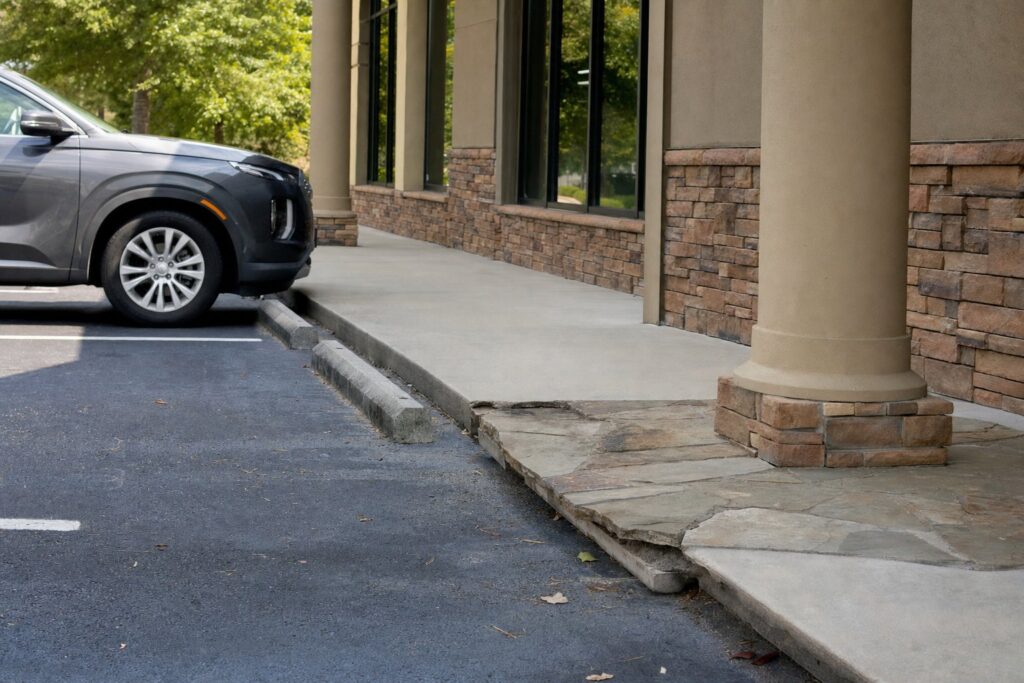
- Parking-lot hazards — potholes, poor lighting, unmarked drop-offs, and uncontrolled traffic.
- Slip and falls — one common subset of premises liability, covered in depth on our slip and fall case value page.
The type of hazard matters for value: a negligent-security case that involves a serious assault or death often carries far higher stakes than a minor trip-and-fall, both because the injuries are catastrophic and because the owner’s conduct can support punitive damages.
What Determines the Value of a South Carolina Premises Liability Case
Premises liability value is determined by the strength of your liability case and the size of your damages, working together. You generally must show the owner knew or should have known about the dangerous condition (notice) and failed to address it.
Economic and non-economic damages
Once liability is established, value scales with your damages — economic (medical bills, lost wages, future care) and non-economic (pain and suffering, mental anguish, loss of enjoyment of life). South Carolina places no cap on these compensatory damages in an ordinary premises case; the statutory non-economic cap applies only to medical-malpractice claims.
Graeham C. Gillin, a partner at Roden Law’s Charleston office, notes that in negligent-security cases, evidence of prior crime on or near the property — police reports, prior incidents, and the owner’s knowledge of the risk — often makes the difference between a modest claim and a substantial one, because it establishes that the harm was foreseeable and preventable.
Typical Settlement Ranges by Injury Severity
Premises liability settlement value scales with injury severity once liability is clear. The illustrative ranges below reflect how value generally tiers up — they are educational examples, not predictions, and your case could fall well outside them.
| Injury severity | Typical examples | Illustrative settlement range |
|---|---|---|
| Minor | Sprains, minor cuts, short recovery | $10,000 – $50,000 |
| Moderate | Fractures, surgery, several months of treatment | $50,000 – $250,000 |
| Severe | Permanent injury, assault injuries, long-term impairment | $250,000 – $1,000,000+ |
| Catastrophic | Brain injury, spinal cord injury, drowning, wrongful death | $1,000,000 – several million+ |
These ranges are illustrations only. Two premises cases with the same injury can settle for very different amounts depending on how clear the owner’s negligence is, your comparative fault, and available insurance. No range here is a promise or a prediction.
How South Carolina Law Affects Your Payout
South Carolina law affects your premises liability payout in three major ways: the deadline to file, how your own fault reduces your award, and special caps when a government entity owns the property.
The filing deadline (statute of limitations)
In South Carolina, you generally have 3 years from the date of injury to file a premises liability lawsuit under S.C. Code § 15-3-530. Miss that deadline and you typically lose the right to recover. For government property, the deadline is generally two years instead (S.C. Code § 15-78-110), or three if a verified claim is filed with the agency within one year (S.C. Code § 15-78-80).
Comparative fault reduces your award
South Carolina follows modified comparative negligence: you can recover as long as you are less than 51% at fault, but your award is reduced by your percentage of fault. If your case is worth $400,000 and you are 15% at fault, you recover $340,000; at 51% or more, you recover nothing. Learn how South Carolina comparative negligence works.
Government property: the Tort Claims Act caps
If your injury happened on public property — a city or county facility, a public housing complex, a school, or an SCDOT-maintained area — the South Carolina Tort Claims Act (S.C. Code § 15-78-120) caps damages at $300,000 per person and $600,000 per occurrence and bars punitive damages against the government. Claims against a charitable organization, such as a nonprofit hospital or church, are limited to the same $300,000 and $600,000 amounts (S.C. Code § 33-56-180). These fixed caps are a critical disclosure if a government entity is responsible for the property where you were hurt.
Punitive damages in serious cases
Punitive damages may be available when a private owner acted recklessly — for example, ignoring repeated warnings about violent crime or a known deadly hazard. Under S.C. Code § 15-32-530, punitive damages are generally capped at the greater of three times compensatory damages or an inflation-adjusted minimum (about $739,000 as of 2026, adjusted annually). They are not available against a government defendant and are never guaranteed.
How Premises Liability Settlements Are Calculated
A premises liability settlement is calculated by first establishing liability, then adding your economic damages to your non-economic damages, and finally adjusting for fault and available insurance.
- Liability comes first — proving the owner knew or should have known about the hazard and failed to act.
- Special damages (economic) are added up from medical bills, wage statements, and future-care estimates.
- General damages (non-economic) are estimated from injury severity and permanence, often using a rough “multiplier” of the economic damages.
- Fault and coverage then adjust the total — reduced by your comparative-fault share and limited by the owner’s liability insurance (or Tort Claims Act caps on public property).
The multiplier is a rough industry concept, not a South Carolina legal formula. No lawyer can promise a particular number; the real value comes from the specific facts and evidence.
Why Roden Law for Your South Carolina Premises Liability Case
Firm-wide, Roden Law has recovered more than $300 million for injured clients across more than 5,000 cases of all types, and holds a 4.9-star average client rating. These figures reflect results across every kind of injury claim the firm handles, not premises cases alone, and are shared to show the firm’s overall track record rather than to predict any individual outcome. In a premises case, our South Carolina attorneys focus on proving notice, establishing liability, and identifying every source of available insurance coverage — the factors that most directly drive what a claim is worth.
This result is shared to show what is possible in the most serious cases. It is not a promise or prediction. Past results do not guarantee future outcomes, and every case is unique. If you want an honest assessment of what your South Carolina premises liability claim may be worth, a Roden Law attorney can review your case at no cost. There are no fees unless we win.
For a fall specifically, see our South Carolina slip and fall case value guide. To learn more about how these claims work, see our premises liability practice page, and our related value guides for car accidents and wrongful death. You can also reach our Charleston office directly to speak with an attorney.
Related Pages
Frequently Asked Questions
About the Author

Graeham C. Gillin
Partner, COOGraeham C. Gillin serves as both attorney and Chief Operating Officer at Roden Law. He brings multifaceted expertise with a professional background spanning business management and commercial construction. His diverse experience positions him to lead the firm’s management, growth, and operational success. Education J.D., Charleston School of Law Bachelor’s Degree, Montana State University Bar Admission […]
View Full Profile →