

Key Takeaways
Most South Carolina truck accident settlements range from roughly $50,000 for moderate injuries to several million dollars for catastrophic ones, with no general cap on damages. Value depends on your medical bills, lost income, pain, fault share, and the truck's commercial insurance limits. South Carolina gives you 3 years to file (S.C. Code § 15-3-530). Every case is unique and no result is guaranteed.
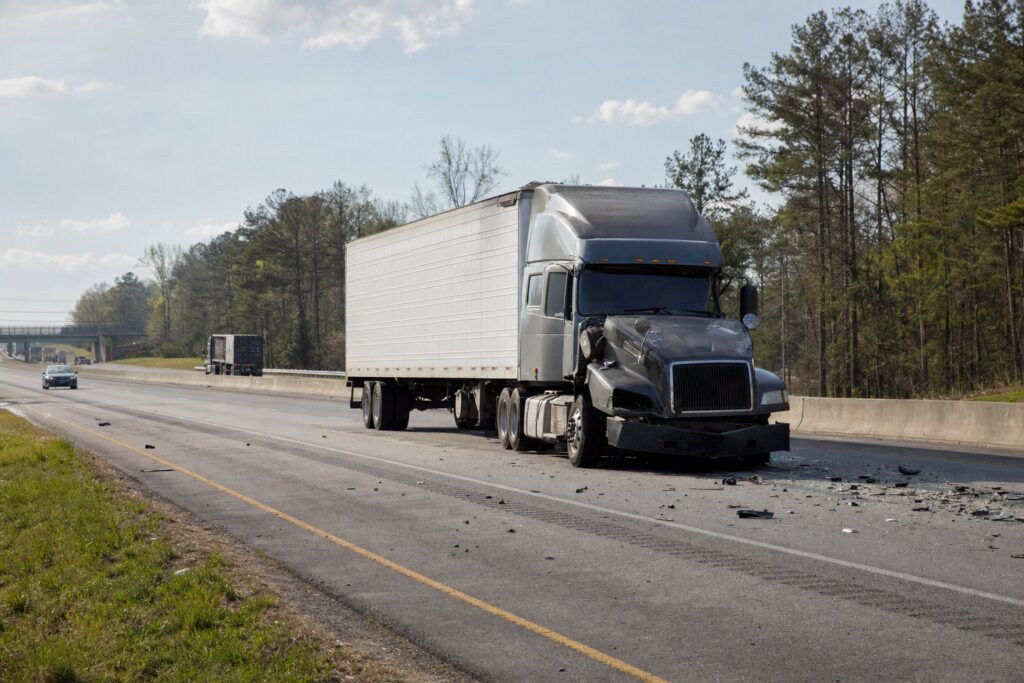
Most South Carolina truck accident settlements fall between roughly $50,000 and $500,000 for moderate-to-serious injuries, while catastrophic cases involving permanent disability, paralysis, or death can settle for several million dollars or more. What your case is actually worth depends on the severity of your injuries, your total medical bills and lost income, who was at fault, and how much commercial insurance coverage is available. There is no single “average” that fits every claim.
Below, we explain honestly how truck accident case value is calculated in South Carolina, the value drivers that matter most, illustrative ranges by injury severity, and how South Carolina law shapes your final payout. These figures are educational illustrations only — past results do not guarantee future outcomes, and every case is unique.
What Determines the Value of a South Carolina Truck Accident Case
The value of a South Carolina truck accident case is determined by your total damages — the measurable financial losses plus the human losses the crash caused. South Carolina law lets injured victims recover two broad categories of compensatory damages, and the size of each category drives the settlement.
Economic damages (special damages)
Economic damages are your documented out-of-pocket and financial losses, and they form the measurable backbone of every claim. These include:
- Past and future medical bills — emergency care, surgery, hospitalization, rehabilitation, medication, and future treatment.
- Lost wages and lost earning capacity — the income you missed and any reduction in your ability to earn going forward.
- Property damage — repair or replacement of your vehicle.
- Out-of-pocket costs — medical devices, home modifications, in-home care, and travel to appointments.
Non-economic damages (general damages)
Non-economic damages compensate the human harm that has no receipt but is just as real. South Carolina places no general cap on these damages in ordinary truck and auto injury cases — the statutory non-economic cap applies only to medical malpractice claims, not to truck crashes. Non-economic damages include:
- Pain and suffering — physical pain from the injury and its treatment.
- Mental anguish and emotional distress — anxiety, depression, and PTSD after a serious wreck.
- Loss of enjoyment of life — the inability to do the things you used to do.
- Disfigurement and permanent impairment — scarring, amputation, or lasting disability.
According to the National Highway Traffic Safety Administration, large trucks can weigh 20 to 30 times more than passenger vehicles, which is why truck crash injuries — and the resulting non-economic damages — tend to be far more severe than ordinary car crashes.
Typical Settlement Ranges by Injury Severity
Truck accident settlement value scales directly with injury severity, because the more serious and permanent the harm, the larger both your economic and non-economic damages become. The illustrative ranges below reflect how value generally tiers up — they are educational examples, not predictions, and your case could fall well outside them.
| Injury severity | Typical examples | Illustrative settlement range |
|---|---|---|
| Minor | Soft-tissue strains, minor whiplash, full recovery | $10,000 – $50,000 |
| Moderate | Broken bones, herniated discs, surgery with recovery | $50,000 – $250,000 |
| Severe | Multiple surgeries, permanent limitations, long rehab | $250,000 – $1,000,000+ |
| Catastrophic | Brain injury, spinal cord injury, paralysis, amputation, wrongful death | $1,000,000 – several million+ |
These ranges are illustrations only. Two cases with the same diagnosis can settle for very different amounts depending on fault, insurance limits, the strength of the evidence, and how the injury affects that specific person’s life. No range here is a promise or a prediction of what your case is worth.
According to the South Carolina Department of Public Safety, large commercial vehicles are involved in thousands of collisions on the state’s roads each year, and the most severe of those crashes drive the high end of these settlement ranges.
Why Truck Accident Cases Are Worth More Than Car Accident Cases in South Carolina
Truck accident cases are typically worth more than car accident cases because commercial trucks carry far higher insurance limits and because more than one party can be held liable. Both factors expand the pool of money actually available to pay a serious claim.
Higher commercial insurance limits
Commercial trucks must carry far more liability insurance than passenger cars, which means more coverage is available when injuries are catastrophic. According to the Federal Motor Carrier Safety Administration, interstate trucks hauling general freight must carry at least $750,000 in liability coverage, and many carriers hold $1 million or more — compared with South Carolina’s $25,000 minimum for private passenger vehicles. That gap is often the difference between a capped car claim and a fully compensated truck claim.
Multiple defendants and multiple policies
Truck crashes frequently involve several liable parties, each with its own insurance, which increases the total compensation available. Potentially responsible parties can include:
- The truck driver who caused the crash.
- The trucking company (motor carrier) that employed the driver.
- The broker that arranged the load.
- The cargo loader if shifting or overweight cargo contributed.
- The truck or parts manufacturer if a mechanical failure was involved.
Graeham C. Gillin, a partner at Roden Law’s Charleston office, notes that identifying every liable party early is one of the most important steps in a South Carolina truck case, because each additional defendant can bring another insurance policy to the table and meaningfully change what a catastrophic claim is ultimately worth.
According to the Insurance Institute for Highway Safety, the vast majority of deaths in large-truck crashes are occupants of the other vehicle, underscoring why these claims so often involve the most serious — and most valuable — injury categories.
How South Carolina Law Affects Your Payout
South Carolina law affects your payout in three major ways: the deadline to file, how your own fault reduces your award, and the limited availability of punitive damages. Each can raise or lower the final number.
The filing deadline (statute of limitations)
In South Carolina, you generally have 3 years from the date of the crash to file a truck accident lawsuit under S.C. Code § 15-3-530. Miss that deadline and you typically lose the right to recover anything, no matter how strong the case — which is why preserving evidence and acting early protects your case value.
Comparative fault reduces your award
South Carolina follows modified comparative negligence: you can recover damages as long as you are less than 51% at fault, but your award is reduced by your percentage of fault. If your case is worth $300,000 and you are found 20% at fault, you recover $240,000. If you are 51% or more at fault, you recover nothing — which is why how fault is assigned has a direct dollar impact on your settlement.
Punitive damages in serious cases
Punitive damages may be available when the trucking company or driver acted recklessly or willfully — such as falsifying logbooks, driving while fatigued in violation of hours-of-service rules, or operating an unsafe vehicle. Under S.C. Code § 15-32-530, punitive damages are generally capped at the greater of three times compensatory damages or $739,245, the 2026 inflation-indexed figure, subject to statutory exceptions. Punitive damages are not awarded in ordinary negligence cases and are never guaranteed.
How Truck Accident Settlements Are Calculated
A truck accident settlement is calculated by adding your economic damages to your non-economic damages, then adjusting for fault and available insurance. Lawyers, adjusters, and juries start from your documented losses and build outward from there.
- Special damages (economic) are added up from records — medical bills, wage statements, and repair estimates produce a hard number.
- General damages (non-economic) are harder to quantify. A common informal method is the “multiplier,” where pain and suffering is estimated as the economic damages multiplied by a figure (often roughly 1.5 to 5) based on injury severity and permanence.
- Fault and coverage then adjust the total — the award is reduced by your comparative-fault share and is practically limited by how much insurance the defendants carry.
The multiplier is a rough industry concept, not a South Carolina legal formula. No statute sets a multiplier, and no lawyer can promise a particular number. The real value of your case comes from the specific facts, evidence, and the way your injuries affect your life.
Proof: Roden Law’s $27 Million Truck Accident Settlement
Roden Law has recovered substantial results in serious truck cases, including a $27,000,000 settlement in a truck accident matter — a result that reflects catastrophic injuries, clear liability, and significant available coverage. Firm-wide, Roden Law has recovered more than $300 million for injured clients across more than 5,000 cases.
This result is shared to show what is possible in the most serious cases. It is not a promise or prediction. Past results do not guarantee future outcomes, every case is unique, and the value of any individual claim depends entirely on its own facts. If you want an honest assessment of what your South Carolina truck accident claim may be worth, a Roden Law attorney can review your case at no cost. There are no fees unless we win.
To learn more about how these claims work, see our South Carolina truck accident lawyers page, our overview of car accident claims, and our guide for the most serious outcomes, wrongful death claims. You can also reach our Charleston office directly to speak with an attorney.
Related Pages
Frequently Asked Questions
About the Author

Graeham C. Gillin
Partner, COOGraeham C. Gillin serves as both attorney and Chief Operating Officer at Roden Law. He brings multifaceted expertise with a professional background spanning business management and commercial construction. His diverse experience positions him to lead the firm’s management, growth, and operational success. Education J.D., Charleston School of Law Bachelor’s Degree, Montana State University Bar Admission […]
View Full Profile →