

Key Takeaways
The Hugh Leatherman Terminal on North Charleston's former Navy Base is the largest container terminal in the Port of Charleston, funneling virtually all truck traffic through Port Access Road to I-26 via the Bainbridge Avenue interchange. The corridor features narrow lanes, frequent merges, limited sight lines at industrial driveways, and poor lighting in early morning hours. Chassis pool defects — worn brakes, bald tires, cracked frames — are a major liability factor unique to intermodal port operations. South Carolina gives victims 3 years to file (S.C. Code § 15-3-530) with recovery if less than 51% at fault.
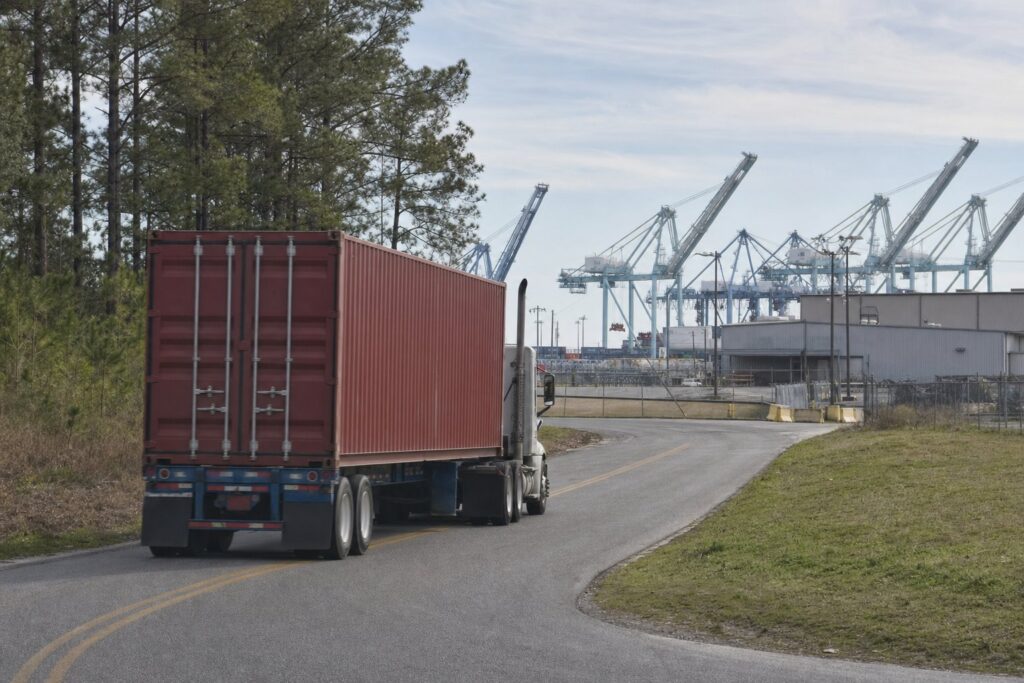
Port Access Road: The Front Door to Charleston’s Largest Container Terminal
The Hugh Leatherman Terminal is the newest and largest container terminal in the Port of Charleston system, built on the former Navy Base in North Charleston. Designed to handle the biggest container ships calling on the East Coast, the terminal generates a massive volume of truck traffic — and virtually all of it funnels through a single corridor: Port Access Road.
Port Access Road connects the Leatherman Terminal to I-26 via the Bainbridge Avenue interchange, creating a concentrated stream of loaded and empty container trucks moving between the terminal and the interstate highway system. The road’s industrial character, narrow lanes, and high truck density make it one of the most hazardous corridors in the Charleston freight network.
Why Port Access Road Is Dangerous
Extreme Truck Concentration
Unlike corridors such as Rivers Avenue or I-526 where trucks mix with general traffic, Port Access Road is dominated by commercial trucks. During peak terminal operations, the road carries a near-continuous stream of tractor-trailers hauling 40-foot and 45-foot shipping containers. This concentration means that when a crash occurs, it almost always involves at least one truck — and frequently involves multiple trucks in chain-reaction collisions.
Narrow Lanes and Frequent Merges
Port Access Road features narrow travel lanes that provide minimal clearance for side-by-side tractor-trailers. Industrial driveways serving warehouses, chassis yards, and staging areas create frequent merge and turn conflicts. Trucks entering or exiting these facilities must cross travel lanes with limited sight lines, especially when adjacent parked containers or stacked chassis block the view.
Poor Lighting in Early Morning Hours
Terminal operations begin well before dawn. Truck drivers arriving for early-morning container pickups navigate Port Access Road in darkness with inadequate street lighting. The combination of poor visibility, truck headlight glare, and dark-colored chassis and containers creates a high risk of rear-end collisions, sideswipe crashes, and pedestrian strikes involving terminal workers walking near the roadway.
Bainbridge Avenue Interchange
The connection between Port Access Road and I-26 via Bainbridge Avenue forces trucks through a series of turns and merges in a compressed space. Trucks accelerating onto I-26 must merge with highway-speed traffic while still managing the weight and momentum of a loaded container. Trucks exiting I-26 must decelerate rapidly and navigate tight ramp geometry. This interchange is a persistent bottleneck and crash generator.
Chassis Pool Defects: A Major Liability Factor
Port Access Road truck crashes frequently involve chassis defects — a problem unique to intermodal port operations. Here’s how it works:
- Shipping containers ride on intermodal chassis — wheeled frames leased from chassis pool operators like DCLI, TRAC, and Flexi-Van
- These chassis circulate among dozens of different drivers and carriers, with no single operator responsible for daily maintenance
- Common defects include worn or out-of-adjustment brakes, bald tires, broken lights, cracked frames, and defective coupling pins
- Drivers are required to conduct pre-trip inspections, but the pressure to get in and out of the terminal quickly means inspections are often rushed or skipped
- When a chassis defect causes a crash, the chassis pool operator bears significant liability for failing to maintain the equipment
Chassis defect cases require specialized investigation. Your attorney must identify the chassis owner, obtain maintenance records, and determine whether the defect was present before the driver took possession of the equipment. For more on intermodal liability, see our guide to Port truck accidents in Charleston.
Common Crash Types on Port Access Road
- Rear-end collisions: Trucks following too closely in heavy port traffic, often compounded by chassis brake defects that increase stopping distance
- Sideswipe crashes: Trucks drifting into adjacent lanes on narrow road sections, or passing in areas without sufficient clearance
- Turning crashes at industrial driveways: Trucks entering or exiting chassis yards and warehouses across travel lanes with blocked sight lines
- Merge crashes at Bainbridge Avenue: Trucks entering or exiting the I-26 interchange in conflict with other truck traffic
- Tire blowouts and debris crashes: Retreaded tires on poorly maintained chassis shedding tread at speed, creating road hazards for following vehicles
Liable Parties in Port Access Road Crashes
| Potentially Liable Party | Basis for Liability |
|---|---|
| Truck driver | Following too closely, failure to conduct pre-trip chassis inspection, fatigued driving after terminal wait times |
| Motor carrier | HOS violations, failure to ensure drivers inspect chassis, negligent hiring of unqualified drivers |
| Chassis pool operator (DCLI, TRAC, Flexi-Van) | Failure to maintain chassis brakes, tires, lights, and structural components |
| Shipping line / container owner | Overweight or improperly loaded containers affecting braking and stability |
| SC Ports Authority / terminal operator | Unsafe terminal exit procedures, releasing overweight containers, inadequate road maintenance on port property |
| Freight broker | Selecting unqualified or unsafe carriers for port loads |
What to Do After a Crash on Port Access Road
- Call 911 — Port Access Road is within North Charleston city limits. Fire and EMS response may also come from port-based units.
- Stay in your vehicle — The high truck volume on Port Access Road makes exiting your vehicle extremely dangerous. Wait for emergency responders unless there is a fire or immediate danger.
- Document everything: Truck company name, USDOT number, container number, chassis pool markings, and the terminal gate the truck exited.
- Photograph the chassis: Look for visible defects — bald tires, missing lights, leaking brake fluid, rust damage to the frame. These photos can establish chassis defect liability.
- Seek medical attention: MUSC Health is the region’s Level I trauma center and is accessible from Port Access Road via I-26.
- Contact a truck accident attorney immediately — Terminal gate records, chassis inspection logs, container weight certificates, and ELD data must be preserved before they are overwritten or destroyed.
South Carolina Law
- Statute of limitations: 3 years from the date of injury (S.C. Code § 15-3-530)
- Comparative fault: South Carolina allows recovery if you are less than 51% at fault. Compensation is reduced by your percentage of fault.
- Punitive damages: Available in port trucking cases involving known chassis defects, falsified driver logs, or overweight containers released despite weight verification failures.
Free Consultation — Roden Law Charleston
Roden Law’s Charleston office handles truck accident cases on Port Access Road and throughout the Charleston port freight corridor. We understand chassis pool liability, terminal operations, and intermodal trucking regulations. Call (843) 790-8999 for a free consultation — no fees unless we recover compensation.
Related resources: Port truck accidents in Charleston | I-526 Truck Accidents | Spruill Avenue Port Trucks
Related Pages
Frequently Asked Questions
About the Author

Graeham C. Gillin
Partner, COOGraeham C. Gillin serves as both attorney and Chief Operating Officer at Roden Law. He brings multifaceted expertise with a professional background spanning business management and commercial construction. His diverse experience positions him to lead the firm’s management, growth, and operational success. Education J.D., Charleston School of Law Bachelor’s Degree, Montana State University Bar Admission […]
View Full Profile →