

Key Takeaways
I-77 connects Columbia to Rock Hill and Charlotte, serving as a major freight pipeline between the Charlotte logistics hub and South Carolina. The corridor passes near Fort Jackson and through rapidly growing communities including Blythewood and Forest Acres. Richland County consistently reports one of the highest crash rates in South Carolina. Fatigue-related crashes peak on rural stretches through Fairfield County. South Carolina gives victims 3 years to file (S.C. Code § 15-3-530) with recovery if less than 51% at fault.
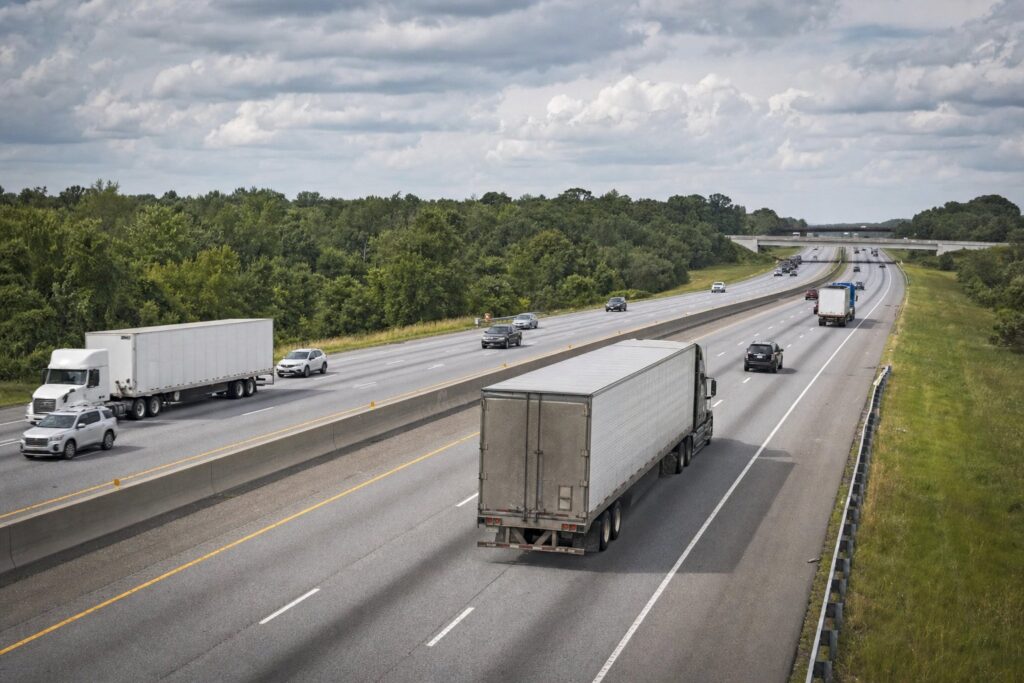
I-77: The Charlotte Freight Pipeline Through the South Carolina Midlands
Interstate 77 connects Columbia to Rock Hill, Fort Mill, and Charlotte, North Carolina — forming a critical freight pipeline between the Charlotte metropolitan logistics network and the South Carolina Midlands. This 90-mile corridor through Richland, Fairfield, and York counties carries a relentless stream of tractor-trailers, tanker trucks, and commercial vehicles between two of the Southeast’s fastest-growing metro areas.
The I-77 corridor between Columbia and Rock Hill is one of the state’s most dangerous truck routes, combining Charlotte-bound freight traffic with military vehicle movements near Fort Jackson, suburban commuter traffic, and two-lane rural stretches through Fairfield County.
I-77 Truck Accident Statistics
- 584 people were killed in large truck crashes in SC from 2016 to 2020
- I-77 connects Columbia to Charlotte — two of the Southeast’s major logistics hubs
- Fort Jackson, the U.S. Army’s primary basic training installation, is adjacent to I-77 on the east side of Columbia, generating military convoy and support vehicle traffic
- The I-77/I-20 interchange northeast of downtown Columbia carries truck traffic between Charlotte and I-20
- Fairfield County’s rural stretches of I-77 see fatigue-related crashes during overnight hours
Danger Zones on I-77: Columbia to Rock Hill
I-77/I-20 Interchange (Northeast Columbia)
The interchange where I-77 meets I-20 northeast of downtown Columbia is a critical convergence point for trucks traveling between Charlotte and points east/west on I-20. This interchange requires rapid lane changes and merging decisions at interstate speed. Trucks transitioning between I-77 and I-20 must navigate weaving movements that bring 80,000-pound vehicles across multiple lanes of traffic. It is one of the interchanges where I-20, I-26 and I-77 meet.
Fort Jackson Area (I-77 Exits 9-12)
Fort Jackson is the U.S. Army’s largest and most active Initial Entry Training center, processing approximately 50,000 soldiers annually. The military installation’s proximity to I-77 means the corridor regularly sees military convoys, support vehicles, troop transport buses, and supply trucks — in addition to standard commercial truck traffic. New military personnel unfamiliar with the area add to unpredictable driving patterns near the base exits.
Blythewood (Exit 27)
Blythewood has experienced rapid residential growth, creating a collision between suburban commuter traffic and through-freight on I-77. The interchange at Exit 27 sees trucks accessing distribution facilities and fuel stops mixing with school traffic and residential commuters during peak hours.
Fairfield County (Exits 32-48)
The rural stretch through Fairfield County — between Blythewood and Winnsboro — is particularly dangerous at night. Long, straight stretches with minimal lighting and sparse rest facilities create prime conditions for fatigue-related lane departures. Emergency response times in rural Fairfield County are significantly longer than in the Columbia or Rock Hill metro areas.
Rock Hill (I-77 at SC-160/Celanese Road)
As trucks approach the Charlotte metro area, the volume of commercial vehicle traffic increases dramatically near Rock Hill. The SC-160 interchange serves as a major access point for distribution facilities on both sides of the state line. Trucks merging on and off I-77 at this location create dangerous conflict points with local traffic.
Why the I-77 Columbia-to-Rock-Hill Corridor Is Dangerous
Charlotte Logistics Connection
Charlotte is one of the largest logistics and distribution hubs in the Southeast. Trucks moving goods between Charlotte-area distribution centers and Columbia, the Port of Charleston (via I-26), and I-95 destinations all use I-77. This through-freight traffic operates on tight delivery schedules, and drivers frequently push hours-of-service limits to complete the Columbia-Charlotte run.
Military Traffic
Fort Jackson’s proximity to I-77 introduces unique hazards. Military convoys travel at controlled speeds below the posted limit, creating dangerous speed differentials with commercial trucks. Support vehicles and personnel transport buses make frequent stops at base-adjacent exits. Training schedules create unpredictable traffic spikes near the installation.
Rural-to-Urban Transition
I-77 transitions from a rural two-lane highway in Fairfield County to a high-volume interstate in the Columbia and Rock Hill metro areas. Trucks that have been traveling at high speed through empty rural stretches must suddenly navigate congested interchanges and merging traffic — a transition that produces rear-end collisions and sideswipe crashes.
Common I-77 Truck Crash Types
| Crash Type | Common Location | Primary Cause |
|---|---|---|
| Rear-end collision | I-77/I-20 interchange congestion | Trucks unable to stop in sudden traffic backups |
| Lane departure/crossover | Fairfield County rural stretches | Driver fatigue on long straight stretches |
| Sideswipe | I-77/I-20 weaving movements | Lane changes during interchange transitions |
| Rollover | I-77 curves near Blythewood | Excessive speed, top-heavy loads |
| Military vehicle conflict | Fort Jackson exits (9-12) | Speed differentials with slow-moving convoys |
FMCSA Regulations and I-77 Truck Crashes
Commercial trucks on I-77 must comply with all Federal Motor Carrier Safety Administration regulations. Common violations on the Columbia-to-Rock-Hill corridor include:
- Hours-of-service violations: Drivers attempting to complete the Columbia-Charlotte run within a single driving window frequently exceed the 11-hour driving limit. ELD data is critical evidence in these cases.
- Maintenance failures: Brake deficiencies are the most commonly cited violation in truck inspections nationwide. On I-77’s grades and curves, brake failure can be catastrophic.
- Cargo securement: Trucks loaded at Charlotte-area distribution centers and bound for Columbia must maintain proper cargo securement throughout the trip. Shifting loads on I-77’s rolling terrain cause rollovers and cargo spills.
- Drug and alcohol violations: Post-accident testing is required for crashes involving fatalities or injuries. Testing must occur within specific time windows, making prompt legal engagement critical.
Your Legal Rights After an I-77 Truck Crash in South Carolina
- Statute of limitations: 3 years from the date of injury (S.C. Code § 15-3-530)
- Modified comparative fault: You can recover damages if you are less than 51% at fault — your award is reduced by your percentage of responsibility
- Multiple liable parties: The truck driver, trucking company, freight broker, cargo shipper, vehicle manufacturer, and maintenance provider may all share liability
- Punitive damages: Available when the trucking company or driver showed willful, wanton, or reckless conduct — such as falsifying ELD records, dispatching a fatigued driver, or ignoring known maintenance defects
- Negligence per se: FMCSA regulation violations constitute evidence of negligence in South Carolina courts
What to Do After a Truck Accident on I-77
- Move to safety if possible — Secondary crashes on I-77 are a significant risk, particularly on the high-speed rural stretches through Fairfield County
- Call 911 — South Carolina Highway Patrol responds to I-77 crashes. Request medical assistance even for seemingly minor injuries.
- Document the truck: Company name, USDOT number (located on the cab door), trailer number, and cargo type. Note any military markings if the crash involved a military vehicle near Fort Jackson.
- Photograph everything: Vehicle damage, road conditions, skid marks, mile markers, interchange signage, and your injuries
- Get medical attention — Prisma Health Richland in Columbia is the nearest Level I trauma center for the southern corridor; Piedmont Medical Center serves the Rock Hill area
- Do not give a recorded statement to the trucking company’s insurance adjuster
- Contact a truck accident attorney within 24-48 hours — ELD data, dash cam footage, and dispatch records can be overwritten or destroyed within days
Evidence Preservation in I-77 Truck Crash Cases
Truck accident evidence disappears fast. Critical data that must be preserved includes:
- Electronic Logging Device (ELD) data — may be overwritten within days
- Dash cam and trailer cam footage — operates on 24-72 hour recording loops
- Post-accident drug and alcohol test results — testing must occur within hours per FMCSA rules
- Dispatch records and communication logs — showing schedule pressure, route assignments, and delivery deadlines
- Vehicle inspection and maintenance records — may reveal pre-existing defects the company knew about
- GPS and telematics data — showing speed, braking patterns, and exact route traveled
Roden Law sends spoliation preservation letters within hours of engagement, legally requiring the trucking company and all related parties to preserve every piece of evidence.
Free Consultation — Roden Law Columbia Office
Roden Law’s Columbia office at 1545 Sumter St., Suite B handles I-77 truck accident cases throughout the corridor — from the I-20 interchange northeast of downtown Columbia to Rock Hill and the North Carolina state line. We work on contingency: no fees unless we recover compensation for you. Call (803) 219-2816 for a free consultation. We begin evidence preservation immediately upon engagement.
Related Pages
Frequently Asked Questions
About the Author

Ivy S. Montano
AssociateIvy S. Montano serves as an Associate at Roden Law in the Savannah office. She is a native of Darien, Georgia, and began her legal career focusing on defending the rights of children with a focus in juvenile dependency and delinquency cases. Prior to joining Roden Law, she worked for a large firm handling insurance […]
View Full Profile →