

Key Takeaways
I-20 is the primary east-west freight artery through the South Carolina Midlands, carrying thousands of tractor-trailers daily through Lexington and Richland counties. Explosive growth in distribution and logistics along the I-20 corridor in Lexington County is driving more truck volume onto roads shared with commuters. South Carolina gives victims 3 years to file (S.C. Code § 15-3-530) with recovery if less than 51% at fault.
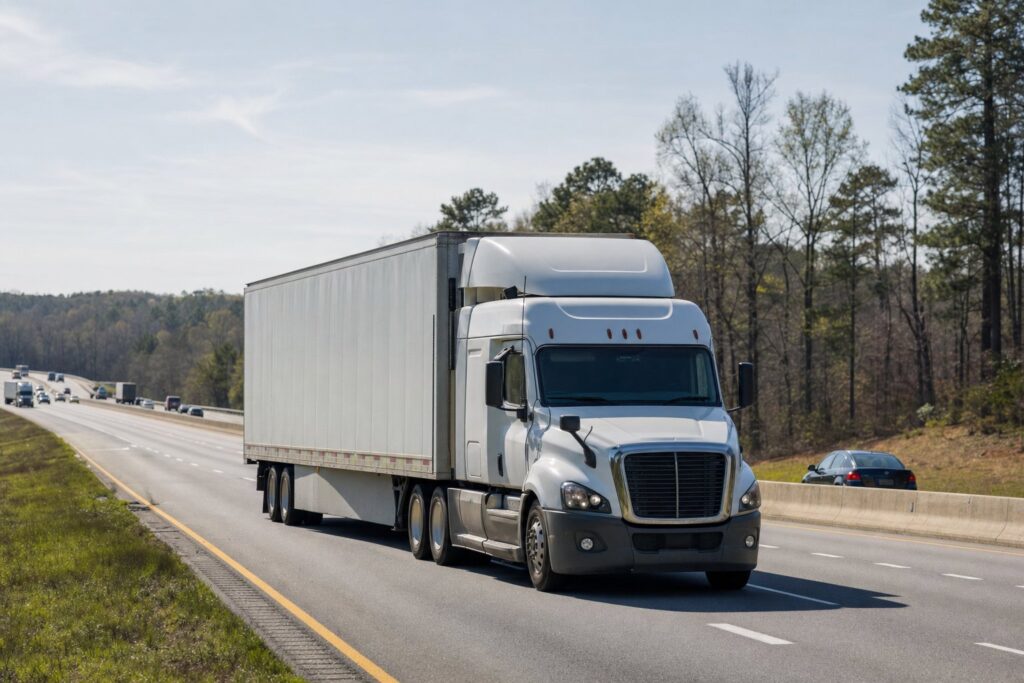
I-20 in the Columbia Area: A Major Freight Corridor With Rising Truck Crash Numbers
Interstate 20 is the primary east-west freight artery through the Midlands of South Carolina, connecting Columbia to Augusta and Atlanta to the west and Florence and the coast to the east. For Midlands residents, I-20 is not just a commuter highway — it is a high-volume commercial truck corridor that carries thousands of tractor-trailers daily through communities in Lexington County, Richland County, and beyond.
The I-20 corridor through the Columbia metro area accounts for a disproportionate share of these incidents, driven by explosive growth in distribution and logistics operations along the highway — particularly in Lexington County.
I-20 Truck Accident Statistics in the Columbia Area
- 584 people were killed in large truck crashes statewide from 2016 to 2020
- Richland County consistently reports one of the highest crash rates in South Carolina
- I-20 carries heavy commercial truck traffic between Atlanta, Augusta, Columbia, and Florence — among the busiest freight routes in the Southeast
- Distribution center growth in Lexington County has significantly increased truck volume on the I-20/I-26 corridor
Danger Zones on I-20: Columbia Area
I-20/I-26 Interchange (West Columbia)
The junction where I-20 meets I-26 in West Columbia is one of the most congested interchanges in the Midlands. Trucks traveling between Charleston (via I-26) and points west on I-20 must navigate rapid lane changes and merging traffic. This interchange sees a concentration of rear-end collisions and sideswipe crashes during peak freight hours.
I-20 at Broad River Road (Irmo/Chapin)
Exit 63 at Broad River Road carries significant truck traffic accessing industrial parks and distribution facilities northwest of Columbia. The merge zones here are short, and passenger vehicles entering I-20 from Broad River Road face immediate truck traffic traveling at interstate speeds.
I-20 at US-1/Augusta Highway (Lexington)
The US-1 interchange in Lexington serves as a gateway to the growing distribution center corridor. Trucks entering and exiting I-20 at this location create dangerous speed differentials, and the volume of turning truck traffic at adjacent surface roads has increased dramatically with new logistics development.
I-20 East of Columbia (Pontiac/Elgin)
East of Columbia, I-20 carries through-freight toward Florence and I-95 through less-developed areas. This stretch sees fatigue-related crashes, particularly during overnight hours when long-haul truckers push through the Midlands corridor between Atlanta and the coast.
I-20 at US-378/Sunset Boulevard (West Columbia/Lexington)
This heavily trafficked interchange serves as a primary access point for commercial vehicles moving between I-20 and the Lexington County industrial corridor. The combination of high-speed interstate traffic and slower vehicles merging from commercial areas creates frequent conflict points.
Why I-20 Truck Crashes Are Increasing
Distribution Center Boom
Lexington County has become a major logistics hub for the Midlands, with facilities including Southern Glazer’s $80 million distribution center and numerous other warehouse operations along the I-20 corridor. Each distribution center generates hundreds of daily truck trips — box trucks, tractor-trailers, and delivery vans — that mix with commuter traffic on I-20 and surrounding roads. Learn more about Columbia Airport Expressway truck accidents in Lexington County.
Atlanta-to-Coast Freight Traffic
I-20 is a critical segment of the freight route connecting Atlanta’s logistics network to coastal South Carolina via I-95 and Florence. Through-trucks carrying goods from Georgia distribution hubs to East Coast destinations pass directly through the Columbia metro area without stopping — adding volume and creating speed differentials with local traffic.
Interchange Complexity
Columbia is where three major interstates converge — I-20, I-26, and I-77. Trucks navigating between these highways must make rapid lane changes and merging decisions in a complex interchange system that was not originally designed for current traffic volumes. Much of that merging happens at the interchanges where I-20, I-26 and I-77 meet.
Common I-20 Truck Crash Types in the Columbia Area
| Crash Type | Common Location | Primary Cause |
|---|---|---|
| Rear-end collision | I-20/I-26 interchange congestion | Trucks unable to stop in heavy traffic |
| Sideswipe | Merge zones at Broad River Rd, US-1 | Lane changes during heavy truck volume |
| Jackknife | I-20 curves near West Columbia | Wet pavement, hard braking |
| Lane departure/rollover | I-20 east of Columbia (Pontiac/Elgin) | Driver fatigue on long straight stretches |
| Cargo spill/debris | Distribution center exit zones | Improperly secured freight |
FMCSA Regulations That Apply to I-20 Truck Crashes
Every commercial truck operating on I-20 must comply with Federal Motor Carrier Safety Administration (FMCSA) regulations. Violations of these rules constitute strong evidence of negligence:
- Hours of Service (HOS): Drivers are limited to 11 hours of driving in a 14-hour window after 10 consecutive hours off-duty. Long-haul trucks on the Atlanta-to-coast I-20 route frequently push these limits.
- Electronic Logging Devices (ELDs): Required on all commercial vehicles to track driving hours electronically — replacing paper logs that were easily falsified
- Vehicle maintenance and inspection: Pre-trip and post-trip inspections are mandatory. Brake failures, tire blowouts, and lighting defects on I-20 trucks often trace back to skipped inspections.
- Cargo securement: All freight must be secured per FMCSA standards. Distribution center trucks loading in haste are prone to cargo shifts that cause rollovers or debris spills on I-20.
- Drug and alcohol testing: Post-accident testing is required for crashes involving fatalities or injuries. Results must be obtained within specific time windows — another reason to contact an attorney immediately.
Your Legal Rights After an I-20 Truck Crash in South Carolina
South Carolina law provides specific protections for truck crash victims:
- Statute of limitations: 3 years from the date of injury to file a lawsuit (S.C. Code § 15-3-530)
- Modified comparative fault: You can recover damages if you are less than 51% at fault — your award is reduced by your percentage of responsibility
- Multiple liable parties: The truck driver, trucking company, cargo shipper, distribution center, vehicle manufacturer, and maintenance provider may all share liability
- Punitive damages: Available when the trucking company or driver showed willful, wanton, or reckless conduct — such as falsifying ELD records or knowingly dispatching a driver who exceeded hours-of-service limits
- FMCSA violations as evidence: Federal trucking regulation violations constitute evidence of negligence in South Carolina courts
What to Do After a Truck Accident on I-20
- Move to safety if possible — Secondary crashes on I-20 are a leading cause of additional injuries, especially near interchange merge zones
- Call 911 — South Carolina Highway Patrol or Richland/Lexington County Sheriff will respond. Request medical assistance even if injuries seem minor.
- Document the truck: Photograph the company name, USDOT number (on the cab door), trailer number, and cargo type
- Photograph everything: Vehicle damage, road conditions, skid marks, mile markers, traffic patterns, and your injuries
- Get medical attention — Prisma Health Richland is Columbia’s Level I trauma center
- Do not give a recorded statement to the trucking company’s insurance adjuster without legal counsel
- Contact a truck accident attorney within 24-48 hours — ELD data, dash cam footage, and dispatch records can be overwritten or destroyed within days
Free Consultation — Roden Law Columbia Office
Roden Law’s Columbia office at 1545 Sumter St., Suite B is located in the heart of the Midlands, giving us immediate access to crash scenes on I-20 and the Richland County Circuit Court. We handle I-20 truck accident cases on contingency: no fees unless we recover compensation for you. Call (803) 219-2816 for a free consultation. We respond to truck accident inquiries within 24 hours and begin evidence preservation immediately.
Related Pages
Frequently Asked Questions
About the Author

Ivy S. Montano
AssociateIvy S. Montano serves as an Associate at Roden Law in the Savannah office. She is a native of Darien, Georgia, and began her legal career focusing on defending the rights of children with a focus in juvenile dependency and delinquency cases. Prior to joining Roden Law, she worked for a large firm handling insurance […]
View Full Profile →