
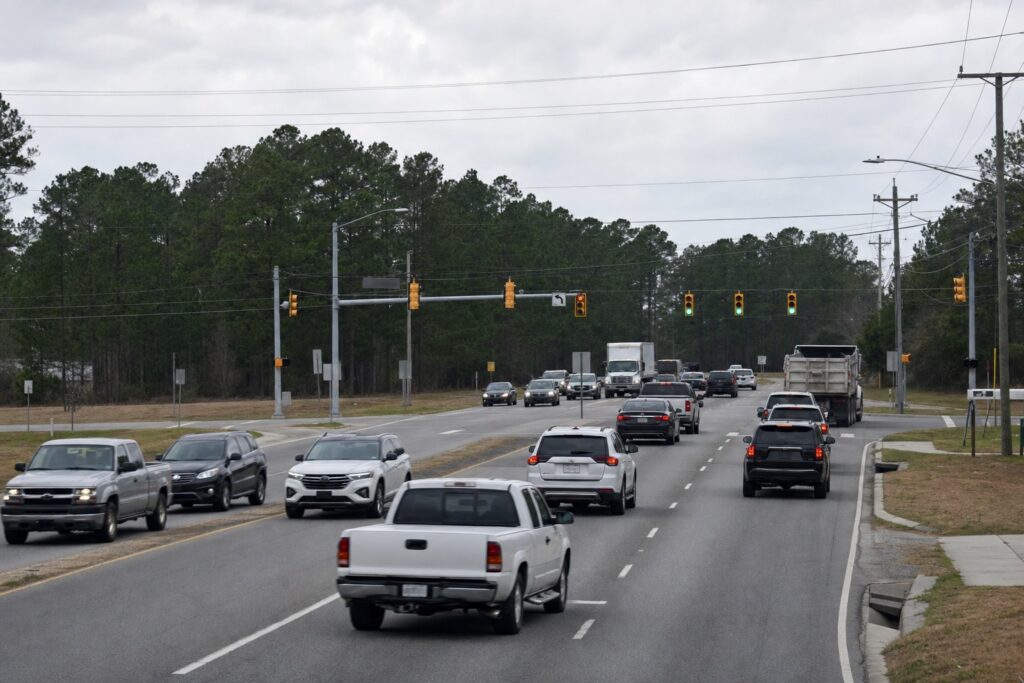
If you or someone you love was hurt in a crash on the SC-302 corridor, an experienced Edmund Highway Lexington County car accident lawyer can help you understand your deadline, protect your claim, and pursue the full compensation you deserve. A wreck on a fast suburban arterial like Edmund Highway can change everything in an instant — medical bills, missed paychecks, and pain that follows you home. You did not ask for this, and you should not have to fight the insurance company alone. At Roden Law, we work on a contingency fee basis: you pay nothing upfront, and no legal fees unless we win your case.
Key Takeaways
- In South Carolina, you generally have 3 years from the date of a crash to file a personal-injury lawsuit (S.C. Code Ann. § 15-3-530).
- South Carolina uses a modified comparative negligence rule with a 51% bar — you can recover only if you are 50% or less at fault (Nelson v. Concrete Supply Co.).
- Crashes on Edmund Highway (SC-302) are litigated in the Lexington County Court of Common Pleas (Eleventh Judicial Circuit) — not Richland County's courts.
- The corridor's many at-grade intersections and driveway cuts make T-bone, rear-end, and left-turn collisions the most common crash patterns.
- The nearest hospital to the corridor is Three Rivers Midlands, roughly 2.6 miles away — get medical care promptly and keep every record.
- Roden Law charges no upfront fees and no legal fees unless we win. Call 844-RESULTS for a free case review.
Why Edmund Highway (SC-302) Is a High-Risk Corridor
Edmund Highway is a primary arterial that funnels West Columbia and Cayce commuter traffic southwest toward Gaston and Pelion, then connects back toward the Columbia metro. That mix is exactly what makes it dangerous. Passenger cars share the road with heavier freight and commercial vehicles, and the route is dotted with signal- and stop-controlled intersections and dozens of driveway cuts — each one a conflict point where a turning or crossing driver can put you in the hospital.
The corridor also sits near I-20, so through-traffic and freight regularly transition between the interstate and SC-302's surface streets. That creates speed differentials: one stretch near West Columbia and Cayce moves in slow, suburban stop-and-go, while the rural segments toward Gaston run faster with limited lighting after dark. Drivers misjudge gaps, follow too closely, and run signals — and the people who pay for it are the ones who were simply driving home.
According to the National Highway Traffic Safety Administration, the majority of fatal crashes happen on roads other than interstates — the kind of signalized, mixed-use arterials that Edmund Highway represents. According to the South Carolina Department of Public Safety, more than 1,000 people are killed on South Carolina roads every year, and tens of thousands more are injured. Those numbers are not abstractions on a corridor like this one; they are West Columbia, Cayce, and Lexington County families.
The Crashes We See Most on This Stretch
- Intersection T-bone (broadside) collisions at SC-302 cross streets, often when a driver runs a light or misjudges a gap.
- Rear-end collisions in the stop-and-go suburban segments near West Columbia and Cayce.
- Left-turn crashes across oncoming Edmund Highway traffic.
- Truck and commercial-vehicle collisions involving freight moving between I-20 and SC-302.
- Hit-and-run and impaired-driving crashes on the arterial after dark, where lighting is limited.
According to the Insurance Institute for Highway Safety, side-impact crashes account for a substantial share of passenger-vehicle occupant deaths — which is why the broadside collisions common at Edmund Highway's intersections so often produce serious, life-altering injuries. If your wreck happened this way, our T-bone (broadside) collision claims page explains how fault is proven in these cases.
South Carolina Law That Governs Your Edmund Highway Claim
A crash on SC-302 is governed by South Carolina law, and two rules matter more than any other.
The deadline. In South Carolina, you generally have three years from the date of injury to file a personal-injury or wrongful-death lawsuit (S.C. Code Ann. § 15-3-530). Miss that window and the court can dismiss your case no matter how badly you were hurt. Some situations shorten the practical timeline — claims against a government entity, for example, carry their own notice requirements — so it is dangerous to wait.
The fault rule. South Carolina follows modified comparative negligence with a 51% bar (S.C. Code Ann. Nelson v. Concrete Supply Co.). You can recover damages only if you are 50% or less at fault, and whatever you recover is reduced by your share of fault. On an intersection-heavy corridor like Edmund Highway, insurers know this rule cold — and they will try to push as much blame onto you as they can to drop your recovery or wipe it out entirely. Understanding South Carolina's comparative fault rule is often the difference between a full recovery and nothing.
| If you are found… | Under SC's 51% bar | What it means for your Edmund Highway claim |
|---|---|---|
| 0% at fault | Full recovery | You collect 100% of proven damages |
| 25% at fault | Reduced recovery | A $100,000 award becomes $75,000 |
| 50% at fault | Reduced recovery | A $100,000 award becomes $50,000 |
| 51% or more at fault | Barred | You recover nothing |
Graeham C. Gillin, a partner and Chief Operating Officer at Roden Law, points out that fault allocation is where most Lexington County intersection cases are actually won or lost — the police report is a starting point, not the final word, and corridor evidence like signal timing, skid marks, dashcam footage, and independent witnesses can move a driver from "majority at fault" to "not at fault" and change the entire value of a claim.
Where Your Case Is Filed
Because Edmund Highway runs through Lexington County, a lawsuit arising from a crash on SC-302 is filed in the Lexington County Court of Common Pleas (Eleventh Judicial Circuit) — not in Richland County's courts, even though the Columbia metro straddles both counties. Filing in the right venue, with the right local procedure, matters. Our car accident lawyers serving the Columbia area handle Lexington County claims regularly and know how these cases move.
What to Do After a Crash on Edmund Highway
In the hours after a wreck, the steps you take shape your claim, so if you can do so safely:
- Call 911 and report the crash. A police report creates an official record. South Carolina law also requires reporting crashes that involve injury, death, or significant property damage.
- Get medical care right away. The nearest hospital to the corridor is Three Rivers Midlands, roughly 2.6 miles away. Even if you feel "okay," adrenaline masks injuries — get checked and keep every record.
- Document the scene. Photograph vehicle positions, the intersection or driveway, signals, skid marks, and visible injuries. Get names and numbers for every witness before they leave.
- Do not admit fault or guess. Under the 51% bar, an offhand "I'm sorry" can be twisted against you. Stick to facts.
- Be careful with the insurance company. Adjusters call quickly and sound friendly, but their job is to pay as little as possible.
For a full checklist, see our guide on what to do after a car accident in South Carolina. According to the Centers for Disease Control and Prevention, motor-vehicle crashes remain a leading cause of injury and death in the United States — and prompt medical documentation is one of the most important things you can do for both your health and your claim.
When a Truck Is Involved
When a truck is involved, your claim is no longer an ordinary car-accident case — freight moving between I-20 and SC-302 puts heavy trucks on this arterial alongside passenger cars. Truck cases are different. Beyond ordinary negligence, they can involve federal motor-carrier records — driver logs, electronic logging device (ELD) data, maintenance histories, and hours-of-service rules — and those records can disappear if they are not preserved quickly. According to the Federal Motor Carrier Safety Administration, large trucks are involved in tens of thousands of injury crashes nationwide each year, and the injuries are often catastrophic because of the size mismatch.
If your crash involved a commercial vehicle, our South Carolina truck accident lawyers and our 18-wheeler and semi-truck accident claims team know how to move fast to lock down evidence. You can also reach our Columbia-area truck accident lawyers directly.
How Roden Law Helps
We build corridor cases the way they should be built — proving exactly how the crash happened, identifying every source of recovery, and pushing back when an insurer tries to shift blame under the 51% bar. We handle drunk-driving and after-dark cases through our drunk driver accident claims team, and hit-and-run wrecks through our hit-and-run accident representation, including uninsured-motorist coverage questions. You can also read our nearby West Columbia drunk-driving crash guidance for a related corridor.
Whether your case is a straightforward rear-end or a complex multi-vehicle wreck, our South Carolina car accident lawyers — backed by the broader resources of our South Carolina personal injury lawyers — bring the same promise: no upfront fees, and no legal fees unless we win.
📞 Call 844-RESULTS for a Free Case Review — No Fees Unless We Win.
About the Author
This article was reviewed by Graeham C. Gillin, partner and Chief Operating Officer at Roden Law. Graeham is licensed by the South Carolina Bar. With more than $300 million recovered, a 4.9-star average across 500-plus client reviews, and 5,000-plus cases handled, Roden Law represents injured people throughout Lexington County and the Midlands on a no-fee-unless-we-win basis. Call 844-RESULTS for a free case review.
Frequently Asked Questions
About the Author