
Last reviewed: 2026-06-16
If you or someone you love was hurt in a boat crash on the Darien River or anywhere in the Altamaha delta, a Darien River boating accident lawyer can help you understand your deadlines, your rights, and who is responsible — and you pay nothing upfront. A collision in these waters can change everything in an instant: a wake-thrown passenger, a propeller strike near the docks, or a sudden impact in a tight channel can leave you facing mounting medical bills and lost income, often after a long ride to a hospital that isn't even in your county. This guide explains how Georgia law treats boating injuries on the Darien River, what makes McIntosh County's working waterfront uniquely hazardous, and the practical steps that protect your claim from the first day.
Key Takeaways
- In Georgia, you generally have 2 years from the date of a boating injury to file a personal-injury or wrongful-death claim (O.C.G.A. § 9-3-33) — but a crash on navigable waters may fall under federal maritime law's 3-year limit (46 U.S.C. § 30106), so confirm which deadline controls early.
- Georgia follows a modified comparative negligence rule: you can still recover if you are less than 50% at fault, but you recover nothing at 50% or more (O.C.G.A. § 51-12-33).
- Boating under the influence (BUI) is a separate offense under Georgia's Boat Safety Act (O.C.G.A. § 52-7-12) and can establish negligence per se against an impaired operator.
- The Georgia DNR Law Enforcement Division investigates Darien River and Sapelo Sound boating accidents; operators have a legal duty to stop, render aid, and report serious crashes.
- McIntosh County civil cases are heard in the Superior Court of McIntosh County (Atlantic Judicial Circuit); some maritime claims belong in federal court in the Brunswick Division.
- Roden Law works on contingency — no fees unless we win — and our Darien office sits at 1108 North Way, minutes from the waterfront.
Why the Darien River and the Altamaha Delta Are High-Risk Waters
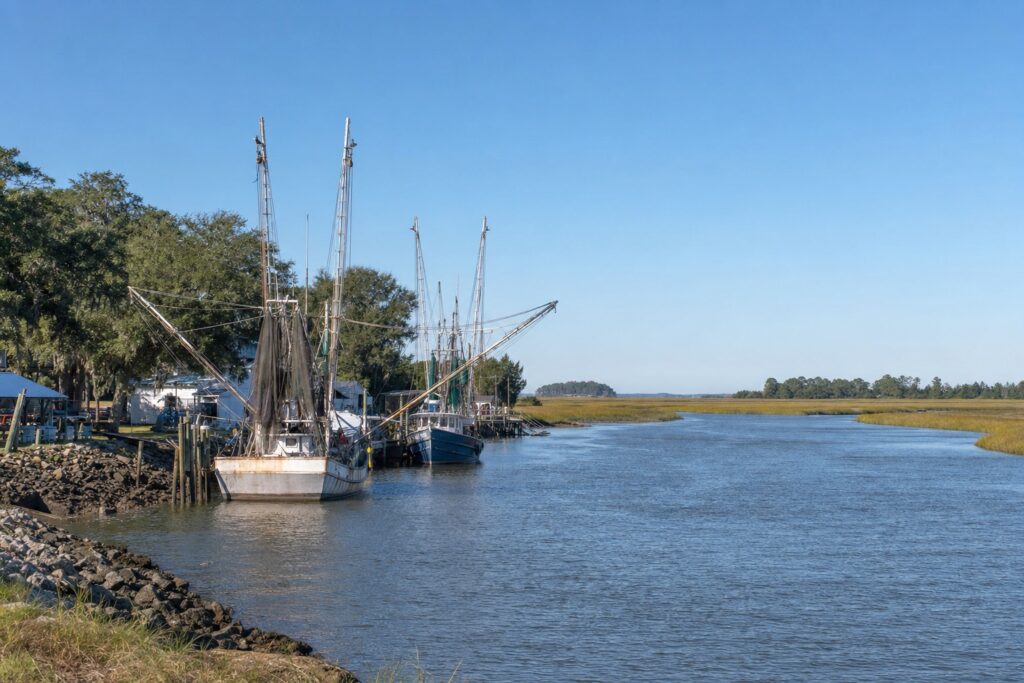
Boating crashes happen on the Darien River and the Altamaha delta because so many vessels share its narrow, tide-driven channels at the mouth of the Altamaha River. Recreational boats, charter and eco-tour vessels, personal watercraft, the Sapelo Island ferry, and a commercial shrimp and fishing fleet all share the same narrow, tide-driven channels. Where the river meets the delta and the Atlantic Intracoastal Waterway, that traffic converges in water known for strong tidal currents, shifting sandbars, and tight passages around the two-lane US-17 Darien River bridge.
According to the U.S. Coast Guard, operator inattention, improper lookout, operator inexperience, and excessive speed rank among the most common contributing factors in recreational boating accidents nationwide — every one of which is amplified in technically demanding tidal waters like these. A skipper unfamiliar with how fast the tide runs through the delta can misjudge a turn, drift onto a sandbar, or close on an anchored shrimp boat far faster than expected.
The calendar makes it worse. Darien's annual Blessing of the Fleet shrimp festival each spring packs the downtown waterfront and boat ramps with crowds and vessels. Summer holiday weekends from Memorial Day through Labor Day spike recreational boating and personal-watercraft traffic on the Darien River and Sapelo Sound. More boats, more inexperienced operators, and more alcohol on the water is a predictable formula for collisions.
Common Darien River Boating Accidents
A Darien River boating accident lawyer sees the same patterns repeat across McIntosh County's coastal waters:
- Boat-on-boat collisions and wake injuries on the open stretches of the Darien River and Sapelo Sound, where a careless wake can throw a passenger from their seat.
- Personal-watercraft crashes, ejections, and propeller strikes near the boat ramps, docks, and anchored shrimp boats along the downtown waterfront. These overlap with the rules governing jet ski and personal watercraft accidents.
- Boating-under-the-influence (BUI) crashes, especially on warm-weather and festival weekends.
- Dock and boarding injuries at the Lower Bluff shrimp docks and other waterfront facilities, which can give rise to dock and marina injury claims.
- Commercial-vessel involvement, when a shrimp or fishing boat is part of the crash — a scenario that can layer maritime-worker issues on top of an ordinary recreational claim.
According to the U.S. Coast Guard, alcohol use is consistently the leading known contributing factor in fatal recreational boating accidents — which is exactly why a BUI investigation often becomes the center of a serious Darien River injury case.
The Two Deadlines That Decide Your Case
The single most important thing to get right is which filing deadline applies. Most Georgia injury claims are governed by a clear rule, but boating injuries sit at the seam between state and federal law.
| Scenario | Governing law | Filing deadline |
|---|---|---|
| Georgia personal-injury claim | O.C.G.A. § 9-3-33 | 2 years from the date of injury |
| Georgia wrongful-death claim | O.C.G.A. § 9-3-33 | 2 years |
| Injury on navigable waters (maritime) | 46 U.S.C. § 30106 | Generally 3 years |
| BUI as negligence per se | O.C.G.A. § 52-7-12 | Tied to the underlying injury claim |
Because the Darien River, Sapelo Sound, and the Atlantic Intracoastal Waterway are navigable coastal waters, a crash there can trigger federal admiralty jurisdiction alongside Georgia law. That distinction affects your venue, your deadline, and the damages available to you. Get the wrong deadline and you can lose the right to recover entirely — which is why identifying the controlling law early is the first job of any Darien boating accident lawyers you talk to.
Eric Roden, Roden Law's founding partner, points out that the gap between the two-year state deadline and the three-year maritime limit is one of the most dangerous traps in coastal injury law: families assume they have plenty of time, and an operator's insurer is happy to let an unrepresented victim run out the clock before anyone has analyzed whether state or federal rules govern the water where the crash happened.
How Fault Works Under Georgia Law
Georgia follows modified comparative negligence with a 50% bar (O.C.G.A. § 51-12-33). In plain terms: as long as you are less than 50% at fault, you can still recover, but your award is reduced by your own share of the blame. If you are found 50% or more at fault, you recover nothing.
That rule is why the other side will work hard to pin part of the blame on you — claiming you weren't wearing a life jacket, were in the wrong part of the channel, or somehow contributed to the wake that threw you. Building a clear, evidence-backed account of what happened is how a Darien River boating accident lawyer keeps your percentage of fault low and your recovery intact.
When an operator was impaired, the analysis shifts in your favor. BUI is a separate offense under O.C.G.A. § 52-7-12, and proving it can establish negligence per se — meaning the operator's violation of the statute is itself evidence of negligence. Our team handles these boating under the influence (BUI) claims regularly on coastal Georgia waters.
Why the First 48 Hours Matter on the Water
Boating cases are harder to reconstruct than car crashes. There are no skid marks, the scene literally drifts away on the tide, and there is no local hospital to anchor the medical timeline — rural McIntosh County has none, so serious injuries are transported to Southeast Georgia Health System's Brunswick campus roughly 20 miles south, or to the Level I trauma center at Memorial Health in Savannah about 50 miles north.
According to the Georgia Department of Natural Resources, the agency's Law Enforcement Division is the primary investigating authority for boating accidents on coastal waters such as the Darien River and Sapelo Sound. According to the Georgia Department of Natural Resources, vessel operators involved in a serious boating accident also have a legal duty to stop, render aid, and report the crash — and an operator's failure to do so can itself support your claim. The DNR report often becomes the backbone of the evidence, so making sure the agency is notified and that the report is accurate is critical.
If you are able, document the vessels, the registration numbers, the conditions, and the witnesses, and get medical care immediately even if you feel "okay" — wake and impact injuries to the spine and brain frequently surface days later.
When a Commercial or Working Vessel Is Involved
McIntosh County's commercial shrimping and fishing fleet means a recreational crash can suddenly involve a working vessel and its crew. That overlap can bring federal maritime doctrines — including Jones Act protections for injured maritime workers — into play alongside an ordinary Georgia injury claim. These commercial vessel accident claims and broader Darien maritime injury lawyers matters are governed by rules most general-practice firms rarely touch, and they may belong in the U.S. District Court for the Southern District of Georgia, Brunswick Division, rather than state court. To understand the patterns behind these crashes, our explainer on the common causes of boating accidents and your legal rights is a useful starting point, as is our guide to jet ski and personal watercraft accident risks.
It is worth noting that the same US-17 Darien River bridge that crowds the water also funnels high-speed truck traffic off I-95 onto a narrow two-lane span. If your injury involved a vehicle rather than a vessel, our Darien truck accident lawyers handle those cases, and we cover the corridor's toll in our report on fatal crashes on US-17 and I-95 through Darien.
How Roden Law Helps
With $300M+ recovered, 5,000+ cases handled, and 62 years of combined experience, Roden Law brings real resources to a corner of the coast where many injured boaters feel they have no advocate. Our Darien office at 1108 North Way puts us minutes from the waterfront and the McIntosh County courthouse. We investigate fast, work with the DNR record, and pursue every source of recovery — and we never charge upfront fees.
📞 Call 844-RESULTS for a Free Case Review — No Fees Unless We Win.
Frequently Asked Questions
Q: How long do I have to file a Darien River boating accident claim in Georgia?
A: In Georgia, you generally have 2 years from the date of injury to file a personal-injury or wrongful-death claim (O.C.G.A. § 9-3-33). But if your crash occurred on navigable waters, federal maritime law's 3-year limit (46 U.S.C. § 30106) may apply instead. Because the Darien River and Intracoastal Waterway are navigable, you should confirm which deadline controls right away.
Q: What if I was partly at fault for the boat crash?
A: You can still recover as long as you were less than 50% at fault. Georgia follows modified comparative negligence with a 50% bar (O.C.G.A. § 51-12-33), so your award is reduced by your own percentage of fault, and you recover nothing only if you are 50% or more responsible. Documenting the crash carefully helps keep your share low.
Q: Does it cost anything to hire a Darien River boating accident lawyer?
A: No. Roden Law works on a contingency fee basis — you pay nothing upfront and owe no legal fees unless we win your case. Your initial case review is free, so there is no financial risk in finding out where you stand before the filing deadline runs.
Q: What should I do right after a boating accident on the Darien River?
A: Get medical care immediately even if you feel fine, because spine and brain injuries often surface days later. Make sure the Georgia DNR is notified, since operators have a legal duty to stop, render aid, and report serious crashes. If you can, document the vessels, registration numbers, conditions, and witnesses before the scene drifts away.
Q: Is boating under the influence treated differently in a Georgia injury claim?
A: Yes. BUI is a separate offense under Georgia's Boat Safety Act (O.C.G.A. § 52-7-12). Proving an operator was impaired can establish negligence per se — meaning the violation itself is evidence of negligence — which can strengthen your injury claim significantly. Alcohol is consistently a leading factor in fatal boating accidents.
Q: Where would my Darien River boating case be filed?
A: Most civil personal-injury and wrongful-death cases from McIntosh County are heard in the Superior Court of McIntosh County (Atlantic Judicial Circuit). However, claims that fall under federal maritime jurisdiction may instead be filed in the U.S. District Court for the Southern District of Georgia, Brunswick Division. Which court applies depends on where and how the crash occurred.
About the Author
Eric Roden is the founding partner of Roden Law and is admitted to practice in Georgia. He leads the firm's coastal-Georgia injury work from its offices in Savannah and Darien, representing boaters and families injured on the Darien River, the Altamaha delta, and McIntosh County's waterways. This article is for general information and is not legal advice; for guidance on your specific situation, contact Roden Law for a free, no-obligation consultation.
About the Author