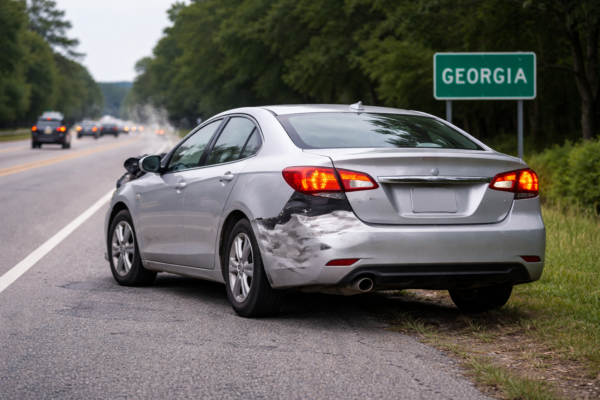
Negligence vs. Gross Negligence in a Car Accident Case: Georgia and South Carolina Laws
Ordinary negligence is the failure to exercise reasonable care, while gross negligence involves conscious disregard for others' safety. Georgia recognizes…
Ordinary negligence is the failure to exercise reasonable care, while gross negligence involves conscious disregard for others' safety. Georgia recognizes…
Uninsured/underinsured motorist (UM/UIM) coverage protects you when the at-fault driver has no insurance or insufficient limits. Georgia requires UM/UIM on…
Credible car accident witnesses are independent, had clear vantage points, provide consistent and specific accounts, and give testimony corroborated by…
Can you recover if you were not wearing a seat belt? How Georgia and South Carolina treat belt use as…
A low-speed fender bender can still cause serious harm. The injuries that commonly follow a "minor" crash, and why they…
What Georgia law actually requires of drivers after a crash — stopping, reporting, exchanging information — and what happens if…
Intoxicated pedestrians can file personal injury claims in both Georgia and South Carolina under modified comparative fault rules. Georgia allows…
Following too closely can establish negligence per se. How that works in a Georgia tailgating claim, and what it proves.
When a drunk driving crash supports punitive damages, what conduct is required, and how the standard differs by state.
Multi-vehicle crashes in Georgia and South Carolina involve complex fault allocation under modified comparative fault rules—Georgia bars recovery at 50%…