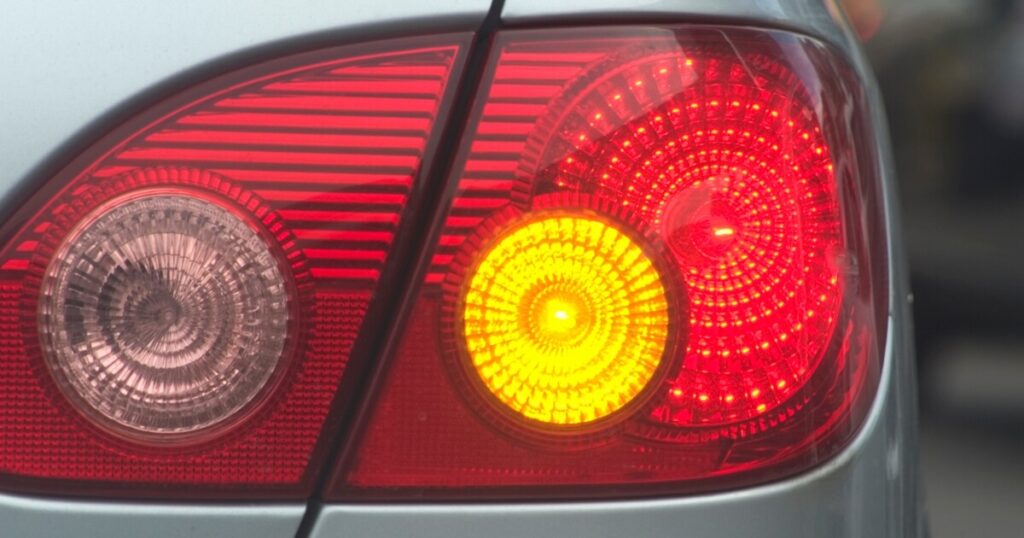
 In Georgia, like most states, drivers are required to use their turn signal to indicate maneuvers, like lane changes. When drivers fail to use a turn signal, or do not signal properly, it can cause confusion or lead to a crash.
At Roden Law, we know that using a turn signal seems unimportant, but this simple switch helps prevent crashes. Drivers who neglect to signal can be liable if they cause a crash that injures you.
Need legal help after a crash? Our car crash attorneys in Savannah help injured victims every day, bringing 62 years of combined experience to every case. Call our law office today to find out if you have a case. There is no charge for this meeting, and we can use this time to answer your legal questions as well.
Request your FREE case review today. 1-844-RESULTS
What Does Georgia Law Say About Signaling Before Turning?
Like most states, Georgia has specific laws about driving and the proper use of turn signals under state law.
When You Must Use a Turn Signal in Georgia
When drivers want to turn, they should, of course, check for traffic first. However, do they always need to signal? Under O.C.G.A. § 40-6-123, drivers must signal whenever a driver behind them or one approaching from the opposite direction could be affected, including when:
- Making a turn at an intersection
- Turning into (or out onto the road from) a private road or driveway
- Changing lanes or moving right or left, including to pass or merge
- Starting from a parked position
- Stopping or suddenly slowing, when there is a chance to signal
Other Frequently Asked Questions About Using Turning and Signaling
Below there are several other questions people often ask about signaling in Georgia.
Does It Matter Where Drivers Begin Turning From?
Drivers cannot randomly turn from any lane in traffic. They may use a turn signal to access one lane over. Under O.C.G.A. § 40-6-120, right turns must be made as close as practicable to the right-hand curb or edge of the roadway; where extra lanes are marked “right-turn only,” drivers follow the markings. The same rule applies to drivers wishing to make a left turn. They cannot turn left from a middle through lane as it would cause them to cross in front of other traffic. They must turn from the extreme left-hand lane lawfully available, including lanes marked for left turns or a two-way center turn lane (O.C.G.A. § 40-6-126).
Do I Still Need To Signal If I Am in a Right or Left-Turn Only Lane?
Not always. Georgia requires a signal “when required” to alert drivers behind you or approaching from the opposite direction, and in State v. Goodman, 220 Ga. App. 169 (1996), the Court of Appeals held a left-turn signal “was not necessary” from a left-turn-only lane where the driver’s “sole legal option was a left turn” and no other traffic was affected. But a signal is still required “when traffic conditions require the use of such signal” (Morgan v. State, 309 Ga. App. 923 (2011)), and in a crash case the other driver will argue it was. Signaling is just a good habit to engage in and an easy way to help prevent a crash.
What Does the “Proper Use of a Turn Signal” Mean?
Under Georgia law, there is no specific time or distance stated. However, O.C.G.A. § 40-6-123(b) requires you to signal continuously for a sufficient amount of time. Paraphrased, you must signal long enough to give drivers behind you or approaching from the opposite direction sufficient notice.
Knowing what is NOT proper signaling may help too:
- Turning on your signal at the same time you change lanes
- Signaling seconds before you turn
- Slamming on your brakes and then signaling, such as when almost missing an exit
- Darting in and out of lanes while signaling
All of these methods of using a signal are careless. Signaling in this way can cause confusion and does not give other drivers time to slow down and react. Think of it this way. Signaling properly can help keep your vehicle from being hit by someone else.
Who May Be Liable if Not Using a Turn Signal Causes a Crash?
While the driver who failed to signal is often the liable party, the law does not assume it: fault has to be proven from the evidence, and a rule-of-the-road violation is negligence per se but not liability per se.
Liable parties may include one of the following:
Driver Who Failed To Use a Turn Signal
The driver who did not use a turn signal before turning or changing lanes is typically considered at fault. O.C.G.A. § 40-6-123 requires drivers to signal before turning or changing lanes whenever another driver could be affected, and violating it is negligence per se in Georgia: it establishes duty and breach, leaving the injured person to prove causation and damages. Drivers have a legal duty of care to avoid causing harm to others. This includes properly signaling to help ensure the safety of all road users. If failing to signal leads to a collision, the driver may be held liable for the accident and any resulting damages.
Other Negligent Drivers
While the driver who failed to signal is usually at fault, other drivers involved in the accident might share liability. However, this is only if the other party’s negligence contributed to the crash in some way.
Here is an example of what shared liability could look like: Another driver was speeding through an intersection. If that negligence contributed to the crash, they might share responsibility for the collision.
Employers (If the Crash Involves a Company or Commercial Vehicle)
Sometimes the drivers who failed to signal may be operating a company or commercial vehicle, such as a truck or delivery van. In this situation, the driver’s employer might be held liable under a legal doctrine called, “respondeat superior” (O.C.G.A. § 51-2-2). This doctrine holds employers responsible for things their employees did if those actions occurred within the scope of their employment.
Vehicle Owners
In some cases, the owner of the vehicle (if different from the driver) may be liable. This is especially true if they knowingly allowed an unsafe or unlicensed driver to use their vehicle, a claim called negligent entrustment.
How Does Georgia’s Modified Comparative Negligence Law Affect a Crash Claim?
Georgia follows a modified comparative negligence rule (O.C.G.A. § 51-12-33). What this means for drivers is that fault for any crash can be shared among multiple parties. The percentage of fault is based on each party’s assessed degree of responsibility.
If the injured party is determined to have been negligent in some way, such as by following a vehicle too closely, they might be partially to blame. In that situation, they could be assessed with a percentage of liability.
The bottom line is this: as long as the injured victim is less than 50 percent at fault, a claim for compensation is still possible. That said, any compensation awarded to a partially liable victim will be reduced by his or her percentage of fault.
Call Today To Speak to One of Our Knowledgeable Attorneys in Savannah
Our legal team at Roden Law firm is eager to help you. We have a history of getting successful outcomes for our clients, and we are prepared to do the same for you.
Find out about your potential legal options today. There is no cost for this meeting. If we find you have legal options, you can hire our services with no upfront costs. What this means is there is no financial risk to you. We only get paid if we win your case.
Roden Law. Savannah lawyers working for you. 1-844-RESULTS
Frequently Asked Questions
About the Author

Want more from Roden Law in your Google results?