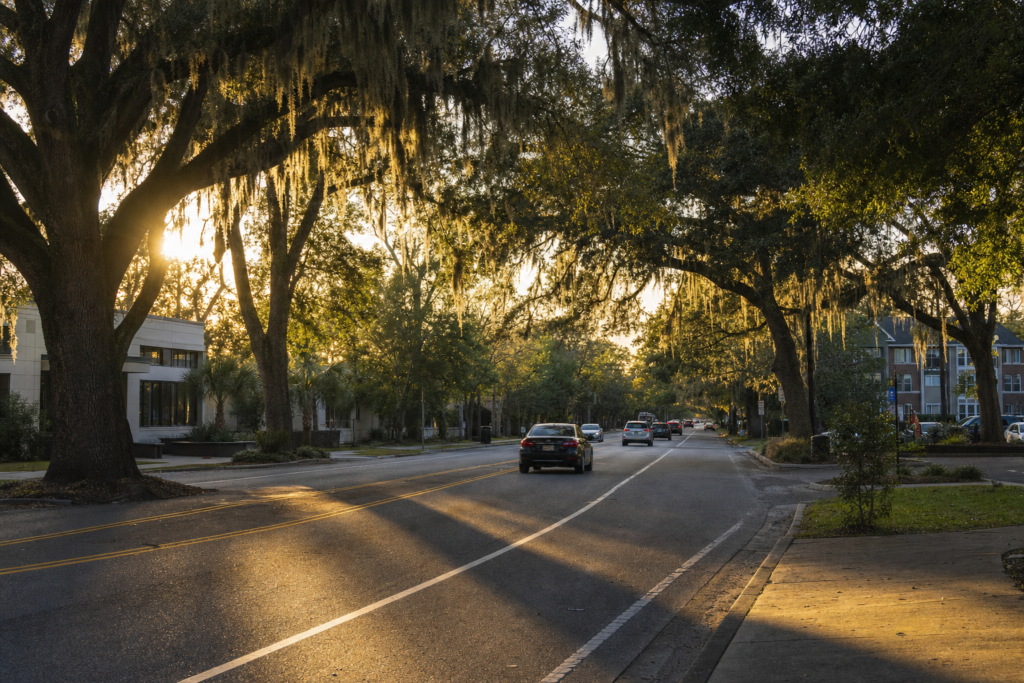
A hit-and-run or drunk-driver crash on Ashley River Road (SC 61) is a collision in which the at-fault driver either flees the scene before being identified or is operating under the influence of alcohol or drugs in violation of South Carolina law. In West Ashley’s Greenwood Park corridor, both fact patterns are common — and both push your recovery onto your own uninsured/underinsured motorist coverage faster than most drivers expect.
You still have a real path to compensation, even if the other driver is never identified or has no insurance. The legal route runs through S.C. Code Ann. § 56-5-1210 (hit-and-run), § 38-77-150 (mandatory uninsured motorist coverage), and the three-year deadline in § 15-3-530. This guide walks a Greenwood Park driver through what to do next.
Key Takeaways
- South Carolina gives you 3 years from the crash date to sue under S.C. Code Ann. § 15-3-530 — evidence on SC 61 disappears within days.
- Every SC auto policy carries mandatory uninsured motorist (UM) coverage under § 38-77-150 — your primary recovery path when an Ashley River Road hit-and-run driver is never identified.
- Underinsured motorist (UIM) coverage under § 38-77-160 is optional but often stackable across household vehicles — critical when an impaired driver carries only state-minimum limits.
- Fleeing an injury crash is a crime under § 56-5-1210; criminal flight does not bar your civil claim and frequently triggers UM coverage.
- DUI crashes can support punitive damages under SC law in egregious cases — particularly relevant for late-night SC 61 collisions returning from West Ashley bars.
- South Carolina uses a 51% modified comparative negligence rule under Nelson v. Concrete Supply Co., 303 S.C. 243 (1991) — recover so long as you are 50% or less at fault.
- Civil filings above $7,500 are venued in Charleston County Court of Common Pleas (Ninth Judicial Circuit).
Why Ashley River Road (SC 61) Sees So Many Hit-and-Run and DUI Crashes
Ashley River Road is an SCDOT primary arterial. Through Greenwood Park it carries commuter, commercial, and Lowcountry tourist traffic between the Ashley River bridges and the plantation corridor west of the city. Four structural factors put drivers here at higher risk than a typical residential street.
Constant turning conflicts. Side streets like Green Park Avenue feed directly onto SC 61. Through-traffic moves at 35 to 45 mph while drivers turning onto, off, and across the corridor brake, hesitate, and misjudge gaps. The result is a recurring pattern of T-bone and left-turn crash lawyers cases at side-street intersections, plus rear-end collision attorneys files for stop-and-go signal approaches.
Late-night bar return traffic. SC 61 is a principal artery pulling West Ashley residents back across the Ashley River after a night downtown. According to the South Carolina Department of Public Safety’s annual Traffic Collision Fact Book, alcohol-impaired driving is consistently a leading contributing factor in fatal crashes statewide, with Charleston County among the most affected counties. SCDPS spring and summer DUI enforcement campaigns flag SC 61 / West Ashley as a high-citation corridor every year.
Park-adjacent crossings. West Ashley Park and Dogwood Park flank the corridor, drawing cyclists, joggers, weekend-tournament traffic, and rideshare drop-offs into the SC 61 lanes after dark.
Higher hit-and-run rate. According to the FBI Uniform Crime Reporting program, North Charleston historically reports crime rates well above SC averages, and SCDPS data shows the greater Charleston / North Charleston / West Ashley area producing a higher share of hit-and-run reports than rural counties. The probability that an SC 61 at-fault driver flees is meaningfully higher than the state baseline.
For neighborhood context, see West Ashley driving risks compared to downtown Charleston and North Charleston hit-and-run trends.
What to Do in the First Hour After an SC 61 Crash
If you can move and breathe, the next 60 minutes shape your case. The full checklist is in what to do after a car accident in South Carolina; the Ashley River Road version is shorter:
- Call 911 first, not your insurer. Greenwood Park sits inside the City of Charleston (29414), so Charleston PD typically responds — but crashes a few blocks north on SC 61 may be reported by North Charleston PD or Charleston County Sheriff. Whoever responds generates the FR-10 / TR-310 report that drives every later step.
- If the other driver flees, capture anything you can. Plate fragments, color, make, direction of travel, and any dashcam or doorbell-camera angle. This is the evidence that makes a § 56-5-1210 case prosecutable and an uninsured-motorist claim payable.
- Decline the field “no-injury” judgment. Adrenaline masks soft-tissue and head injuries. Bon Secours Saint Francis Hospital sits ~1 mile south of the Greenwood Park cluster — closest ED for SC 61 crashes. For suspected TBI or spinal involvement, MUSC Health on the Charleston peninsula is the regional Level I trauma center.
- Document the scene before vehicles move. Skid marks, debris field, signal phase, lighting, the side-street curb cut if a left-turn driver came out of Green Park Avenue.
- Talk to a lawyer before you talk to the at-fault insurer. Recorded statements in the first 48 hours are the most common reason South Carolina injury cases under-resolve.
How South Carolina Law Actually Recovers for You
Three statutes and one Supreme Court case do most of the work in a Greenwood Park hit-and-run or DUI claim.
The deadline — § 15-3-530. You have three years from the crash to file a personal-injury lawsuit. Three years is not a lot — witnesses move, body-cam footage is purged, and the at-fault insurer exploits every gap. See South Carolina’s three-year personal injury statute of limitations. Wrongful-death actions are also generally three years from the date of death under § 15-51-10 et seq.
The hit-and-run statute — § 56-5-1210. Leaving the scene of a crash involving injury or death is a separate criminal offense. The criminal case is the state’s business — your civil case is independent. Whether the fleeing driver is caught or never identified, your South Carolina UM coverage exists for this situation.
Mandatory UM coverage — § 38-77-150. Every South Carolina auto policy must include uninsured motorist coverage. When the at-fault driver flees and is never identified, that policy treats them as effectively uninsured and your UM coverage steps in.
Optional UIM and stacking — § 38-77-160. UIM kicks in when an impaired driver is identified but carries only state-minimum limits. South Carolina permits stacking UIM across household vehicles in many fact patterns — often the difference between a six-figure recovery and a $25,000 cap. The firm’s GA-focused piece on uninsured and underinsured motorist coverage is the closest existing explainer; SC stacking is fact-driven and best done with counsel.
*Comparative fault — Nelson v. Concrete Supply Co., 303 S.C. 243 (1991).* SC follows a 51% modified comparative-negligence rule. You can recover at 50% or less at fault, with recovery reduced proportionally; recovery is barred at 51% or more. See South Carolina’s 51% modified comparative negligence rule.
Punitive damages and DUI — § 56-5-2930 et seq. and § 15-32-510 et seq. South Carolina’s DUI per se framework starts at § 56-5-2930, with felony DUI provisions for serious bodily injury or death. Drunk-driver fact patterns often support punitive damages on top of compensatory damages — subject to statutory caps. This is why the drunk-driver crash lawyers practice page treats DUI cases as distinct from ordinary negligence files.
UM vs. UIM: Which Coverage Pays on SC 61
The two coverages do different work. Knowing which applies to your facts is half the case.
| Feature | Uninsured Motorist (UM) | Underinsured Motorist (UIM) |
|---|---|---|
| SC statute | § 38-77-150 | § 38-77-160 |
| Required on every SC policy? | Yes — mandatory | No — optional; insurer must obtain a written rejection |
| Minimum limits | $25K / $50K bodily injury, $25K property damage | Up to the insured’s underlying liability limits |
| When it kicks in | At-fault driver has no insurance, or flees and is never identified | At-fault driver is identified but liability limits are less than your damages |
| Stacking across household vehicles | Limited under SC law | Commonly available; fact-specific, often case-determinative |
| Typical SC 61 use case | Late-night fleeing or phantom-vehicle collision | Impaired driver with only state-minimum limits |
Rule of thumb: UM is for “we never found the other driver.” UIM is for “we found them, but their coverage is not enough.” Many Ashley River Road files involve both — a partial identification, a low-limits tender, and a UIM stack to make the client whole.
Punitive Damages and the Drunk-Driver Case
A drunk-driver crash is legally distinct from an inattentive-driver rear-ender. South Carolina permits punitive damages for willful, wanton, or reckless conduct, and DUI is the textbook example. Graeham C. Gillin, partner and Chief Operating Officer at Roden Law, points out that drunk-driver cases are often under-valued in the first 72 hours — adrenaline hides the long-tail injuries that drive the real settlement, and impaired drivers usually carry just enough liability coverage to pay the ER bill. The leverage lives in punitive exposure under § 15-32-510 et seq. and the stacked UIM layer under § 38-77-160. SC 61-specific analysis is in proving pain and suffering after an Ashley River Road accident.
If a rideshare driver was involved, different policy layers apply — start with Uber and Lyft rideshare crash attorneys for the TNC coverage framework before going to the UM layer.
Where the Case Gets Filed
Civil filings above $7,500 are venued in the Charleston County Court of Common Pleas (Ninth Judicial Circuit); smaller matters go to the Charleston County Magistrate’s Court. The local North Charleston car accident lawyers page and the hit-and-run accident attorneys pillar walk through filing through trial.
About the Author
Graeham C. Gillin is a partner and Chief Operating Officer at Roden Law, licensed by the South Carolina Bar. His practice focuses on serious-injury, wrongful-death, hit-and-run, and DUI-involved automobile cases throughout the Lowcountry — including the SC 61 / West Ashley / Greenwood Park corridor served from the firm’s North Charleston office. He is the attorney of record for the firm’s South Carolina UM/UIM claims.
Free Case Review — No Fees Unless We Win. Call 1-844-RESULTS to speak with the Roden Law team about your Ashley River Road crash.
Frequently Asked Questions
About the Author