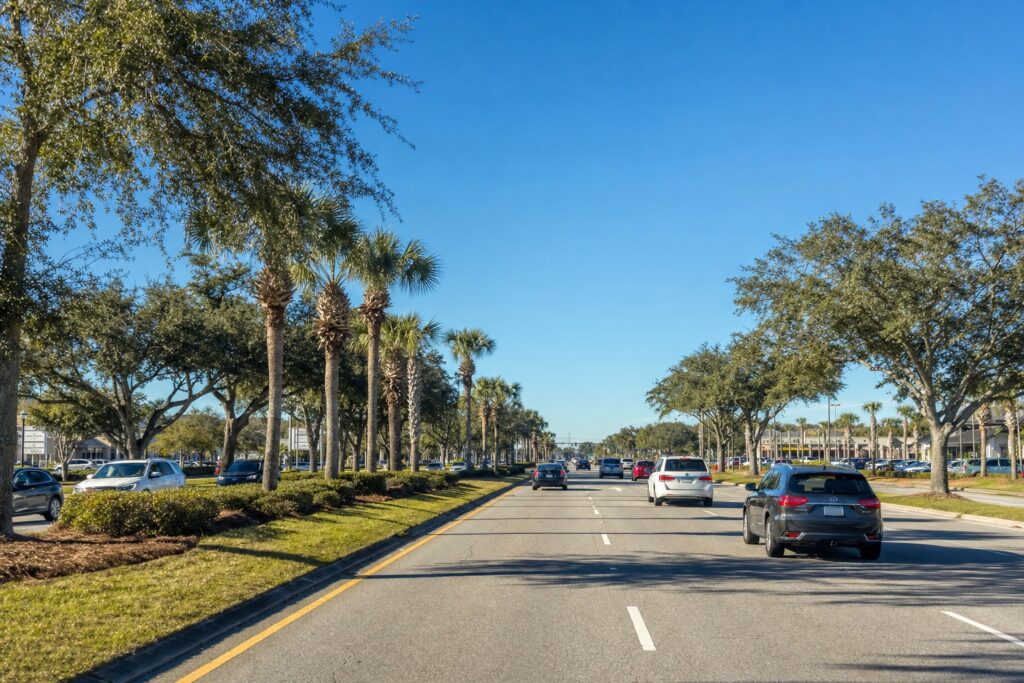
If your family has lost someone in a crash on Johnnie Dodds Boulevard (US-17) in Mount Pleasant, a Mount Pleasant Johnnie Dodds wrongful death car accident lawyer can explain your rights under South Carolina law, protect the evidence before it disappears, and carry the legal burden while you grieve. You did not plan for this, and nothing here makes it easier. What follows is meant to give you clear, jurisdiction-specific answers at a moment when clear answers are hard to find — and to do it without charging you anything up front.
Key Takeaways
- A wrongful-death claim after a fatal US-17 crash must be filed by the personal representative of the estate under S.C. Code Ann. § 15-51-10 — not by family members individually.
- South Carolina gives you three years from the date of death to file most wrongful-death claims (S.C. Code Ann. § 15-3-530).
- South Carolina uses modified comparative negligence with a 51% bar — your family can recover as long as the person who died was 50% or less at fault, with damages reduced by their share.
- Fatal Mount Pleasant crashes are litigated in the Charleston County Court of Common Pleas (Ninth Judicial Circuit).
- A wrongful-death action and a survival action are separate claims that often arise from the same crash and recover different losses.
- After a fatal Credit One Stadium event-night DUI crash, punitive damages may be available alongside the at-fault driver's criminal exposure under S.C. Code Ann. § 56-5-2930.
- Roden Law works on contingency — no fees unless we win — and the call is free: 1-844-RESULTS.
Why Johnnie Dodds Boulevard (US-17) Is So Dangerous for East Cooper Families
Johnnie Dodds Boulevard (US-17) is the principal arterial carrying East Cooper traffic between Mount Pleasant and the Arthur Ravenel Jr. Bridge, and the Shoals Drive area sits just off it. That makes the corridor one of the busiest and most crash-prone stretches in Charleston County — a place where high speed, heavy volume, and constant turning movements collide.
According to South Carolina Department of Public Safety data, more than 1,000 people are killed in traffic collisions on South Carolina roads in a typical year, and Charleston County consistently ranks among the counties with the highest collision counts in the state. On the US-17 corridor near Mount Pleasant, several local factors stack the odds:
- Heavy through-traffic and signalized intersections on Johnnie Dodds Boulevard, where frequent lane changes drive rear-end and turning collisions.
- Merge and weave conflicts where the Mark Clark Expressway (I-526) feeds high-speed freeway traffic into the surface-street arterial flow near Mount Pleasant.
- Event-day surges around Credit One Stadium (about 1.82 miles away), where Charleston Open tennis crowds and concert traffic overwhelm the US-17 / I-526 approaches.
- Rapid East Cooper development that has added curb cuts, turning movements, and congestion faster than the road network was designed to handle.
- Residential and pedestrian exposure near Kearns Park (about 0.74 miles away), where local cross-traffic mixes with arterial volume.
According to National Highway Traffic Safety Administration reporting, speeding and alcohol-impaired driving are each a factor in roughly a third of U.S. traffic deaths — and both risks spike on this corridor on event nights. You can read more about how Mount Pleasant's development-driven crash risk and car accidents on Coleman Boulevard in Mount Pleasant compound the danger on neighboring East Cooper roads, and how I-526 crashes through Mount Pleasant feed the same high-speed traffic into US-17.
When a crash here turns fatal, victims are typically taken to East Cooper Medical Center (about 2.46 miles away), the nearest emergency department serving the corridor, or to AMG Specialty Hospital Charleston. For families, what comes next is not a medical question but a legal one — and the law moves on its own schedule.
Who Can File a Wrongful-Death Claim After a Fatal US-17 Crash
This is the single most misunderstood part of South Carolina wrongful-death law. A wrongful-death claim is not filed by the grieving spouse, parent, or child directly. Under S.C. Code Ann. § 15-51-10, the claim must be brought by the personal representative of the deceased person's estate — the person named in the will or appointed by the probate court — who pursues it on behalf of the statutory beneficiaries.
Those beneficiaries are set by statute in a fixed order: first the spouse and children, then (if none) the parents, and then the heirs. The personal representative files the lawsuit; the recovery is distributed to the family members the law protects. If no personal representative has been appointed yet, that appointment usually has to happen before the case can move forward — one more reason families benefit from talking to Charleston wrongful death lawyers early.
Graeham C. Gillin, a partner and Chief Operating Officer at Roden Law, points out that the most painful mistakes he sees come from delay: families assume there is nothing to do until the estate is "settled," and meanwhile the crash scene is cleared, the at-fault driver's insurer locks down its story, and witnesses scatter. Getting a personal representative appointed and an investigation started quickly is what preserves a fatal-crash case, and it costs the family nothing to begin.
Wrongful Death vs. Survival Action — Two Separate Claims
A single fatal Johnnie Dodds Boulevard crash usually gives rise to two distinct South Carolina claims, and they recover different losses. Understanding the difference matters because they are valued and proven separately.
| Wrongful-Death Action | Survival Action | |
|---|---|---|
| Statutory basis | S.C. Code Ann. § 15-51-10 | South Carolina survival statute |
| Who recovers | The statutory beneficiaries (spouse, children, parents) | The estate itself |
| Losses covered | Lost financial support, loss of companionship, grief and mental anguish of survivors, funeral costs | The pain, suffering, and medical expenses the victim endured before death |
| Filed by | Personal representative of the estate | Personal representative of the estate |
| Typical deadline | Three years from date of death (§ 15-3-530) | Three years (§ 15-3-530) |
Both claims are brought by the same personal representative, and the work of proving them — accident reconstruction, medical records, economic-loss analysis — overlaps heavily. The team that handles fatal car accident lawyers cases pursues both in parallel so nothing the family is owed is left on the table.
South Carolina Deadlines and Fault Rules That Decide These Cases
Two rules govern almost every fatal US-17 case, and both are unforgiving if missed.
The filing deadline. South Carolina generally gives families three years from the date of death to file a wrongful-death claim (S.C. Code Ann. § 15-3-530). Three years feels like a long time in the rawest weeks of grief, but evidence on a busy corridor like Johnnie Dodds Boulevard degrades within days. Our full breakdown of South Carolina's 3-year statute of limitations explains the narrow exceptions — and why none of them are safe to rely on.
Comparative fault. South Carolina follows modified comparative negligence with a 51% bar. Your family can recover as long as the person who died was 50% or less at fault; if they were more at fault than the other driver, recovery is barred, and any award is reduced by their percentage of fault (Nelson v. Concrete Supply Co., 303 S.C. 243 (1991)). When more than one driver shares blame, fault is apportioned among defendants under S.C. Code Ann. § 15-38-15. Insurers exploit this rule aggressively in fatal cases — the deceased cannot tell their side, so the defense fills the silence. Our guide to South Carolina comparative fault rules walks through how that fight actually plays out.
According to Centers for Disease Control and Prevention data, motor-vehicle crashes remain a leading cause of injury-related death in the United States, which is exactly why these claims are litigated so hard — the stakes for both sides are enormous.
When the At-Fault Driver Was Impaired After a Credit One Stadium Event
Some of the most severe fatal crashes on this corridor happen on event nights. Credit One Stadium draws large Charleston Open and concert crowds, and as fans leave, post-event impaired driving spikes on the US-17 and I-526 approaches. When a fatal crash is caused by an impaired driver, the case changes in two ways.
First, the at-fault driver faces criminal DUI exposure under S.C. Code Ann. § 56-5-2930, separate from your family's civil claim. Second, drunk-driving conduct can support punitive damages — money meant to punish and deter, on top of compensation for your loss. Roden Law also handles claims involving drunk driver accident lawyers across the Charleston metro, where event-night and seasonal impaired driving drive a meaningful share of the corridor's worst crashes.
There is one more practical reality on this corridor: high event-day and tourist traffic means a larger share of at-fault drivers carry only minimum South Carolina liability limits. When those limits cannot cover a death, your own under- and uninsured motorist coverage often becomes the real source of recovery — a fight the Charleston car accident lawyers at Roden Law handle routinely.
How Roden Law Helps East Cooper Families
You should not have to become an expert in probate appointments, apportionment statutes, and insurance limits while you are planning a funeral. That is our job. As Roden Law personal injury lawyers, we open every fatal-crash matter the same way: preserve the scene evidence, secure the vehicles, identify every liable party and every applicable insurance policy, and handle the estate side so the personal representative can step into the case cleanly.
With $300M+ recovered, 5,000+ cases handled, and a 4.9-star average client rating, our promise to East Cooper families is simple: we work on a contingency fee basis — you pay nothing up front and no legal fees unless we win.
Free Case Review — No Fees Unless We Win. Call 1-844-RESULTS to speak with a Mount Pleasant Johnnie Dodds wrongful death car accident lawyer today.
About the Author
Graeham C. Gillin is a partner and Chief Operating Officer at Roden Law and is licensed by the South Carolina Bar. He leads the firm's representation of East Cooper and Charleston County families in fatal-crash and wrongful-death cases, including those arising on the Johnnie Dodds Boulevard (US-17) corridor in Mount Pleasant. This article is for general information and is not legal advice.
Frequently Asked Questions
About the Author