
 Car Accident
What Do Fault and No-Fault Mean in Car Insurance?
Georgia and South Carolina are both fault states where the at-fault driver pays for damages, unlike no-fault states that use…
Car Accident
Georgia and South Carolina are both fault states where the at-fault driver pays for damages, unlike no-fault states that use…
Ordinary negligence is the failure to exercise reasonable care, while gross negligence involves conscious disregard for others' safety. Georgia recognizes…
Uninsured/underinsured motorist (UM/UIM) coverage protects you when the at-fault driver has no insurance or insufficient limits. Georgia requires UM/UIM on…
 Car Accident
Intoxicated pedestrians can file personal injury claims in both Georgia and South Carolina under modified comparative fault rules. Georgia allows…
 Car Accident
Multi-vehicle crashes in Georgia and South Carolina involve complex fault allocation under modified comparative fault rules—Georgia bars recovery at 50%…
Georgia's Super Speeder Law (O.C.G.A. § 40-6-189(b)) imposes an additional $200 surcharge on drivers convicted of 75+ mph on two-lane…
 Car Accident
Lane-change crashes number in the hundreds of thousands nationally each year (NHTSA), and blind spot crashes hit motorcyclists, bicyclists, and…
 Car Accident
Concussions from car accidents can produce delayed symptoms including headaches, confusion, memory loss, and mood changes. Georgia allows two years…
 Car Accident
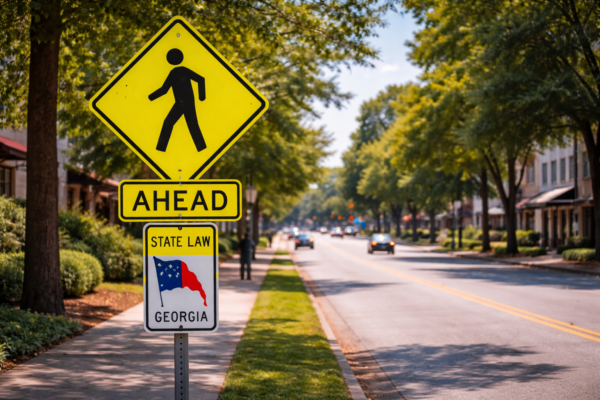
Pedestrian accidents in Georgia and South Carolina carry high fatality rates due to lack of pedestrian protection. Drivers must yield…
Gathering and preserving evidence immediately after a motorcycle accident is critical for proving negligence and overcoming rider bias. Key evidence…