Key Takeaways
Boeing's North Charleston facility exposes workers to assembly line injuries, repetitive stress disorders, chemical exposure, and falls. South Carolina workers' compensation provides medical and wage benefits regardless of fault but limits damage recovery. Injured workers may pursue third-party claims against equipment manufacturers, subcontractors, or negligent co-employers for full damages including pain and suffering. Georgia workers file under O.C.G.A. 34-9-1. Filing deadlines differ by claim type, and OSHA violations may support negligence claims.
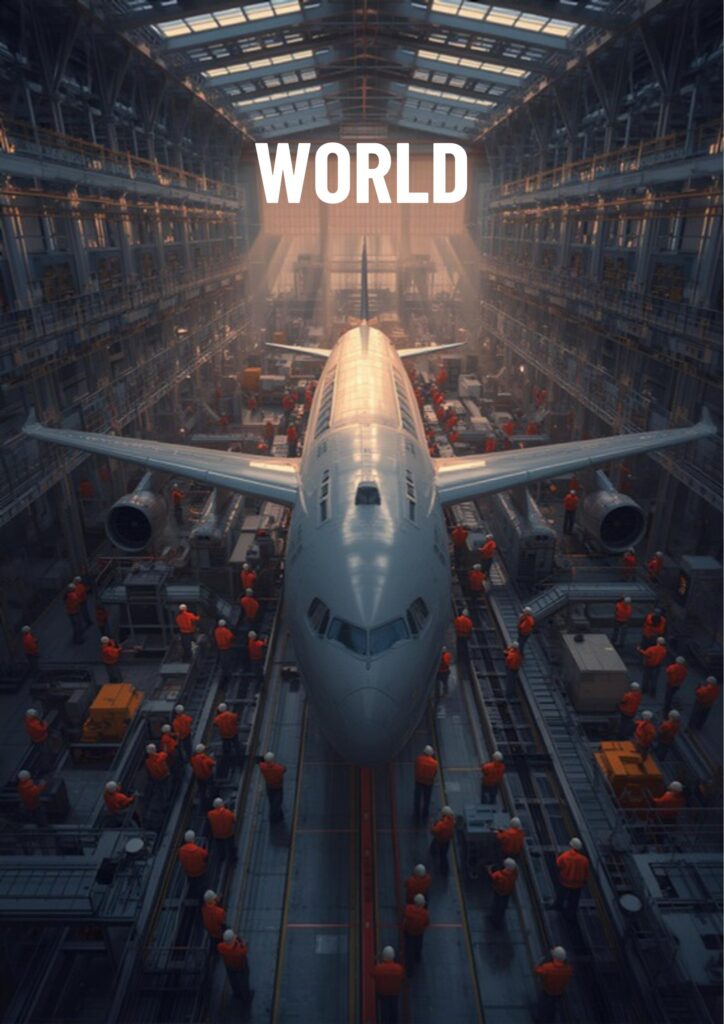
The Boeing South Carolina campus in North Charleston is one of the largest manufacturing facilities in the southeastern United States. The sprawling complex — which assembles the 787 Dreamliner and has produced aircraft components for decades — employs thousands of workers directly and supports thousands more through its network of contractors, subcontractors, and suppliers. It is the economic anchor of the North Charleston industrial corridor and one of the most important employers in the entire Charleston metro area.
But aerospace manufacturing is dangerous work. Boeing’s North Charleston facility involves heavy machinery, composite materials, chemical solvents, overhead cranes, confined spaces, elevated work platforms, robotic systems, and the constant physical demands of assembling enormous aircraft structures. According to the Bureau of Labor Statistics, the manufacturing sector — and aerospace manufacturing in particular — produces tens of thousands of workplace injuries annually. Workers at the Boeing South Carolina facility face these risks every shift.
Boeing in North Charleston: One of South Carolina’s Largest — and Most Hazardous — Workplaces
The Boeing South Carolina campus includes multiple buildings dedicated to different phases of 787 Dreamliner production:
- Fuselage fabrication — large composite barrel sections are assembled using autoclaves, automated fiber placement machines, and manual layup processes
- Final assembly — fuselage sections are joined, systems are installed, and aircraft are completed in massive hangar facilities
- Paint and finishing — aircraft are painted in specialized facilities using industrial coatings, solvents, and controlled environments
- Testing and delivery — completed aircraft undergo systems testing, flight testing, and preparation for customer delivery
- Support facilities — maintenance shops, parts warehouses, tooling facilities, and administrative buildings supporting production
Each area presents distinct hazards. The combination of heavy industrial manufacturing, chemical processes, and the enormous scale of the work — individual fuselage sections weigh tens of thousands of pounds — makes Boeing’s North Charleston campus one of the most hazardous workplaces in South Carolina.
Common Workplace Injuries at Boeing South Carolina
Repetitive Stress and Ergonomic Injuries
The most common category of injury at aerospace manufacturing facilities. Workers performing overhead drilling, riveting, fastening, and composite layup work sustain rotator cuff tears, carpal tunnel syndrome, tennis elbow, herniated discs, and chronic back and neck pain. The physical demands of working inside fuselage sections — often in awkward positions, overhead, or in confined spaces — place extraordinary strain on muscles, joints, and the spine.
Falls
Aircraft assembly requires workers to operate at significant heights — on scaffolding around fuselage sections, on elevated platforms, on aircraft wings, and on ladders accessing various assembly stations. Falls from these heights cause traumatic brain injuries, spinal cord injuries, fractures, and fatalities. Even falls from lower heights onto hard factory floors can produce serious injuries.
Struck-By and Caught-In Accidents
The movement of massive aircraft components — fuselage sections, wing assemblies, engine pylons — using overhead cranes, automated guided vehicles, and specialized transport systems creates struck-by and caught-in hazards. Workers near these operations can be struck by swinging loads, crushed between moving components, or caught in automated machinery.
Chemical and Composite Exposure
Boeing’s 787 production relies heavily on carbon fiber reinforced polymer (CFRP) composites. The manufacturing and machining of these materials generates fine particulate dust that can cause respiratory problems. Additionally, workers in paint, sealing, and bonding operations are exposed to industrial solvents, epoxies, isocyanates, and other chemical compounds that can cause acute chemical burns, respiratory irritation, and chronic occupational illness.
Electrical Injuries
The installation and testing of aircraft electrical systems — involving miles of wiring per aircraft — creates electrocution and arc flash hazards. Workers testing high-voltage systems or working near energized components face shock, burn, and cardiac arrest risks.
Hearing Loss
The noise levels in manufacturing areas — from riveting, drilling, grinding, engine testing, and heavy equipment operation — can exceed safe exposure limits. Prolonged exposure without adequate hearing protection causes noise-induced hearing loss, which is permanent and irreversible.
Workers’ Compensation for Boeing Employees in South Carolina
Boeing employees injured on the job are generally entitled to South Carolina workers’ compensation benefits (S.C. Code § 42-1-10 et seq.). Benefits include:
- Medical treatment — all reasonable and necessary care related to the work injury through authorized providers
- Temporary total disability — 66⅔% of your average weekly wage while unable to work, subject to the state maximum
- Temporary partial disability — 66⅔% of the wage difference if you can perform light-duty work
- Permanent partial disability — scheduled benefits for permanent impairment to specific body parts
- Permanent total disability — benefits for workers permanently unable to return to any employment
Workers’ comp is a no-fault system — you do not need to prove Boeing was negligent. However, the benefits are limited: there is no compensation for pain and suffering, disability payments are capped at a fraction of your actual wages, and permanent total disability benefits are generally limited to 500 weeks.
For Boeing workers with catastrophic injuries — traumatic brain injuries, spinal cord injuries, amputations, or severe chemical exposure injuries — workers’ comp alone may provide only a fraction of the compensation needed for lifetime medical care and lost earning capacity.
Third-Party Claims: When Workers’ Comp Is Not Enough
While workers’ comp bars you from suing Boeing directly, you may have a separate personal injury claim against third parties — companies or individuals other than your employer whose negligence contributed to your injury:
- Equipment manufacturers — if a defective machine, tool, robotic system, crane, or safety device caused your injury, the manufacturer may be strictly liable under product liability law
- Contractors and subcontractors — Boeing’s campus hosts numerous contractor companies performing construction, maintenance, installation, and support services; if a contractor’s negligence caused your injury, that company can be sued
- Chemical and material suppliers — companies that manufacture or supply hazardous chemicals, composite materials, or coatings used in the production process may be liable for failure to warn of known health risks
- Maintenance and repair companies — third-party companies that service equipment on the Boeing campus may be liable for negligent maintenance that led to equipment failure
- Temporary staffing agencies — the relationship between a staffing agency and a host employer like Boeing creates complex liability questions when a temp worker is injured
Third-party claims allow recovery of full compensatory damages including medical bills, all lost wages, pain and suffering, loss of enjoyment of life, and potentially punitive damages — none of which are available through workers’ compensation.
OSHA Concerns and Safety Record at Boeing South Carolina
Boeing’s South Carolina facility has faced scrutiny regarding workplace safety practices. OSHA inspections, employee complaints, and media investigations have raised concerns about:
- Production pressure — allegations that schedule pressure leads to shortcuts in safety procedures and inadequate time for proper equipment maintenance
- Ergonomic hazards — the physical demands of manual assembly work inside fuselage sections, particularly for workers performing overhead tasks for extended periods
- Chemical exposure controls — adequacy of ventilation, personal protective equipment, and exposure monitoring in areas where composite materials, solvents, and coatings are used
- Training adequacy — whether workers, particularly newer employees and temporary workers, receive sufficient safety training before performing hazardous tasks
OSHA citations and inspection records are publicly available through the OSHA establishment search database. Violations documented by OSHA can serve as evidence of negligence in a third-party personal injury claim, although they are not automatically admissible in South Carolina courts.
Injuries to Contractors and Temporary Workers at the Boeing Campus
A significant number of workers on the Boeing South Carolina campus are not Boeing employees. They work for contractors, subcontractors, and temporary staffing agencies. This distinction has critical legal implications:
- Contractor employees are generally covered by their own employer’s workers’ comp insurance, not Boeing’s. They may also have a third-party claim against Boeing if unsafe conditions on the Boeing campus contributed to their injury.
- Temporary workers face unique challenges. Both the staffing agency and Boeing may argue that the other is responsible for safety training and workers’ comp coverage. South Carolina courts look at the actual employment relationship — who controlled the work, provided the tools, and directed the activities — to determine the responsible employer.
- Independent contractors may not have any workers’ comp coverage and must pursue their claims through personal injury litigation against the parties whose negligence caused the injury.
Toxic Exposure and Occupational Illness at the Boeing Facility
Occupational illnesses caused by chemical and environmental exposures at Boeing South Carolina may not become apparent for months or years after exposure. These claims present special challenges:
- Composite dust exposure — carbon fiber dust from machining composite structures can cause respiratory irritation, bronchitis, and potentially long-term lung disease
- Solvent exposure — MEK, acetone, and other solvents used in composite bonding and cleaning can cause neurological damage, liver and kidney damage, and skin conditions
- Isocyanate exposure — used in paints and coatings, isocyanates are a leading cause of occupational asthma and can cause permanent respiratory impairment
- Noise-induced hearing loss — develops gradually and may not be noticed until significant damage has occurred
For occupational illness claims, the statute of limitations may run from the date the illness is diagnosed or the date the worker discovers (or should have discovered) the connection between the illness and the workplace exposure — not from the date of first exposure. This “discovery rule” is critical for workers whose conditions develop years after initial exposure.
Filing Deadlines for Boeing Workplace Injury Claims
- SC workers’ compensation — report to employer within 90 days; file claim within two years (S.C. Code § 42-15-40)
- SC personal injury (third-party) — three years from injury or discovery (S.C. Code § 15-3-530)
- SC wrongful death — three years from date of death (S.C. Code § 15-51-20)
- Occupational illness — the discovery rule may extend deadlines, but you must act promptly once you learn of the diagnosis and its connection to workplace exposure
Workers’ Comp Comparison: South Carolina vs. Georgia
Roden Law represents injured workers in both South Carolina and Georgia. For workers who may travel between Boeing’s South Carolina facility and other employers or job sites in Georgia, the differences matter:
| Feature | South Carolina | Georgia |
|---|---|---|
| Workers’ comp statute | S.C. Code § 42-1-10 et seq. | O.C.G.A. § 34-9-1 et seq. |
| Report deadline | 90 days | 30 days |
| Filing deadline | 2 years | 1 year |
| PI statute of limitations | 3 years | 2 years |
| Comparative fault threshold | Less than 51% (S.C. Code § 15-38-15) | Less than 50% (O.C.G.A. § 51-12-33) |
How a North Charleston Workplace Injury Lawyer Can Help
Workplace injury cases involving a major employer like Boeing present unique challenges — aggressive corporate defense teams, complex workers’ comp proceedings, potential third-party claims, and occupational illness issues. A workplace injury lawyer from Roden Law can:
- Pursue both workers’ comp and third-party claims — maximize total recovery by securing workers’ comp benefits while building negligence cases against equipment manufacturers, contractors, and other third parties
- Investigate thoroughly — obtain OSHA records, equipment maintenance histories, chemical exposure data, and internal safety reports
- Handle occupational illness claims — connect you with occupational medicine specialists who can document the relationship between your workplace exposure and your condition
- Navigate the contractor/temp worker maze — determine which employer is responsible for workers’ comp coverage and identify all parties who may be liable for third-party claims
- Protect your job rights — ensure that Boeing or your employer does not retaliate against you for filing a workers’ comp claim
- Calculate lifetime damages — aerospace manufacturing injuries often end careers; we ensure that future lost earning capacity, lifetime medical costs, and long-term care needs are fully valued
At Roden Law, we represent injured workers throughout North Charleston and the greater Charleston area. We handle workplace injury cases on a contingency-fee basis — you pay nothing unless we recover compensation for you.
If you have been injured at Boeing South Carolina or any North Charleston workplace, call us today at (843) 790-8999 or 1-844-RESULTS for a free consultation.
Frequently Asked Questions
Generally, workers' compensation is your exclusive remedy against your direct employer in South Carolina. However, if a third party's negligence caused your injury — such as a defective machine manufacturer, a contractor on the Boeing campus, or a chemical supplier — you can file a separate personal injury lawsuit against that third party to recover full damages including pain and suffering.
South Carolina workers' compensation provides medical treatment through authorized providers, temporary disability payments at two-thirds of your average weekly wage, and permanent disability benefits for lasting impairment. You do not need to prove Boeing was negligent. However, benefits do not include pain and suffering and are capped at a fraction of your actual wages.
Contractors are typically covered by their own employer's workers' comp insurance and may have a third-party claim against Boeing if unsafe conditions on the campus caused the injury. Temporary workers face complex questions about which employer — the staffing agency or Boeing — is responsible. An attorney can analyze the actual employment relationship to determine your rights.
Yes. Workers exposed to composite dust, solvents, isocyanates, or other hazardous materials at Boeing who develop respiratory conditions, neurological damage, or other occupational illnesses can file workers' comp claims and potentially third-party claims against chemical suppliers. The discovery rule may extend filing deadlines for illnesses that develop years after exposure.
For workers' comp, you must report the injury within 90 days and file a formal claim within two years (S.C. Code section 42-15-40). For third-party personal injury claims, the statute of limitations is three years (S.C. Code section 15-3-530). For occupational illnesses, the deadline may run from the date of diagnosis rather than the date of exposure.
The most common injuries include repetitive stress injuries (rotator cuff tears, carpal tunnel, herniated discs) from assembly work, falls from scaffolding and elevated platforms, struck-by and caught-in accidents from heavy component movement, chemical and composite dust exposure causing respiratory problems, electrical injuries from aircraft systems work, and noise-induced hearing loss from manufacturing environments.
About the Author