
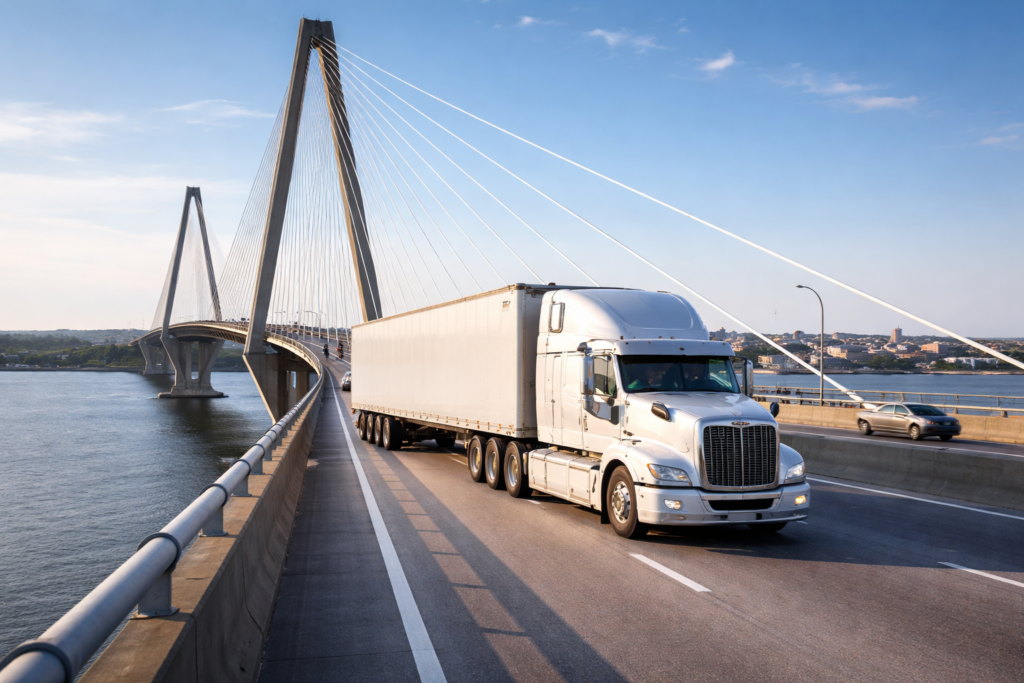
Were you hit by a semi or box truck on the Arthur Ravenel Jr. Bridge or along US-17? This guide explains the risks unique to this corridor, which agency likely holds your report, the evidence that proves fault, and the steps to protect your claim. If you need help now, our Charleston truck accident lawyers can start preservation letters today.
Quick takeaways
- Wind, grade, and congestion make the Ravenel & US-17 corridor especially risky for large trucks.
- Jurisdiction can be Charleston PD, Mount Pleasant PD, or SCHP depending on the precise location and lane of travel.
- Dashcam, ELD/ECM, and wind advisories are time-sensitive evidence—move fast to preserve them.
- Commercial claims often involve multiple insurers (motor carrier, trailer owner, excess/umbrella coverage).
Why the Ravenel & US-17 are high-risk for 18-wheelers
The Ravenel Bridge’s height and exposure increase wind effects on tall trailers, while US-17 sees frequent speed changes and heavy tourist traffic. Merging near ramps, lane shifts, and sudden slowdowns elevate the risk of rear-ends, sideswipes, and cargo-shift incidents. When a semi is involved, the stopping distances, blind spots, and the force of impact all amplify injuries and damages compared with typical passenger-car crashes.
Who has your crash report? (Charleston vs. Mount Pleasant vs. SCHP)
Jurisdiction on or near the bridge can be confusing. As a rule of thumb:
- City of Charleston PD typically covers the Charleston side approaches and certain stretches leading onto the bridge.
- Mount Pleasant PD typically covers the Mount Pleasant side approaches and related US-17 segments.
- South Carolina Highway Patrol (SCHP) may investigate wrecks on state-controlled portions or multi-vehicle incidents spanning jurisdictions.
If multiple agencies responded, your lawyer can help confirm the primary investigating agency, request the report, and reconcile supplemental narratives. Don’t guess—request the official report number from dispatch or the officer at the scene whenever possible.
Exactly what to do in the first 72 hours
Day 0–1
- Call 911; get medical care. Tell EMS about head, neck, back, or tingling/numbness symptoms.
- Photograph the scene: truck logos and USDOT/MC numbers, license plates, lane markings, skid marks, debris, your injuries, and any wind signage or cones.
- Record witnesses: names, numbers, where they stood, and what they saw/heard.
- Note nearby cameras: traffic cams, bridge cams, hotel/garage/storefront angles facing the roadway.
- Contact a truck-accident lawyer to send spoliation letters for dashcam, ELD/ECM, dispatch, and trailer data.
Day 2–3
- Follow up with primary care or a specialist; document pain, range of motion, and concussion symptoms.
- Share your photos, witness list, and camera locations with your attorney.
- Keep receipts: pharmacy, rideshare, medical devices, and out-of-pocket costs.
Evidence that proves fault on the bridge or US-17
In commercial-vehicle cases, the clock is your enemy. Many systems overwrite in days.
- Truck-side data: dashcam (front/side/back), ELD/ECM/telematics (speed, braking, GPS), dispatch logs, driver qualification & training, maintenance/brake records.
- Scene-side evidence: traffic/bridge cameras, nearby business/garage cameras, lane closure logs, 911 audio, post-collision inspections, tow and lane-closure timelines.
- Weather & wind advisories: recordings and alerts near the time of impact support a duty-of-care analysis (e.g., speed selection, lane choice, stopping distance).
We coordinate rapid preservation and subpoenas, and when a truck was en route to or from the port, we also pursue gate logs and GPS breadcrumbs. (See: Port of Charleston drayage truck crashes.)
Liability & insurance layers in 18-wheeler claims
Unlike a two-car crash, a semi-truck claim may involve:
- Motor carrier / employer (negligent driving; negligent hiring/training/supervision)
- Owner-operator or different vehicle owner (separate policy)
- Trailer owner (if different from tractor owner)
- Broker/shipper (limited circumstances, e.g., negligent selection or load issues)
- Excess/umbrella policies above primary auto coverage
Identifying every applicable policy early helps cover medical needs and avoids lowball offers that ignore excess coverage.
Injuries & damages you can claim
- Medical expenses (ER, imaging, surgery, therapy, future care)
- Lost wages, reduced earning capacity, and time off for treatment
- Pain and suffering, emotional distress, and loss of enjoyment
- Vehicle & property damage, towing/storage, rental or loss-of-use
- Scarring/disfigurement and permanent impairment
If the truck was headed to/from the port
Bridge and US-17 incidents often involve drayage trucks. Additional records can include port gate timestamps, dispatch tickets, scale logs, and container/chassis data. These help establish timing, routing, and whether load or schedule pressure contributed to the crash. Learn more in our Port of Charleston drayage guide.
How Roden Law builds your case
- Rapid evidence playbook: same-day spoliation letters to the motor carrier, trailer owner, and others to preserve dashcam, ELD/ECM, and dispatch data.
- Camera & witness sweep: we canvass likely vantage points on both sides of the bridge and along US-17.
- Accident reconstruction: we align telematics, weather/wind advisories, vehicle damage profiles, and lane closure records.
- Negotiation & litigation readiness: we posture your claim for trial from day one to improve outcomes.
Free Case Review: Talk with our Charleston truck accident lawyers today—we’ll start preservation letters immediately.
FAQs: Ravenel Bridge & US-17 truck accidents
Internal links
- Charleston Truck Accident Lawyers (Pillar)
- Port of Charleston Drayage Truck Crashes
- SC Truck-Crash Evidence: ELDs, Dashcams, Gate Logs & Spoliation
Disclaimer: This page provides general information, not legal advice. Every case is different. For advice about your situation, contact an attorney.
Frequently Asked Questions
About the Author

Want more from Roden Law in your Google results?