
Key Takeaways
Request a copy of your crash report right away: GDOT, the statewide custodian, sells Georgia crash reports through BuyCrash or by mail for $5 ($2 more for a certified copy), and Savannah Police also fill requests directly. For a clerical error such as a wrong plate number or misspelled name, contact the investigating officer with a document that shows the correct detail. Only the investigating officer and agency can amend a Georgia crash report, and they will not rewrite a conclusion about fault simply because a driver disagrees with it. If the officer will not change it, write a concise, factual, signed and dated account and give it to your attorney. Fault errors cost money: under O.C.G.A. § 51-12-33 you recover nothing if you are 50 percent or more at fault, and your damages are reduced by any smaller share. Georgia law requires the driver to notify police immediately of a crash involving injury, death, or apparent property damage of $500 or more (O.C.G.A. § 40-6-273).
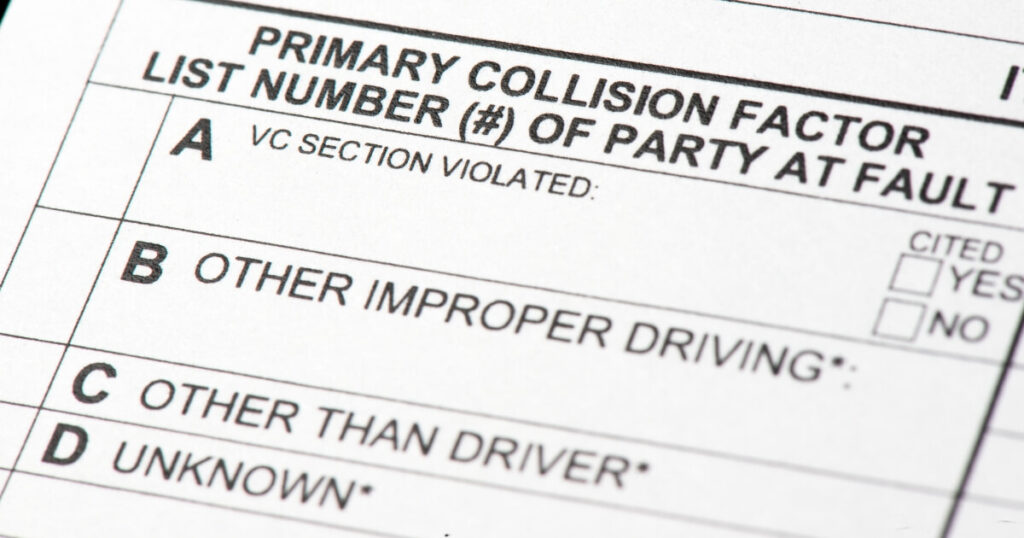
 After a car crash, there are a lot of things to do, especially if you have any injuries. Whether or not your police report is correct is probably the furthest thing from your mind. However, if the details in your police report are wrong, it could cause problems for any claim you pursue for damages.
At Roden Law, we dive into some of the critical details a police report provides and why they matter to your injury claim. We also talk about what you can do if any of the information in this report is not correct.
Injured in a crash caused by another driver? Have questions about how to recover compensation for things like medical costs and lost wages? Our experienced car crash attorneys in Savannah have answers and we are here to help you. Call our law offices in Georgia anytime, night or day, to request your initial consultation. It is completely free, confidential and carries no obligation to file a claim.
Request your FREE case review today. 1 (844) RESULTS
Are Police Reports Required in Georgia?
Georgia law requires the driver to notify law enforcement of a crash immediately in the following circumstances (O.C.G.A. § 40-6-273):
- An injury or fatality resulted from the crash
- There was apparent property damage of $500 or more
Separately, your auto policy may require you to report the crash to your insurer, and many insurers ask for the police report when you make a claim. That is a policy condition, not a legal reporting duty.
What Errors Could I Find On My Police Report?
There are generally three types of errors that you might find on your police report, including:
Factual Mistakes
A factual mistake is easier to make than you may realize. Crash scenes are often chaotic. The first responders may initially be more focused on getting medical help for anyone who is injured. Maybe the officer is at the end of his or her shift or had a bad night. Like all of us, they are vulnerable to making mistakes. A factual mistake could include:
- Wrong make, model or color of your vehicle or the other driver’s vehicle
- License plate numbers may be wrong
- Incorrect driver’s license numbers
- Incorrect names and addresses of either driver involved
- Wrong time and/or date for when the crash occurred
- Location is not where the crash occurred
Facts From Your Statement Are Incorrect or Left Out
The responding officer may have written your statement down wrong. For instance, say you said the other driver ran a red light, but the officer wrote that you said the other driver had a yellow light.
Omission errors are also common. For example, if you told the officer that you injured your back and neck in the crash, but he or she instead documented that you said you had no injuries.
Disputed Errors
Disputed errors are the officer’s conclusions, such as who was at fault or what contributed to the crash. These are the hardest to change, because only the investigating officer and agency can amend the report, and they will not rewrite a conclusion simply because a driver disagrees with it. These types of errors, especially, may be best handled with the assistance of a lawyer.
Why It Is Important To Remove Errors From Your Police Report
Mistakes in a police report could negatively affect your claim in many ways. Whether the information is wrong, left out or there are some other errors, it is important to seek a correction as quickly as possible.
For instance, if you do not correct the fact about the other driver running the red light, you could get unfairly blamed for more than your share of fault. If that happens, it could impact how much you get compensated for your losses. This is because Georgia follows a modified comparative fault system (O.C.G.A. § 51-12-33).
Georgia’s Modified Comparative Negligence Rule
If you are deemed to be 50 percent or more at fault for an accident in Georgia, you cannot recover any of your damages. Even if you are assessed with less than 50 percent of the fault, any compensation you receive will be reduced.
An example of this is if you are assessed with 20 percent of the fault when you were actually not at fault at all. If you were awarded $100,000 for your damages in that situation, you would only get $80,000. That is $20,000 lost on an error.
How Do I Get Mistakes Removed
Depending on the type of error you find, there are several ways to seek a correction to your police report.
Get a Copy of Your Georgia Crash Report
The first step is to request a copy of your crash report right away. Statewide, the Georgia Department of Transportation (GDOT) is the custodian of Georgia crash reports; you can buy a copy through BuyCrash or mail GDOT’s Individual Crash Report Request form ($5 per report, $2 more for a certified copy). Anyone named in the report, such as a driver, an injured person or their attorney, is entitled to it under O.C.G.A. § 50-18-72(a)(5). If Savannah Police investigated, you can also request a copy of your police report from its Records Unit in person, by phone, by fax, snail mail or by email; it may take up to three business days.
The longer you wait to fix a report with errors on it, the more likely it is the officer who documented your report may not remember details about it.
Correcting Factual Mistakes
For clerical errors, contacting the investigating officer with a document that shows the correct detail (your registration for a wrong plate number, your license for a misspelled name) is usually all it takes; the officer can then issue a corrected or supplemental report.
Changing or Amending Subjective Information:
Statements that are subjective or disputable are tougher to fix, but you can try to get these changed or at least amended by taking these steps:
- Contact the officer listed on the report and politely explain the error.
- Ask if they can correct the statement.
- If they will not change the statement, write your own account of the crash (concise, factual, signed and dated) and give it to your attorney. Whether the agency will attach a driver’s statement to the official report is at its discretion; what your statement reliably does is put your version in front of the insurance adjuster and, if needed, the court.
- When you write your statement, be sure that it is not just your opinion. Provide the facts without rambling – be clear, be brief and give details. If you have additional supporting evidence, like photos or dash cam footage, work with your attorney on the best way to send this statement.
Injured in a Car Crash? Call Roden Law for Legal Help
The aftermath of any car crash is a traumatic event for all involved. Dealing with injuries, doctors’ appointments, medical costs, insurance companies and more is overwhelming.
At Roden Law, you are not just a number. We work tirelessly for our clients in Savannah and throughout Georgia, seeking the maximum possible compensation for your losses. Call us today to learn more. Your initial consultation is completely free, and there are no upfront costs or fees to pay.
You do not have to handle your case alone. Call: 1 (844) RESULTS today.
Frequently Asked Questions
About the Author