
Key Takeaways
Truck accident liability can extend to the driver, trucking company, cargo loader, maintenance provider, and vehicle manufacturer. Federal FMCSA regulations establish safety standards whose violation is strong evidence of negligence. Georgia allows 2 years to file (O.C.G.A. § 9-3-33) while South Carolina allows 3 years (S.C. Code § 15-3-530). Critical evidence like ELD and black box data must be preserved immediately through spoliation letters.
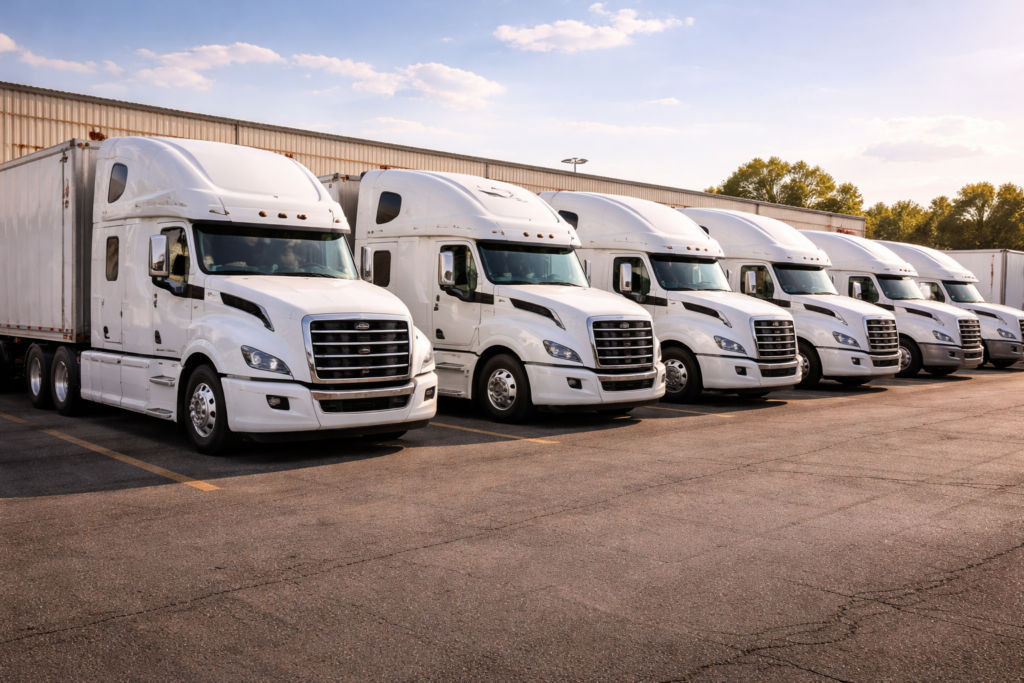
Truck accidents are among the most devastating collisions on Georgia and South Carolina roads. A fully loaded commercial truck can weigh up to 80,000 pounds — roughly 20 times the weight of a passenger car — and the injuries from these crashes are often catastrophic. But unlike a standard car accident, determining who is legally responsible for a truck crash is rarely straightforward. Multiple parties may share liability, from the driver to the trucking company, cargo loaders, maintenance providers, and even vehicle manufacturers. Federal Motor Carrier Safety Regulations (49 CFR Part 390) set the safety standards that govern every aspect of commercial trucking.
Understanding Truck Accident Liability
Truck accident liability is based on negligence — the failure of one or more parties to exercise reasonable care in operating, maintaining, or managing a commercial vehicle. What makes truck accident cases uniquely complex is the number of parties involved in getting a truck from point A to point B:
- The truck driver operates the vehicle
- The trucking company (motor carrier) employs or contracts with the driver and sets schedules
- The cargo shipper and loader determine what goes on the truck and how it is secured
- The maintenance provider inspects and repairs the vehicle
- The truck or parts manufacturer designs and builds the vehicle and its components
- The broker may arrange the load and select the carrier
Each of these parties has legal obligations. When any of them fails to meet those obligations and that failure causes an accident, they can be held liable for the resulting injuries and damages.
Who Can Be Held Liable for a Truck Accident?
| Party | Basis for Liability | Common Examples |
|---|---|---|
| Truck Driver | Direct negligence | Fatigue, distraction, impairment, speeding, improper lane changes |
| Trucking Company | Direct + vicarious liability | Negligent hiring, schedule pressure, inadequate training, poor maintenance |
| Cargo Loader/Shipper | Negligent loading | Overweight loads, unsecured cargo, imbalanced freight |
| Maintenance Provider | Negligent repair | Faulty brake work, missed safety defects, improper inspections |
| Manufacturer | Product liability | Defective brakes, tire blowouts, steering failures, faulty couplings |
| Government Entity | Road condition negligence | Dangerous road design, missing signage, unrepaired hazards |
The Truck Driver
Truck drivers are held to a higher standard of care than regular motorists because of the inherent danger of operating a massive commercial vehicle. Common forms of driver negligence include violating hours-of-service (HOS) rules, driving while fatigued, using a cell phone behind the wheel, failing to check blind spots, and driving too fast for road conditions.
The Trucking Company
Motor carriers bear extensive legal responsibilities. A trucking company can be directly liable for its own negligence — hiring drivers with poor safety records, failing to drug test, pressuring drivers to exceed legal driving hours, or neglecting vehicle maintenance. Under the legal doctrine of respondeat superior, the company is also vicariously liable for the negligent actions of its drivers committed within the scope of employment.
The Cargo Loader and Shipper
Federal regulations impose strict requirements on how cargo must be loaded and secured. When improperly loaded freight shifts during transit, it can cause the truck to roll over, jackknife, or lose cargo onto the roadway — creating hazards for everyone nearby.
The Maintenance Provider
Many trucking companies outsource maintenance to third-party shops. If a mechanic performs substandard brake work, misses a critical safety defect during an inspection, or uses inferior replacement parts, the maintenance company can be independently liable for accidents caused by mechanical failure.
The Vehicle or Parts Manufacturer
When a defective product causes a truck accident — such as a brake system that fails under normal use or a tire that blows out due to manufacturing defects — the manufacturer can be held strictly liable regardless of negligence.
Vicarious Liability and the Trucking Company
The respondeat superior doctrine is one of the most powerful tools in truck accident litigation. Under this legal principle, an employer (the trucking company) is liable for the negligent acts of its employees (the truck driver) committed within the scope of employment. This matters because trucking companies carry far larger insurance policies than individual drivers — often $1 million or more for interstate carriers.
Trucking companies frequently try to avoid vicarious liability by classifying drivers as independent contractors. However, courts in both Georgia and South Carolina look beyond the contractual label and examine the actual level of control the company exercises over the driver. Federal regulations under 49 CFR § 390.5 also hold the motor carrier responsible for safety compliance regardless of the driver’s employment classification.
Key factors courts consider when determining the employment relationship include:
- Does the company control the driver’s route, schedule, and delivery assignments?
- Does the company provide the truck, fuel, or equipment?
- Does the company set performance standards and conduct training?
- Does the company require the driver to use its branding, placards, or identification?
Federal Trucking Regulations That Establish Negligence
The Federal Motor Carrier Safety Administration (FMCSA) sets comprehensive safety regulations for the trucking industry. Violations of these regulations are strong evidence of negligence:
- Hours of Service (HOS): Drivers are limited to 11 hours of driving within a 14-hour window after 10 consecutive hours off duty. Fatigue-related violations are a leading cause of truck accidents.
- Electronic Logging Devices (ELDs): Required since 2017, ELDs automatically record driving time, replacing easily falsified paper logs.
- Drug and Alcohol Testing: Mandatory testing at hire, randomly, after accidents, and upon reasonable suspicion of impairment.
- Vehicle Inspections: Drivers must perform pre-trip and post-trip inspections and report defects. Carriers must ensure defects are repaired before the vehicle operates.
- Weight Limits: Interstate trucks cannot exceed 80,000 pounds gross vehicle weight. Overweight trucks require longer stopping distances and stress mechanical components.
- Cargo Securement: FMCSA regulations specify exactly how different types of cargo must be loaded, braced, and tied down.
- Driver Qualifications: CDL licensing, medical certification, background checks, and training requirements must be met before a driver operates a commercial vehicle.
Truck Accident Liability in Georgia and South Carolina
Georgia Law
Georgia’s modified comparative fault system under O.C.G.A. § 51-12-33 allows you to recover damages as long as you are less than 50% at fault. Your compensation is reduced by your percentage of responsibility. Key Georgia provisions for truck accident cases:
- Statute of limitations: 2 years from the accident date (O.C.G.A. § 9-3-33)
- Punitive damages: Available under O.C.G.A. § 51-12-5.1 for willful misconduct, malice, or wanton disregard — common in cases involving falsified log books or intoxicated drivers. Generally capped at $250,000 with specific exceptions.
- Negligent entrustment: Georgia recognizes claims against companies that entrust a commercial vehicle to a driver they know (or should know) is unfit
- Spoliation sanctions: Georgia courts can penalize trucking companies that destroy or fail to preserve ELD data, maintenance records, or other evidence
South Carolina Law
South Carolina follows a modified comparative fault system that allows recovery if you are less than 51% at fault — slightly more favorable than Georgia’s threshold. Key South Carolina provisions:
- Statute of limitations: 3 years from the accident date (S.C. Code § 15-3-530)
- Joint and several liability: Under S.C. Code § 15-38-15, defendants are generally responsible for their proportionate share of fault, with exceptions for defendants more than 50% at fault
- Punitive damages: Available under S.C. Code § 15-33-135 for willful, wanton, or reckless conduct. Generally capped at the greater of three times compensatory damages or $500,000.
- Negligent hiring and supervision: South Carolina courts allow independent claims against trucking companies for hiring or retaining unfit drivers
Common Causes and Who Is Responsible
Driver Fatigue
Fatigued driving remains one of the leading causes of truck accidents nationwide. When a tired driver causes a crash, both the driver (for violating HOS rules) and the trucking company (for setting unrealistic schedules or failing to monitor compliance) may share liability.
Mechanical Failure
Brake failures, tire blowouts, and steering malfunctions account for a significant percentage of truck crashes. Liability may fall on the maintenance provider who performed substandard repairs, the trucking company that deferred maintenance, or the manufacturer of the defective component.
Improperly Loaded Cargo
Overloaded or unsecured cargo causes rollovers, jackknifes, and debris hazards. The cargo loader, shipper, and trucking company may all share responsibility depending on the circumstances.
Distracted Driving
Texting, GPS use, eating, and other distractions are just as dangerous in a truck as in a car — but the consequences are far more severe. The driver is primarily liable, but the trucking company may share responsibility if it failed to enforce distracted driving policies.
Impaired Driving
A truck driver operating under the influence of alcohol or drugs faces both criminal charges and civil liability. The trucking company may also be liable if it failed to conduct required drug testing or ignored warning signs of substance abuse.
How to Prove Truck Accident Liability
Truck accident cases require gathering and preserving evidence that may be destroyed if action is not taken quickly:
- Electronic logging device (ELD) data — records driving hours and rest periods, proving HOS violations
- Event data recorder (EDR) or “black box” data — captures speed, braking, acceleration, and steering inputs before the crash
- Driver qualification files — CDL records, drug test results, training history, and prior violations
- Vehicle maintenance records — inspection logs, repair orders, and documented deficiencies
- Dispatch and communication records — texts, emails, GPS data, and delivery schedules showing pressure to violate safety rules
- CSA scores — the trucking company’s federal safety rating through FMCSA’s Compliance, Safety, Accountability program
- Dashcam and surveillance footage — video from the truck, other vehicles, and nearby cameras
- Accident reconstruction analysis — expert assessment of how the crash occurred based on physical evidence
Critical timing note: Trucking companies are only required to retain certain records for limited periods — some ELD data is overwritten within days. An attorney can send a spoliation preservation letter demanding that all evidence be preserved immediately after the accident.
Filing Claims Against Multiple Parties
Because truck accidents frequently involve multiple liable parties, your attorney may file claims against several defendants simultaneously. This strategy offers important advantages:
- Access to multiple insurance policies — each liable party may carry separate coverage, increasing total available compensation
- Defendants blaming each other — when multiple parties are named, they often point fingers, revealing information helpful to your case
- Maximum recovery — pursuing all responsible parties ensures you can recover the full value of your brain injury, spinal cord injury, or wrongful death damages
Under both Georgia and South Carolina’s comparative fault systems, juries apportion fault among all parties — ensuring each defendant pays their fair share of the damages.
How an Attorney Builds Your Truck Accident Case
Truck accident litigation requires specialized knowledge of federal trucking regulations, complex liability theories, and sophisticated evidence preservation techniques. An experienced truck accident attorney at Roden Law can:
- Send spoliation letters immediately to prevent destruction of ELD data, black box recordings, and maintenance records
- Investigate the full chain of liability to identify every responsible party and every available insurance policy
- Retain accident reconstruction experts to establish exactly how the crash occurred
- Analyze federal regulatory compliance to identify HOS violations, maintenance failures, and driver qualification deficiencies
- Calculate lifetime damages using economic experts, life care planners, and vocational specialists
- Take on well-funded trucking companies that employ aggressive legal teams to minimize their exposure
If you or a family member has been injured in a truck accident in Georgia or South Carolina, contact Roden Law for a free consultation. We work on a contingency fee basis — you pay nothing unless we win your case. Call 1-844-RESULTS today.
Frequently Asked Questions
While the truck driver is often at fault, the trucking company frequently shares liability through vicarious liability (respondeat superior) and direct negligence such as negligent hiring, poor maintenance, or pressuring drivers to violate hours-of-service rules.
Yes. Courts in both Georgia and South Carolina look beyond the contractual label and examine the actual level of control the company exercises over the driver. Federal regulations also hold the motor carrier responsible for safety compliance regardless of employment classification.
Georgia has a 2-year statute of limitations for personal injury claims under O.C.G.A. § 9-3-33. Because critical evidence like ELD data can be overwritten quickly, it is essential to contact an attorney immediately after the accident.
South Carolina allows 3 years to file a personal injury lawsuit under S.C. Code § 15-3-530. However, trucking evidence is time-sensitive — an attorney should send a preservation letter as soon as possible.
Critical evidence includes electronic logging device (ELD) data, event data recorder (black box) data, driver qualification files, vehicle maintenance records, dispatch communications, drug test results, and dashcam or surveillance footage.
Yes. Truck accident claims frequently involve multiple defendants — the driver, trucking company, cargo loader, maintenance provider, and manufacturer. Filing against all liable parties gives you access to multiple insurance policies and maximizes potential recovery.
About the Author