
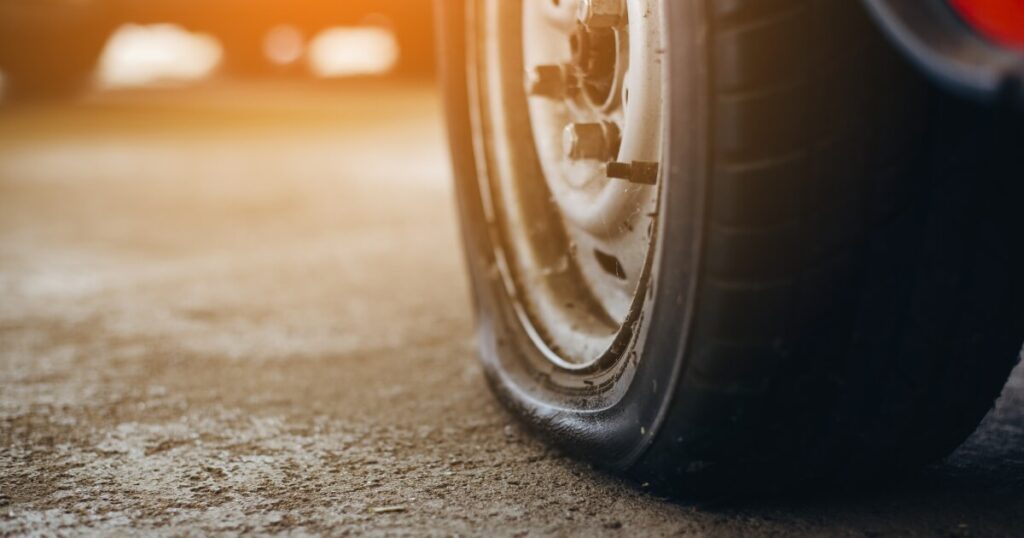
 Tire blowouts are always unexpected, but if this hazard occurs on a highway in busy traffic, it can be a terrifying experience. If the driver loses control of the vehicle, it could quickly lead to a crash and cause injuries to others sharing the road. If your car gets hit by a driver who had a blowout, is that person liable or will you have to cover your own damages?
At Roden Law, our attorneys bring 62 years of combined experience to crash victims’ cases. One thing we can tell you is that determining liability for any crash is rarely straightforward. There are always contributing factors that investigators will need to examine before they can say who may be liable. The same is true for an accident caused by a blown out tire.
This article talks about the common causes of tire blowouts and who may be liable for your damages in this situation. Need legal help to determine if you are eligible to seek compensation for your damages? Contact our law firm to speak to one of our experienced car crash attorneys in Savannah. There is no cost for this initial consultation.
Request your FREE case review today. 1-844-RESULTS
What Causes Tire Blowout Crashes?
Before looking at who may be liable, we want to talk about things that often cause tire blowouts. Some of the most common causes may include:
- Driving on worn-out tires
- Tires that are either under or over inflated
- Defective tires
- Road hazards, like a huge pothole or object in the road
- A vehicle that has been overloaded with heavy cargo
Determining Liability: Who Can Be Held Responsible?
Determining liability for a tire blowout crash can be complex. Why a tire failed is usually established by an independent tire expert, so the failed tire must be preserved (Phillips v. Harmon).
Multiple parties may be assessed with liability for a tire blowout crash, including:
The Driver With the Blown-Out Tire
Often, drivers operating the vehicles that have a blowout may bear partial or full responsibility if a crash occurs. For instance, drivers who fail to properly maintain their tires. Drivers owe a legal duty of care to maintain their vehicles, which includes replacing, servicing or repairing tires as needed. Georgia requires at least 2/32 inch of tread in all major grooves and no cord-deep cuts, bumps, bulges or separations (O.C.G.A. § 40-8-74(e)), and bars driving an unsafe vehicle (O.C.G.A. § 40-8-7).
Tire blowouts may occur if they are too worn. Tires are also more susceptible to a blowout if they are either underinflated or over inflated. Drivers should inflate tires to the vehicle manufacturer’s pressure on the driver’s door label, not the maximum printed on the tire. Failing to do either of these things could make a driver liable if it leads to a blowout and causes a crash.
Vehicle Owners
If the vehicle is owned by someone other than the driver, the owner may also be liable: an employer for a driver on the job (O.C.G.A. § 51-2-2), and a rental company only for its own negligence, such as failing to maintain the tires (Graves Amendment, 49 U.S.C. § 30106). Vehicle owners have a duty to ensure that the vehicles they provide are properly maintained and safe to operate. If vehicle owners fail to maintain the tires or provide a vehicle with known defects, they may be held accountable for any resulting accidents.
Tire Manufacturers
In cases where a tire blowout is caused by a defect in the tire itself, the manufacturer of the tire may be held liable for the resulting accident. Under O.C.G.A. § 51-1-11, a tire manufacturer is strictly liable if the tire was not reasonably suited to its intended use when sold, but generally only within ten years of first sale; the tire’s DOT date code shows its age. If a tire is found to have a manufacturing defect or design flaw that contributed to the blowout, the manufacturer may be held partially or fully liable.
Tire Retailers and Installers
Tire retailers and installers are not strictly liable like manufacturers (O.C.G.A. § 51-1-11.1), but they can be liable for negligent installation, repair or inspection, even if they did not know the tire was unsafe.
Government Entities
In some cases, poorly maintained roads or hazardous road conditions may contribute to tire blowout crashes. A city is liable for a street defect only if negligent and on actual or constructive notice of it (O.C.G.A. § 32-4-93), and written notice is due within 6 months (O.C.G.A. § 36-33-5). Counties are immune unless a statute waives their immunity (O.C.G.A. § 36-1-4) and require claims within 12 months (O.C.G.A. § 36-11-1); state roads, including I-16 and I-95, fall under the Georgia Tort Claims Act’s 12-month notice (O.C.G.A. § 50-21-26).
What Evidence Could Help To Prove Liability for a Tire Blowout Crash?
Proving liability in a tire blowout crash requires gathering evidence to support your claim. This may include:
- Maintenance Records: Documentation of tire maintenance, including inspections, rotations and replacements can help establish whether a driver properly maintained the vehicle’s tires.
- Photographs: Photos of the accident scene, including tire damage and road conditions can provide valuable evidence.
- Expert Testimony: Accident reconstructionist specialists, tire specialists, or mechanical engineers can provide insight into the cause of the tire blowout and who may be liable.
- Witness Statements: Eyewitnesses, passengers and other drivers may not know why the tire failed, but they can corroborate your version of events.
Why Seek Legal Help After a Crash Caused by a Tire Blowout?
If you have been involved in a tire blowout crash, seeking legal guidance from an experienced car accident attorney is essential. A skilled attorney can assess the circumstances of your accident, gather evidence to support your claim, and advocate on your behalf to pursue the compensation you deserve.
Our team of dedicated car accident attorneys in Savannah is ready to help. We have years of experience representing clients injured in car crashes throughout the state, including those caused by tire blowouts.
At Roden Law, we have the knowledge and resources to navigate complex liability issues and fight for your rights. Contact us today for a free consultation to discuss your case. Learn what legal options may be available to you and how we can help. There are no upfront costs to pay if we represent you. We only get paid if you do.
Frequently Asked Questions
About the Author

Want more from Roden Law in your Google results?